
TL;DR

Get the latest gadgets delivered free with Prime
- Fast, free delivery on millions of items
- Prime Video, Amazon Music and more included
- Member-only deals all year
NASA has launched the Swift Boost mission, deploying the robotic spacecraft LINK to rescue the Swift Observatory from rapid orbital decay. The mission aims to extend the telescope’s life by repositioning it to a higher orbit, with operations ongoing.
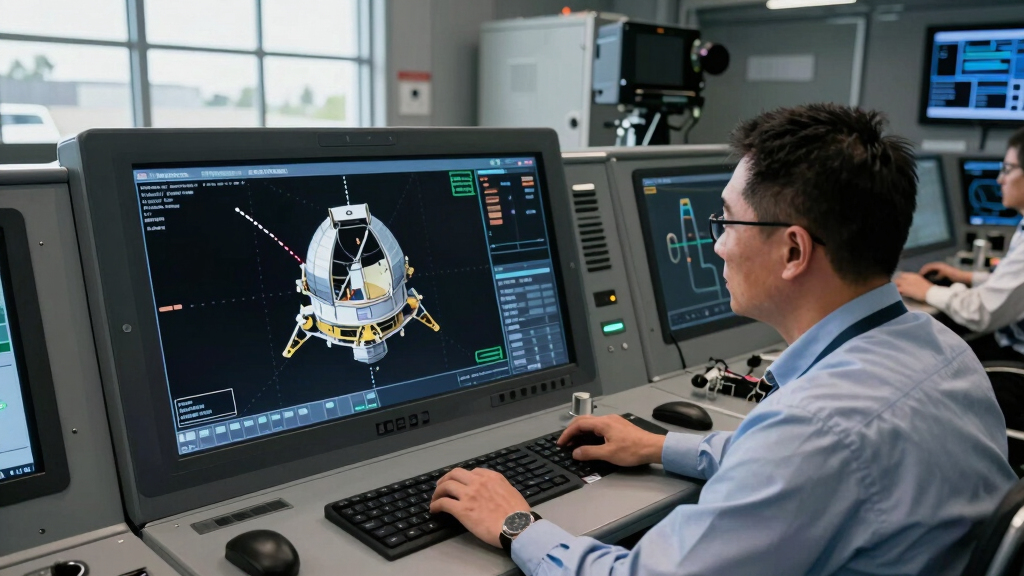
NASA has successfully launched the Swift Boost mission, deploying a robotic spacecraft called LINK to rescue the Neil Gehrels Swift Observatory, which is rapidly losing altitude and risks falling from orbit. This development marks a significant effort to prolong the observatory’s scientific mission and prevent its premature deorbiting.
The mission launched from the Marshall Islands on July 3 at 4:36 AM Eastern time, after initial delays. LINK was attached to a Northrop Grumman Pegasus XL rocket, which was carried into space by the Stargazer aircraft from Kwajalein Atoll. The rocket was released at approximately 40,000 feet altitude, and its engines ignited shortly after, delivering LINK into space. NASA confirmed that contact with LINK was established successfully, and the spacecraft has powered on and is undergoing health checks conducted by Katalyst Space, the Arizona-based company responsible for its design.
Once its systems are verified, LINK will proceed to survey the Swift Observatory, dock with it using three robotic arms, and then begin the process of tugging it into a higher orbit. The target orbit is approximately 370 miles in altitude, which is expected to extend the telescope’s operational life by about a decade. The entire process of capturing and repositioning the observatory is projected to take between 10 to 12 weeks. Recent solar activity has accelerated the observatory’s orbital decay, making this intervention urgent. Without assistance, the Swift telescope would likely fall from orbit by the end of the year.
Why Extending Swift’s Orbit Matters for Space Science
The successful deployment of LINK to rescue the Swift Observatory is a rare example of in-space servicing technology aimed at prolonging the life of scientific instruments. The Swift telescope has been instrumental in studying gamma ray bursts, phenomena that release more energy in seconds than the sun does in its entire lifetime. Extending its operational life allows scientists to gather critical data on these cosmic events, which are linked to the formation of heavy elements like gold and platinum. This mission also demonstrates advancements in robotic space operations, potentially paving the way for future satellite servicing missions.
As an affiliate, we earn on qualifying purchases.
Background on Swift’s Mission and Orbital Decay
The Neil Gehrels Swift Observatory has been in operation since its launch over two decades ago, primarily studying gamma ray bursts and cosmic phenomena. In recent years, increased solar activity has caused the observatory’s orbit to decay faster than initially predicted. Without intervention, it was expected to fall from orbit by the end of 2024, ending its scientific contributions. Previous efforts to monitor and manage its orbit were insufficient, prompting NASA to develop the Swift Boost mission as a proactive solution to extend its lifespan.
As an affiliate, we earn on qualifying purchases.
Remaining Challenges and Uncertainties in the Rescue Operation
While the launch and initial contact with LINK are confirmed, it is still unclear how quickly and effectively the robotic spacecraft will be able to dock with Swift and begin the tugging process. The exact timeline for completing the orbit raise depends on the health of LINK’s systems and the success of its survey phase. Additionally, unforeseen technical issues could delay or complicate the operation, and the long-term stability of the new orbit remains to be confirmed.
As an affiliate, we earn on qualifying purchases.
Next Steps in the Swift Orbit Rescue Process
Over the coming weeks, LINK will undergo detailed system checks before proceeding to survey the Swift Observatory. Once systems are verified, it will dock with Swift and begin the process of raising its orbit. The mission team expects the entire operation to take approximately 10 to 12 weeks, with the goal of completing the repositioning before the observatory’s current orbit decays further. Continued monitoring and updates will follow as the operation progresses.
As an affiliate, we earn on qualifying purchases.
Key Questions
What is the main goal of the Swift Boost mission?
The primary goal is to attach a robotic spacecraft, LINK, to the Swift Observatory and raise its orbit, extending its operational life by about a decade.
Why is Swift’s orbit decaying faster recently?
Recent increased solar activity has caused atmospheric expansion, which accelerates orbital decay for low-Earth orbit satellites like Swift.
How will LINK attach to the Swift Observatory?
LINK is equipped with three robotic arms designed to dock with Swift and then perform the tugging operation to raise its orbit.
What scientific benefits does extending Swift’s life provide?
Extending Swift’s operational life allows continued study of gamma ray bursts and cosmic phenomena, which are vital for understanding element formation and high-energy astrophysics.
What are the risks of this mission?
Potential risks include technical failures during docking or orbit raising, which could jeopardize the mission’s success or delay the process.
Source: Engadget
Evergreen bestsellers Picks
bestsellers
As an affiliate, we earn on qualifying purchases.