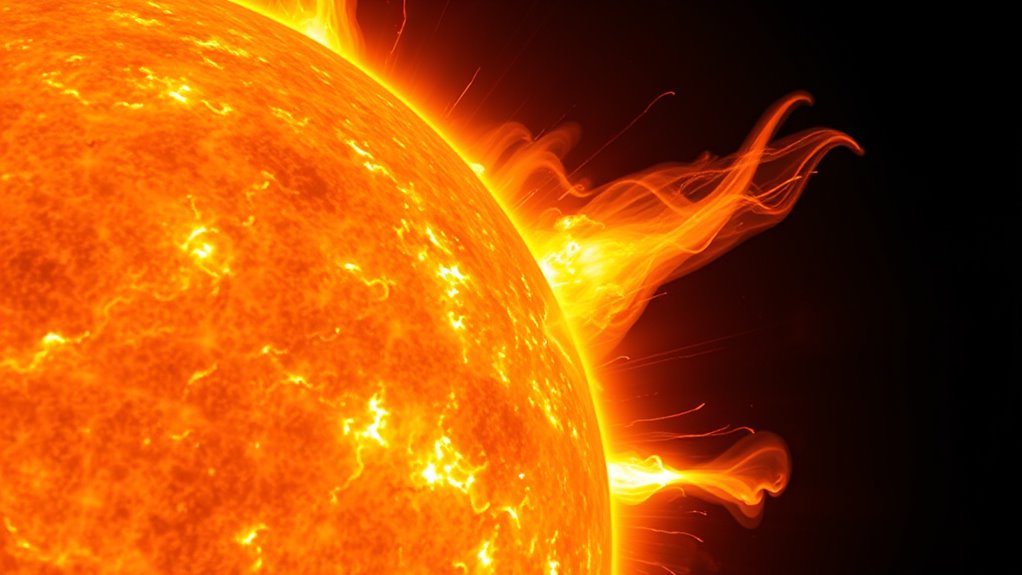

To safely observe solar flares with filters, use specially designed solar filters that reduce sunlight to safe levels, protecting your eyes from damage. Confirm the filters are certified, free of scratches or damage, and securely attached to your telescope, binoculars, or camera. Never look through unfiltered lenses at the sun, and avoid removing filters during observation. Following these guidelines keeps your eyesight safe while watching solar activity; continue exploring to learn more about protecting your vision.

Get the latest gadgets delivered free with Prime
- Fast, free delivery on millions of items
- Prime Video, Amazon Music and more included
- Member-only deals all year
Key Takeaways
- Use certified solar filters specifically designed for safe solar viewing to prevent eye damage.
- Ensure filters are securely attached to telescopes or binoculars and are free of scratches or damage.
- Never look at the sun through unfiltered lenses or regular sunglasses, especially during solar activity.
- Keep filters in place at all times when observing the sun, especially during solar flares or prominences.
- Regularly inspect and replace filters if they become damaged, discolored, or compromised to maintain safe observation.

Observing solar flares can be an exciting way to learn about our sun’s dynamic activity, but it’s essential to prioritize safety. Solar viewing offers a rare glimpse into some of the most powerful and fascinating phenomena in our solar system, yet it also poses significant risks if proper precautions aren’t taken. The key to safe solar observation is understanding and implementing filter safety. Never look at the sun directly without appropriate protection, as even brief exposure can cause serious eye damage or permanent vision loss. Regular sunglasses, no matter how dark, do not provide sufficient protection for solar viewing. Instead, use specialized solar filters designed specifically for observing the sun.
Always use proper solar filters to protect your eyes during solar observations.
When choosing a solar filter, ensure it’s certified for safe solar viewing. These filters typically have a special solar film or glass that reduces sunlight to safe levels, allowing you to see solar features like sunspots, prominences, and flares clearly and safely. Always inspect your solar filter before use, looking for any scratches, pinholes, or damage. Even tiny imperfections can let harmful solar radiation through, risking eye injury. Attach your filter securely to your telescope, binoculars, or camera, making sure it fits tightly and doesn’t slip or fall off during observation.
It’s equally important to follow filter safety guidelines during solar viewing. Never remove your solar filter while observing the sun, especially during a solar flare, as this exposes your eyes to intense solar radiation. Keep your equipment in good condition and replace filters if they become damaged or discolored over time. When observing, avoid looking through unfiltered lenses or glasses at any point. If you’re using binoculars or a telescope, always ensure they have the proper solar filters in place before aiming at the sun.
Practicing filter safety isn’t just about protecting your vision; it guarantees you can enjoy the spectacle of solar activity without worry. Be patient and take your time to set everything up correctly. If you’re new to solar viewing, consider consulting reputable guides or expert sources for best practices. Remember, observing solar flares is a rewarding experience, but only if you do so responsibly and safely. With the right filters and careful attention to safety procedures, you can witness the sun’s fascinating flares and learn about its ever-changing surface without risking your sight. Understanding solar phenomena is essential for safe observation practices and appreciating the sun’s dynamic behavior.
certified solar filters for telescopes
As an affiliate, we earn on qualifying purchases.
As an affiliate, we earn on qualifying purchases.
Frequently Asked Questions
Can I Observe Solar Flares Without Specialized Equipment?
You can’t safely observe solar flares without specialized equipment. Solar viewing requires a proper solar filter to protect your eyes from harmful rays. Regular sunglasses or makeshift filters are unsafe and can cause permanent eye damage. Always use certified solar viewing filters or solar telescopes designed for safe observation. Prioritize filter safety to enjoy solar phenomena without risking your eyesight. Never look directly at the sun without proper protection.
How Often Do Solar Flares Occur?
Solar flare frequency varies with solar cycle patterns, which last about 11 years. During solar maximum, you can expect more frequent and intense flares, sometimes occurring daily. In contrast, during solar minimum, flares are rare, maybe a few times a year. Keep an eye on space weather forecasts, as they help predict flare activity. Your chances of observing flares increase during peaks, so stay updated on solar cycle trends.
What Are the Signs of a Dangerous Solar Flare?
Oh, so you’re eager to spot the danger signs of a solar flare? Well, watch for increased solar flare intensity, which often sparks dazzling auroras but can also disrupt magnetic fields dramatically. If you notice sudden radio blackouts or GPS glitches, you’re witnessing magnetic field disruptions firsthand. These are your cosmic warning signs that a dangerous solar flare might be releasing its power, so stay alert and avoid direct viewing without proper protection.
Is It Safe to Look at the Sun During a Flare Without Filters?
You shouldn’t look at the sun during a flare without proper solar safety measures. Even if you’re using binocular viewing, the intense solar radiation can cause serious eye damage. Always use specialized solar filters designed for safe viewing, like eclipse glasses, to protect your eyes. Never rely on makeshift filters or unfiltered binoculars, as they don’t block harmful rays. Your vision is worth safeguarding during solar events.
How Do Solar Flares Affect Earth’s Atmosphere?
Imagine Earth’s atmosphere as a gentle shield, but solar flares send a gust of solar wind that stirs it up. These solar winds and magnetic disturbances can cause shimmering auroras and disrupt communications. They energize our magnetic field, creating beautiful light shows but also risking satellite and power grid issues. So, solar flares act like cosmic tempests, stirring Earth’s atmospheric dance with bursts of charged particles and magnetic excitement.
solar viewing glasses for solar flares
As an affiliate, we earn on qualifying purchases.
As an affiliate, we earn on qualifying purchases.
Conclusion
Remember, observing solar flares is like watching a fireworks show—spectacular but potentially dangerous. Always use proper filters and never look directly at the Sun without protection. Think of your filters as a shield, turning the Sun’s fierce rays into safe, mesmerizing light. By following these precautions, you’re not just a spectator but a responsible guardian of your own safety. Embrace the beauty safely, and let your curiosity shine as brightly as the solar flares themselves.
As an affiliate, we earn on qualifying purchases.
solar observation filter for cameras
As an affiliate, we earn on qualifying purchases.
As an affiliate, we earn on qualifying purchases.
Columbus Day / Indigenous Peoples' Day Picks
long weekend sales
As an affiliate, we earn on qualifying purchases.