
TL;DR

Get the latest gadgets delivered free — and shop member deals
- Fast, free delivery on millions of items
- Access to Prime Big Deal Days deals on October 6–7
- Prime Video, Amazon Music and more included
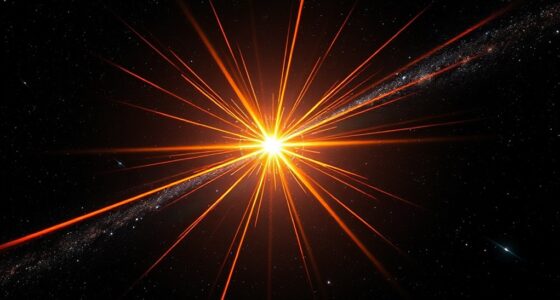
NASA observed a significant X1.1 solar flare from the Sun on June 30. This event could affect communication, navigation, and power systems on Earth. The flare was captured by NASA’s Solar Dynamics Observatory.
NASA’s Solar Dynamics Observatory captured a powerful X1.1 class solar flare peaking at 4:50 p.m. ET on June 30. This is the most intense type of solar flare, and its occurrence highlights ongoing solar activity that could impact Earth’s space environment and technological systems.
The solar flare was classified as an X1.1 event, indicating a high level of energy release from the Sun. NASA’s observatory continuously monitors solar activity and confirmed the flare’s timing and intensity through real-time imaging. Solar flares of this magnitude can disrupt radio communications, navigation signals, and electrical grids, and pose risks to satellites and astronauts in space.
According to NASA, the flare was detected via the Solar Dynamics Observatory, which provides detailed imagery of solar phenomena. The flare’s peak was precisely recorded at 4:50 p.m. ET, and it is part of the Sun’s regular 11-year solar cycle, which is currently in its active phase.
Implications of the X1.1 Solar Flare for Earth’s Technology
This solar flare underscores the importance of space weather monitoring, as intense flares can cause radio blackouts, power grid disturbances, and affect navigation systems. Agencies like NOAA’s Space Weather Prediction Center and NASA warn that such events require preparedness to mitigate potential disruptions to communication networks and satellite operations. The flare’s strength suggests a need for ongoing vigilance during solar maximum periods, which could intensify the impact on Earth’s technological infrastructure.
As an affiliate, we earn on qualifying purchases.
Recent Solar Activity and Flare Classification
The Sun experiences periodic increases in activity, known as solar maximum, during which solar flares and eruptions become more frequent and intense. The current solar cycle, Solar Cycle 25, has shown heightened activity since early 2026, with multiple flares recorded. The X-class classification indicates the most powerful flares, with X1.1 representing a significant but not the largest possible event. Past similar flares have caused temporary disruptions in radio communications and navigation signals.
NASA’s fleet of spacecraft, including the Solar Dynamics Observatory, continuously observes the Sun’s activity, providing real-time data used by space weather forecasters to predict and warn about potential impacts on Earth. The recent flare is consistent with the ongoing solar cycle’s activity pattern.
“Flares of this magnitude can temporarily disrupt radio and satellite communications, but their effects are usually short-lived.”
— an anonymous researcher
As an affiliate, we earn on qualifying purchases.
Uncertainties About the Flare’s Impact Duration
It is not yet clear how long the effects of this X1.1 flare will last or if additional flares will follow during the current solar cycle peak. Space weather predictions are inherently uncertain, and the actual impact depends on various factors, including the direction of solar particles and magnetic fields.
As an affiliate, we earn on qualifying purchases.
Monitoring and Preparedness for Future Solar Activity
Space weather agencies will continue to monitor solar activity closely, issuing warnings if further significant flares occur. Researchers are also analyzing data from this event to improve models predicting space weather impacts. The public and industries reliant on satellite and electrical infrastructure are advised to stay alert for updates from NOAA and NASA.
As an affiliate, we earn on qualifying purchases.
Key Questions
What is an X1.1 solar flare?
An X1.1 solar flare is a very strong burst of energy from the Sun, classified as X-class, which is the most intense category. The number indicates its relative strength within that class.
Could this flare affect Earth’s technology?
Yes, strong solar flares like this can cause temporary disruptions to radio communications, navigation signals, and power grids. However, the severity depends on various factors, including the flare’s direction and magnetic interactions.
Are more flares expected soon?
Space weather forecasts suggest increased solar activity during the current solar cycle peak, so additional flares are possible. Agencies will continue to monitor and issue alerts as needed.
How does NASA detect solar flares?
NASA uses spacecraft like the Solar Dynamics Observatory to observe the Sun continuously, capturing high-resolution images and data that help identify and analyze solar flares in real time.
Source: Google Trends
Fall Picks
fall essentials
As an affiliate, we earn on qualifying purchases.