
TL;DR

Get the latest gadgets delivered free with Prime
- Fast, free delivery on millions of items
- Prime Video, Amazon Music and more included
- Member-only deals all year
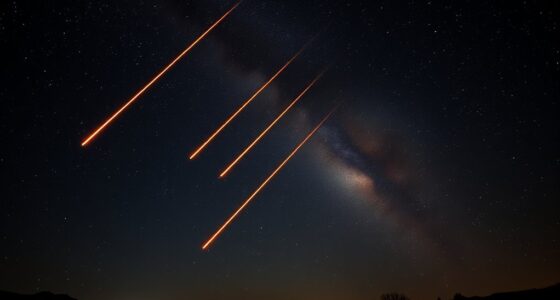
The June Bootids meteor shower, notorious for unpredictable outbursts, peaks between June 20 and June 27. While typically modest, unexpected displays could occur, attracting skywatchers worldwide.
The June Bootids meteor shower is expected to peak next week, with the potential for surprise outbursts that could produce a higher-than-usual number of meteors. This unpredictable event is of interest to skywatchers and astronomers, as past occurrences have ranged from modest displays to spectacular shows, despite the shower’s generally low activity levels.
The June Bootids are associated with debris from comet 7P/Pons-Winnecke, which orbits the Sun approximately every six years. The shower’s activity is usually modest, with only one or two meteors per hour, but it has a history of unexpected outbursts. Notable events include a burst in 1998, which produced up to 100 meteors per hour, and a 2004 outburst with 20-50 meteors per hour, according to the Royal Museums Greenwich.
Most years, the shower peaks between June 20 and June 27, with the radiant point located in the constellation Boötes. Observers should look away from the radiant to maximize their chances of spotting meteors, which appear as streaks across the sky. The best viewing conditions are in dark, remote locations away from city lights.
While the shower’s typical activity remains low, astronomers emphasize its unpredictable nature, meaning skywatchers should remain alert for sudden increases in meteor activity during the peak period, especially in the early morning hours.
Why the June Bootids’ Unpredictability Matters
This meteor shower’s unpredictable nature makes it a unique event for skywatchers and astronomers alike. While most annual showers follow predictable patterns, the June Bootids have a history of surprise outbursts, which can provide rare opportunities for observation and data collection. Such unpredictability also challenges astronomers’ models of debris streams and comet activity, offering insights into the behavior of cometary fragments and the dynamics of meteoroid streams.
For amateur astronomers and astrophotographers, the potential for unexpected displays adds excitement and the chance to witness a rare celestial event. It also highlights the importance of ongoing monitoring and observation during the peak window, which could yield valuable scientific data.
As an affiliate, we earn on qualifying purchases.
Background on the June Bootids and Past Outbursts
The June Bootids are linked to debris from comet 7P/Pons-Winnecke, which orbits the Sun roughly every six years. The shower is active throughout late June, with the peak typically occurring between June 20 and June 27, according to the American Meteor Society. Historically, the shower has been difficult to predict; for example, in 1998, skywatchers experienced an outburst with up to 100 meteors per hour, a significant increase from its usual modest activity.
Past outbursts are thought to result from Earth passing through dense filaments of debris left by the comet, but the precise conditions that trigger these events remain uncertain. The shower’s inconsistency is partly due to the complex and variable nature of the debris stream, which can change over time due to gravitational influences and other factors.
“The June Bootids are one of the most unpredictable meteor showers, with past outbursts showing how dynamic and variable the debris stream can be.”
— an anonymous researcher
As an affiliate, we earn on qualifying purchases.
What Remains Uncertain About the Upcoming Peak
While astronomers expect the June Bootids to peak between June 20 and June 27, the exact intensity of the activity remains uncertain. Past outbursts have been sporadic, and predicting whether this year will produce a significant increase in meteors is challenging. Current models cannot definitively forecast whether the shower will deliver a spectacular display or remain modest, making observation during the peak period particularly valuable.
As an affiliate, we earn on qualifying purchases.
Next Steps for Skywatchers and Researchers
Skywatchers should plan to observe the shower during the peak window, ideally from dark locations away from city lights, in the early morning hours. Keeping an eye on local weather conditions will be important, as clear skies are essential for viewing.
Researchers and astronomers will continue monitoring the debris stream and analyzing observational data to better understand the factors that lead to outbursts. The upcoming peak presents an opportunity to gather new insights into cometary debris behavior and improve future predictions.
As an affiliate, we earn on qualifying purchases.
Key Questions
When is the best time to see the June Bootids?
The best viewing time is expected between June 20 and June 27, particularly in the early morning hours before dawn, when the sky is darkest and meteors are most visible.
How many meteors can I expect to see?
Typically, the June Bootids produce just one or two meteors per hour, but past outbursts have resulted in up to 100 meteors per hour. The actual activity this year remains uncertain.
Where should I watch for the meteors?
Find a dark, remote location away from city lights. Look towards the constellation Boötes, but avoid staring directly at the radiant; scan a broad area of the sky instead.
Why are the June Bootids so unpredictable?
Their unpredictability is linked to the complex and variable debris stream from comet 7P/Pons-Winnecke, which can produce sudden outbursts when Earth passes through denser fragments.
Source: Space.com
Columbus Day / Indigenous Peoples' Day Picks
long weekend sales
As an affiliate, we earn on qualifying purchases.