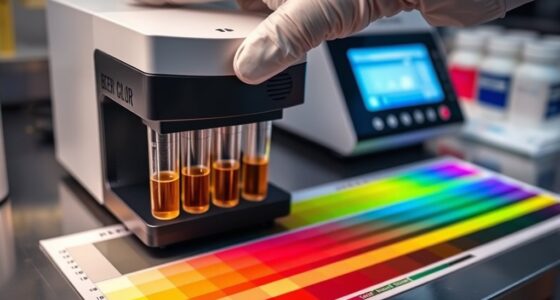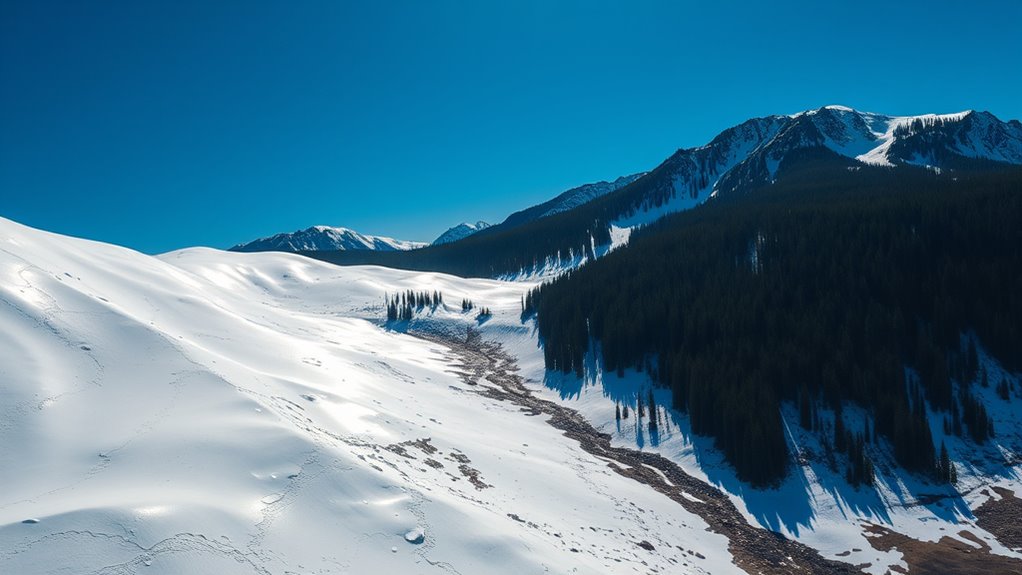

Your understanding of albedo and reflectance shows how surface colors influence climate. Light-colored surfaces like snow and sand reflect more sunlight, helping keep temperatures cooler. Darker surfaces like forests and oceans absorb more sunlight, increasing warming. These differences in surface color and reflectance shape local and global climate patterns by controlling how much solar energy is retained or reflected back into space. Continuing will reveal more about how these factors affect Earth’s climate system.
Key Takeaways
- Surface color influences albedo; lighter colors reflect more sunlight, affecting local and global climate.
- Snow and ice with high albedo help cool the Earth by reflecting solar radiation.
- Darker surfaces like forests and oceans have low albedo, absorbing more energy and increasing regional temperatures.
- Changes in surface colors, such as snow melting, alter reflectance and can contribute to climate feedback loops.
- Surface composition and color are critical in climate models due to their impact on energy absorption and reflection.
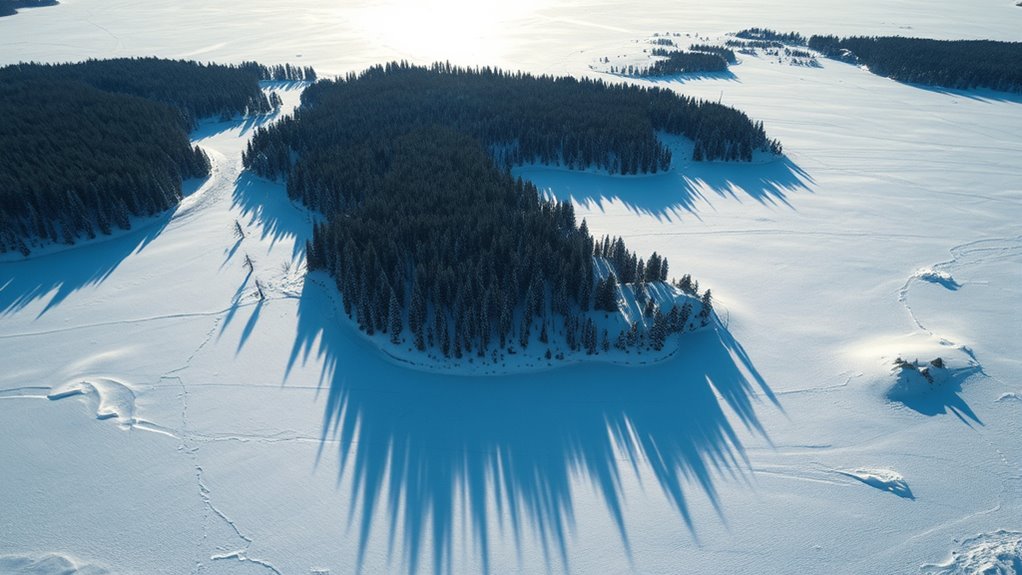
Have you ever wondered how surfaces reflect sunlight or other forms of radiation? It’s fascinating because the way a surface interacts with incoming energy directly affects the climate and our environment. This interaction is governed by what scientists call albedo—the measure of how much radiation a surface reflects. When sunlight hits different surfaces, some of that energy is absorbed, warming the surface, while the rest is reflected back into space. The amount reflected influences planetary brightness, which is a key factor in Earth’s energy balance. Surfaces with high reflectance, like snow and ice, bounce a significant portion of sunlight away, helping to cool the planet. Conversely, darker surfaces such as forests or oceans absorb more energy, contributing to warming. Understanding surface energy is crucial because it explains how different surfaces contribute to climate variation and energy distribution across the globe.
Surface energy plays an essential role here. It refers to the energy exchanged at the Earth’s surface through processes like absorption, reflection, and emission. When a surface has high surface energy, it can absorb more radiation, increasing its temperature. Surfaces with low surface energy tend to reflect more radiation, which keeps them cooler and influences the overall planetary brightness. This dynamic shapes local climates and even global climate patterns. Think about urban areas with asphalt and concrete—they tend to have low albedo, absorbing a lot of sunlight, which makes cities hotter. Rural areas with abundant vegetation or snow cover have higher albedo, reflecting more sunlight and maintaining cooler temperatures.
Your understanding of how surface energy and planetary brightness interact helps explain why certain regions warm faster than others. For example, deserts, with their light-colored sands, have high reflectance, which moderates their temperature somewhat. Meanwhile, deep oceans absorb vast amounts of solar energy due to their low albedo, impacting global heat distribution and weather systems. The color of a surface isn’t just about aesthetics; it’s a fundamental factor in climate regulation. Lighter colors reflect more radiation, reducing surface energy absorption, while darker shades do the opposite.

Rust-Oleum 710 Elastomeric Roof Coating, 5 Gallon, White
84% initial reflectivity
As an affiliate, we earn on qualifying purchases.
As an affiliate, we earn on qualifying purchases.
Frequently Asked Questions
How Does Albedo Affect Local Weather Patterns?
Albedo influences local weather patterns by affecting how much sunlight is reflected or absorbed. When you have high albedo surfaces like desert sand or snow, they reflect more sunlight, reducing urban heat and cooling the area. Conversely, darker surfaces absorb heat, raising temperatures. This variation impacts local climates, influencing urban heat islands and desert reflection, which can alter weather patterns and temperature regulation in your environment.
Can Albedo Changes Be Deliberately Used to Combat Climate Change?
Yes, you can deliberately use albedo changes to combat climate change by implementing strategies like urban cooling and solar radiation management. Increasing surface reflectivity through reflective paints, cool roofs, or white pavements helps reduce heat absorption, lowering urban temperatures. Solar radiation management techniques, such as deploying aerosols in the atmosphere, can also reflect sunlight away from Earth. These methods can mitigate warming effects and improve local climate resilience.
What Is the Relationship Between Reflectance and Greenhouse Gases?
Reflectance is like a mirror for sunlight, bouncing it back into space, while greenhouse gases trap heat like a blanket. As you increase solar reflectance, less energy is absorbed, reducing atmospheric absorption and warming. Greenhouse gases, however, absorb infrared radiation, intensifying the greenhouse effect. So, the more gases there are, the more heat gets trapped, disrupting the delicate balance between reflectance and climate regulation.
How Do Different Surfaces Alter Earth’s Energy Balance?
You notice how different surfaces alter Earth’s energy balance by affecting heat absorption and reflection. Urban heat, caused by asphalt and concrete, traps more heat, raising temperatures. Conversely, desert reflection, with its high albedo, bounces sunlight back into space, cooling the area. These surface differences influence local and global climates, with reflective surfaces helping mitigate warming and dark, urban areas contributing to heat buildup.
Are There Natural Processes That Significantly Change Surface Albedo?
You might be surprised to learn that natural processes like surface contamination and vegetation dynamics can substantially alter surface albedo. For instance, dust or ash settling on surfaces darkens them, reducing reflectance. Likewise, changes in vegetation cover, such as seasonal shifts or growth patterns, can increase or decrease albedo, affecting how much solar energy the surface reflects and ultimately influencing local and global climate patterns.

FolkArt Outdoor Acrylic Paint in Assorted Colors (8 oz), Coal
Satin sheen
As an affiliate, we earn on qualifying purchases.
As an affiliate, we earn on qualifying purchases.
Conclusion
Remember, your choices are like the paintbrushes of our planet’s palette. When you opt for brighter surfaces, you’re adding shiny white strokes that reflect more sunlight, helping cool the Earth—like a mirror of hope. Conversely, darker surfaces absorb heat, warming our world like a shadow cast by neglect. Your actions shape this canvas, influencing the climate’s future. Choose wisely, for your decisions are the colors that will either brighten or darken our planet’s horizon.

KESPEN Window Privacy Film One Way Daytime Privacy Static Cling Sun Blocking Anti UV Reflective Window Tint for Home and Office, Black-Silver, 17.5 Inch X 6.5 Feet
UV BLOCKING & GLARE CONTROL: KESPEN sun blocking window film can effectively block 82% of infrared rays and…
As an affiliate, we earn on qualifying purchases.
As an affiliate, we earn on qualifying purchases.

MRPAPA Double Reflective Insulation Foam, 48" x 10 Ft Reflective Window Radiant Barrier B2 Fireproof Bubble Insulation Roll for Keep Heat, Thermal Heat Block Shield – Engineered Foil
【SAFETY MATERIAL】✅ MRPAPA reflective insulation sheet is made of truly double Aluminum foil and polyethylene bubble. B2 fire-protection…
As an affiliate, we earn on qualifying purchases.
As an affiliate, we earn on qualifying purchases.