
Chromatic aberration happens when your lens can’t focus all colors of light at the same point, leading to blurred images or color fringes around high-contrast edges. This occurs because different wavelengths bend differently inside the lens, especially in bright scenes with sharp contrast. To reduce this effect, you can choose high-quality lenses or stop down your aperture. If you want to know how to manage or prevent this issue, keep exploring effective techniques and solutions.
Key Takeaways
- Chromatic aberration occurs when lenses fail to focus all colors at the same point, causing blurring and color fringes.
- It results from lens dispersion, where different wavelengths of light bend differently, especially at high contrast edges.
- Visible symptoms include purple or green fringes around objects, reducing image sharpness and detail.
- Mitigation involves using low-dispersion lenses, stopping down aperture, and applying software corrections in post-processing.
- Choosing high-quality, specialized lenses and understanding their limitations help minimize chromatic aberration during photography.

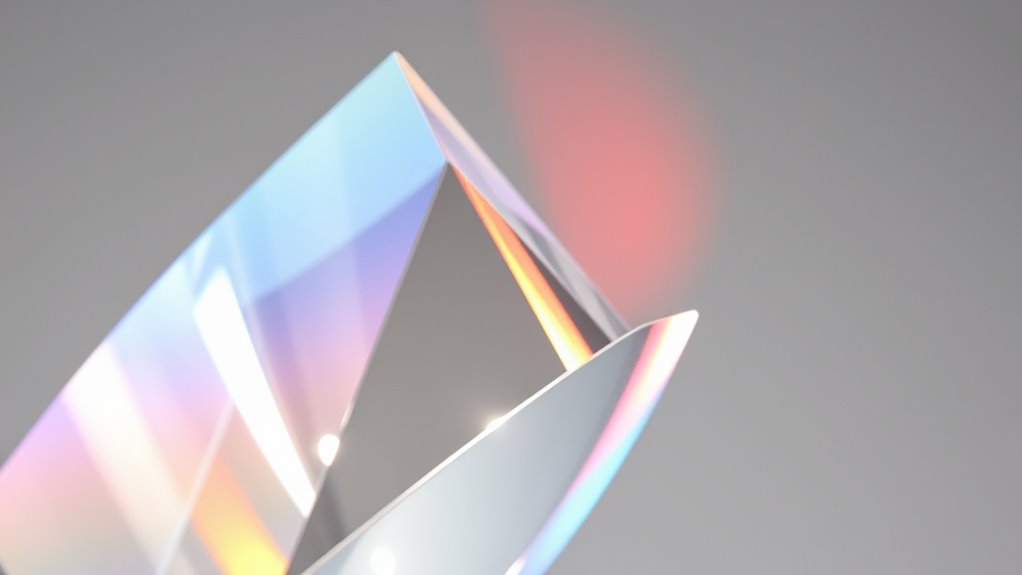
Chromatic aberration occurs when a lens fails to focus all colors of light at the same point, resulting in blurred or color-fringed images. You might notice this issue when taking photos of high-contrast scenes, like a bright sky behind dark trees, where colorful outlines appear along the edges. This happens because lenses bend different wavelengths of light differently—a phenomenon known as lens dispersion. As a result, some colors focus closer to the lens while others focus further away, creating a mismatch that appears as unwanted color fringing around objects.
Chromatic aberration causes color fringes around objects in high-contrast scenes.
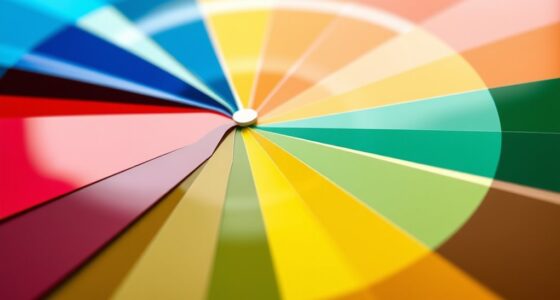
When light passes through a lens, it doesn’t all bend equally. Shorter wavelengths, like blue and violet, tend to refract more than longer wavelengths, such as red and orange. This differential bending causes the colors to focus at slightly different points, leading to a blurry, double-image effect around high-contrast edges. The effect is most noticeable along the borders of bright and dark areas, where color fringing becomes prominent. You might see a purple or green outline around a white object against a darker background, which diminishes image clarity and distracts from the subject’s details.
To combat this, many lenses incorporate special glass with low dispersion properties, designed specifically to minimize lens dispersion and reduce chromatic aberration. These are called apochromatic or ED (extra-low dispersion) lenses. They help bring multiple wavelengths into closer focus, considerably decreasing color fringing. In addition, lens coatings and multi-element designs are used to control how light travels through the lens, further reducing chromatic aberration and improving overall sharpness. You can also rely on software correction in post-processing to remove residual color fringing, especially in digital images. Understanding how lens dispersion manifests in your photos allows you to take steps to mitigate its effects. For example, stopping down your aperture can reduce aberration by increasing the depth of field and allowing more of the scene to be in focus, which lessens the visibility of color fringing. Using high-quality lenses with specialized elements is another effective strategy. When shooting high-contrast scenes, being mindful of the lens’s limitations helps you decide whether to adjust your settings or switch to a lens better suited for minimizing chromatic aberration.

SVBONY MK90 Spotting Scope, Maksutov Cassegrain Telescope for Adults Astronomy, 90mm Aperture, Compact and Lightweight Spotting Scope for Terrestrial and Sky Viewing, Planet Visual and Photography
Professional Optics, Enhanced Contrast; Features Maksutov Cassegrain innovation with meniscus corrector lens superior to traditional Schmidt designs; Delivers...
As an affiliate, we earn on qualifying purchases.
Frequently Asked Questions
How Does Chromatic Aberration Affect Image Quality in Different Lighting Conditions?
Chromatic aberration can reduce your image clarity by causing color fringing, especially in high-contrast areas. In bright lighting conditions, it’s more noticeable because the lens struggles to focus all colors evenly, leading to blurred edges. During low light, the effect might seem less prominent, but it can still degrade overall sharpness. To maintain image quality, use lenses with better correction or shoot in conditions that minimize aberration.
Can Chromatic Aberration Be Completely Eliminated With Current Lens Technology?
Imagine a world where lenses are like magic glasses—yes, completely eliminating chromatic aberration. Thanks to advanced lens design and material advancements, we’re closer than ever. However, current technology can’t fully eradicate it; some residual chromatic aberration still slips through. Modern coatings and precise manufacturing minimize it greatly, but perfection remains elusive. So, while you’ll notice significant improvements, a perfect, aberration-free image isn’t quite within reach yet.
What Are the Best Practices for Photographing to Minimize Chromatic Aberration?
To minimize chromatic aberration, you should choose high-quality lenses designed to reduce it, like those with special coatings or ED glass. Use focusing techniques that keep your subject sharp, especially at the edges of the frame, and avoid shooting wide open when possible. Stopping down your lens helps, and consider shooting at focal lengths less prone to aberration. Post-processing can also help remove residual color fringing.
How Does Chromatic Aberration Impact Video Recording and Playback?
Imagine you’re capturing a scene with your smartphone, and suddenly, you notice color fringing along edges—that’s chromatic aberration affecting your video. It causes optical distortion, making colors appear mismatched or blurry, especially in high-contrast areas. During playback, this can distract viewers and reduce overall quality. To minimize this, use lenses with low dispersion glass or apply digital correction in post-production, ensuring your videos stay sharp and true to color.
Are There Specific Lens Coatings That Reduce Chromatic Aberration Effectively?
Yes, certain lens coatings are designed specifically for aberration reduction. These coatings minimize light scattering and improve color accuracy, effectively reducing chromatic aberration. When shopping for lenses, look for those labeled with special coatings like “multi-coating” or “super multilayer coating,” as they enhance image clarity and contrast. By choosing lenses with these coatings, you’ll notice sharper, more vibrant images with less distracting color fringing.

Maksutov-Cassegrain Telescope, Mak70 Telescopes for Adults Kids 1000mm Focal Length 70mm Objective Lens, Beginners Astronomy Telescope with Slow Motion Gimbal Tripod
【Might Mak】Mak-cass design brings several benefits which distinguishes the telescope from others. Foremost, it largely reduces aberrations and...
As an affiliate, we earn on qualifying purchases.
Conclusion
Understanding chromatic aberration helps you choose better lenses and capture sharper images. By knowing how different wavelengths bend, you can take steps to minimize color fringing and improve your photography. Don’t let this issue be a thorn in your side; instead, see it as an opportunity to learn and grow. With patience and the right techniques, you’ll turn a tricky problem into a stepping stone for stunning visuals. Keep your eyes open and press on!

Sky-Watcher Skymax 102mm Maksutov-Cassegrain - Large Aperture Compound-Style Reflector Telescope
EXPERTLY MATCHED OPTICS: The Skymax series of Maksutov-Cassegrain optical tubes features matched primary and secondary mirrors with an...
As an affiliate, we earn on qualifying purchases.

Celestron - NexStar 127SLT Computerized Telescope - Compact and Portable - Maksutov-Cassegrain Optical Design - SkyAlign Technology - Computerized Hand Control - 127mm Aperture
COMPUTERIZED STAR LOCATING TELESCOPE: The Celestron NexStar 127SLT offers a database of more than 40,000 stars, galaxies, nebulae,...
As an affiliate, we earn on qualifying purchases.