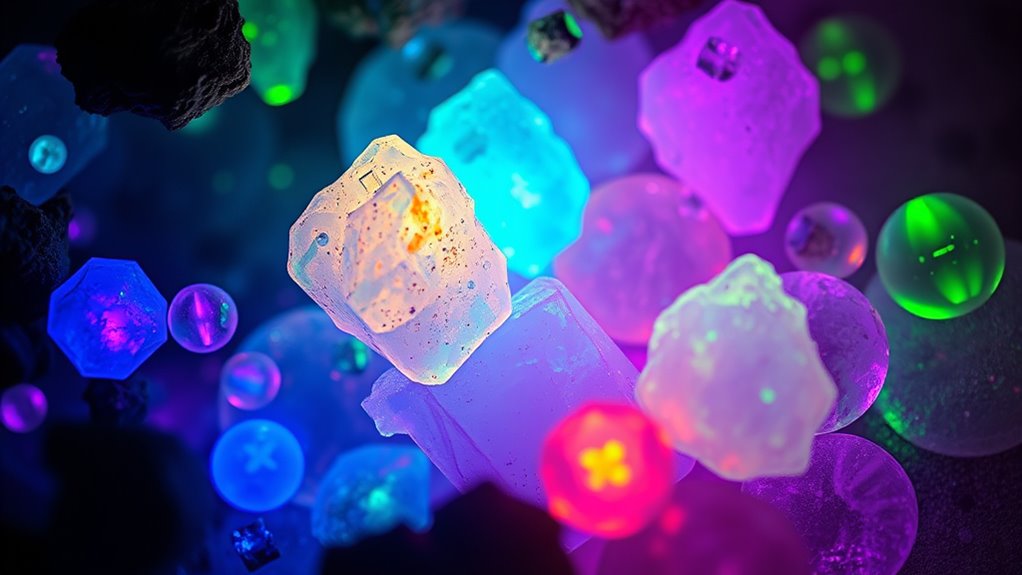

Fluorescence and phosphorescence are processes that explain how materials absorb light energy and then emit it differently. In fluorescence, electrons quickly drop back to their original state, causing near-instant glow, while in phosphorescence, electrons get trapped in higher energy levels, releasing light slowly over time. These phenomena are used in various applications, from biological imaging to glow-in-the-dark products. If you keep exploring, you’ll discover more about how these effects influence many modern technologies.
Key Takeaways
- Fluorescence involves immediate light emission as electrons return quickly to ground state after energy absorption.
- Phosphorescence features delayed emission due to electrons trapped in higher energy states for longer periods.
- Both phenomena result from different energy transfer mechanisms within materials, affecting their glow duration.
- Applications include fluorescent dyes for imaging and glow-in-the-dark products utilizing their distinct emission properties.
- Advances in understanding these processes enhance development of new materials for lighting, imaging, and safety uses.

Fluorescence and phosphorescence are enthralling phenomena that involve the emission of light from materials after they absorb energy. When you expose certain substances to light or other forms of energy, they can re-emit that energy as visible light, but the way they do this differs markedly. Fluorescence occurs almost instantaneously; as soon as the material absorbs energy, it quickly releases it, often within nanoseconds. Phosphorescence, on the other hand, involves a delayed release, where the material continues to glow for seconds or even hours after the initial energy source is removed. This difference stems from the underlying energy transfer processes happening within the materials.
Fluorescence emits light instantly, while phosphorescence glows with a delay after energy absorption.
In fluorescence, energy transfer within the molecules happens rapidly. When a photon strikes the material, electrons jump to a higher energy state. Almost immediately, the electrons drop back down to a lower energy level, releasing energy as light. This quick cycle is why fluorescent objects glow brightly only while exposed to the stimulating energy source. The efficiency of this energy transfer process makes fluorescent materials particularly useful in various applications. For instance, they’re used in fluorescent dyes for biological imaging, where their ability to emit bright, specific colors helps visualize cellular structures. They’re also common in safety signs, highlighters, and certain types of lighting, where their quick response and vibrant glow serve practical purposes.
Phosphorescence involves a different kind of energy transfer. When energy excites the electrons, they’re trapped in a higher energy state for a longer period due to quantum mechanical effects. This trapping causes the delayed emission, which is why phosphorescent materials glow after the energy source is gone. The material applications of phosphorescence are diverse, especially in glow-in-the-dark products, emergency signage, and toys. These materials can absorb ambient light and store that energy temporarily, then release it slowly over time, providing a sustained glow. Their ability to store and release energy gradually makes them invaluable in situations where continuous illumination is needed without an external power source.
Understanding the energy transfer mechanisms in fluorescence and phosphorescence allows scientists and engineers to develop new materials tailored for specific applications. Whether it’s creating more efficient lighting, designing advanced imaging tools, or developing long-lasting glow-in-the-dark products, grasping how energy moves within these materials is key. This knowledge enables the optimization of material properties, ensuring that their luminous qualities meet particular needs, whether immediate or prolonged. Advances in understanding energy transfer processes have led to the development of more durable and efficient phosphorescent materials. As research advances, you can expect even more innovative uses of these enthralling phenomena in technology, medicine, and everyday life.
Frequently Asked Questions
How Do Environmental Factors Affect Fluorescence and Phosphorescence?
Environmental impact and material stability considerably influence fluorescence and phosphorescence. You’ll find that exposure to humidity, temperature changes, and light can cause materials to degrade, reducing their glow over time. These factors can also alter the energy states of the substances, diminishing their efficiency. To maintain ideal brightness, you need to contemplate environmental conditions, ensuring material stability by protecting them from moisture, UV rays, and extreme temperatures, thereby prolonging their luminescent properties.
Can Fluorescence or Phosphorescence Be Used for Medical Imaging?
Yes, you can use fluorescence and phosphorescence for medical imaging. These methods enable luminescence imaging, which helps you visualize tissues and cells with high contrast. By applying signal enhancement techniques, you improve the clarity of the images, making it easier to detect abnormalities. This approach is especially useful in cancer detection and tracking disease progression, offering non-invasive, real-time insights that assist in accurate diagnosis and treatment planning.
What Are the Latest Applications of Fluorescent Materials?
You might think fluorescent materials are just for novelty, but today, you see them everywhere. Luminescent textiles glow in the dark, providing safety and style, while glow-in-the-dark inks transform ordinary objects into eye-catching art. These latest applications harness advanced fluorescence to create functional, aesthetic, and innovative products, proving that science isn’t just for labs — it’s lighting up your everyday life in ways you never expected.
How Do Quantum Dots Enhance Phosphorescent Properties?
Quantum dots enhance phosphorescent properties through quantum confinement, which tightens electron energy levels, boosting emission efficiency. Surface passivation plays a vital role by reducing surface defects that often quench phosphorescence, allowing the dots to glow longer and more brightly. By controlling these factors, you can improve the longevity and brightness of phosphorescent materials, making quantum dots highly valuable in applications like bioimaging, lighting, and display technologies.
Are There Ethical Concerns With Phosphorescent Materials?
You should consider ethical concerns with phosphorescent materials, especially regarding sustainable sourcing and animal testing. Some phosphorescent substances involve rare or environmentally damaging resources, raising sustainability issues. Additionally, if animal testing is used in developing these materials, it sparks ethical debates about animal welfare. Being aware of these concerns helps you choose products that prioritize ethical sourcing and avoid unnecessary harm to animals or the environment.
Conclusion
As you explore the fascinating world of fluorescence and phosphorescence, you’ll discover subtle ways light tells its quiet stories. These phenomena gently remind you of nature’s delicate secrets, softly glowing in the dark. By understanding their gentle magic, you invite a deeper appreciation for the unseen beauty that surrounds you. Embrace these luminous whispers of science, and let them inspire your curiosity to uncover more of nature’s understated wonders.