To test sunscreen efficacy with UV beads, first apply the product to your skin or a surface, then place UV beads nearby. Expose the beads to sunlight for 15-30 minutes and watch for color changes. Less change indicates better protection, while significant color shifts show less effective coverage. This simple test helps you see how well your sunscreen works outside. Keep exploring to find out how different formulations perform and guarantee your skin stays protected.
Key Takeaways
- Apply sunscreen evenly on skin or a surface before placing UV beads nearby.
- Expose the beads and treated area to sunlight for 15-30 minutes to observe UV penetration.
- A minimal or no color change in beads indicates effective UV protection.
- Compare different sunscreens by repeating the test with each product separately.
- Use ingredients like zinc oxide or titanium dioxide as indicators of broad-spectrum, effective sunscreens.
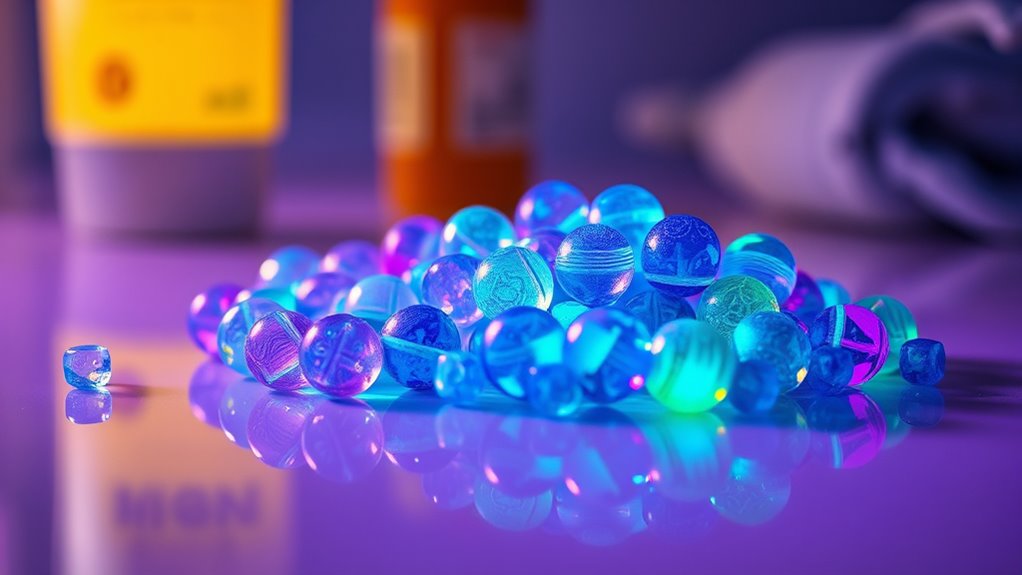
When choosing a sunscreen, verifying how effectively it protects your skin from harmful UV rays is essential. UV protection is the primary reason you wear sunscreen, so understanding how well a product performs can make a real difference in your skin’s health. One practical way to test a sunscreen’s efficacy at home involves using UV beads, which are sensitive to ultraviolet light. These beads change color when exposed to UV rays, providing a visual indicator of UV exposure. By using them, you can see firsthand how much protection your sunscreen offers before heading outdoors.
Start by applying your sunscreen to a clean, dry surface or area, just as you would on your skin. Make sure to follow the recommended amount—usually about a teaspoon for your face and a shot glass full for your body—to guarantee an accurate test. Once the sunscreen is applied, place the UV beads directly on top of the treated area or hold them nearby if you’re testing a larger surface. Expose the beads to sunlight for a specific period, typically around 15-30 minutes, and observe any color changes. If the beads change color markedly, it indicates that UV rays are penetrating through the sunscreen, meaning its UV protection might be inadequate.
Apply sunscreen evenly, then expose UV beads to sunlight to test its protective effectiveness.
This simple test highlights the importance of checking the sunscreen ingredients that contribute to its protective qualities. Look for broad-spectrum sunscreens, which contain ingredients like zinc oxide, titanium dioxide, avobenzone, or oxybenzone. These ingredients are known for their ability to block or absorb different UV wavelengths, providing better protection. If your sunscreen relies solely on chemical filters that aren’t broad-spectrum, it might not be as effective against UVA rays, which can cause skin aging and long-term damage.
Testing with UV beads can also help you compare different sunscreens or formulations. For example, if you have two products, apply each one separately and expose them to sunlight with beads placed on top. The one that causes less color change indicates better UV protection. Remember, no sunscreen offers 100% protection, but this method can help you identify products that perform better in real-world conditions.

Neutrogena Sunscreen Lotion Beach Defense SPF 70, Face & Body Sunscreen, Broad Spectrum, Fast Absorbing, 6.7 Fl Oz, Water Resistant 80 Min, Oil-Free, Oxybenzone & Octinoxate Free
Sunscreen lotion: Broad spectrum SPF 70 shields skin from UVA/UVB rays; water resistant for up to 80 minutes,…
As an affiliate, we earn on qualifying purchases.
As an affiliate, we earn on qualifying purchases.
Frequently Asked Questions
How Do UV Beads Change Color to Indicate UV Exposure?
When exposed to UV rays, UV beads change color to show UV exposure. The beads contain dyes that react to ultraviolet light, causing a visible color change. As UV exposure increases, the beads shift from their original color to darker shades, indicating higher UV levels. This simple, visual method helps you easily monitor UV exposure, making it a useful tool for testing sunscreen effectiveness and understanding sun safety.
Can UV Beads Measure Sunscreen SPF Levels Accurately?
While UV beads offer a charming glimpse into sun exposure, they don’t provide precise SPF measurements. Their sensitivity to UV rays can vary, and bead color stability isn’t reliable enough for accurate SPF testing. You might enjoy their visual appeal, but for exact sunscreen efficacy, dedicated lab testing remains essential. Relying solely on UV beads could lead to misleading conclusions about your sunscreen’s protective qualities.
Are UV Beads Reusable After Testing Sunscreen?
UV beads are generally reusable after testing sunscreen, but reusability concerns depend on bead durability. You should gently clean the beads with soap and water to remove residual sunscreen, allowing them to dry completely before reuse. Keep in mind that repeated exposure to sunscreen and cleaning may weaken the beads over time, so check for signs of wear or color fading that could affect accuracy in future tests.
What Are the Limitations of Using UV Beads for Sunscreen Testing?
Using UV beads for sunscreen testing has limitations. You might find that they can be affected by environmental impact, such as humidity or dirt, which can skew results. Additionally, a cost analysis shows that UV beads can be pricey over time, especially if you need frequent replacements. They also don’t provide precise SPF measurements, so relying solely on them could lead to inaccurate assessments of sunscreen efficacy.
How Long Does It Take for UV Beads to Show Results?
You’ll see the bead color change within 15 to 30 minutes of UV exposure, depending on the intensity. The UV exposure timeline is vital because prolonged exposure causes a more noticeable color shift, indicating less effective sunscreen. Keep in mind, higher UV levels speed up the process, so monitor the beads regularly during testing to observe the color change accurately and assess sunscreen protection effectively.

Auvoau 1000Pcs UV Pony Beads Bracelet, 9mm Solar Magic Beads, Color Changing for Necklace, Hair Beads, Key Chain, Jewelry Making
【1000Pcs Pony Beads】Each package contains of 1000Pcs rainbow colors large hole opaque matte pony beads along.Enough quantity to…
As an affiliate, we earn on qualifying purchases.
As an affiliate, we earn on qualifying purchases.
Conclusion
Now that you’ve tested your sunscreen with UV beads, you can see how well it protects your skin from UV rays. Did you know that only 30% of sunscreens block all UV rays effectively? This experiment shows the importance of applying enough sunscreen and reapplying regularly. Remember, using sunscreen properly can considerably reduce your risk of skin damage. Stay safe and protect your skin by choosing a broad-spectrum sunscreen with an SPF suitable for your activities.

CeraVe 100% Mineral Sunscreen SPF 50 with Zinc Oxide & Titanium Dioxide, Hyaluronic Acid & Ceramides, Oil Free & Non-Greasy, Hydrating Mineral Sunscreen For Body, 5 oz
[ BROAD SPECTRUM SUNSCREEN FOR BODY SPF 50 ] 100% Mineral-based sunscreen, also known as a physical sunscreen,…
As an affiliate, we earn on qualifying purchases.
As an affiliate, we earn on qualifying purchases.

COOLA Organic Sunscreen SPF 50 & 30 Sunblock Spray Kit, Dermatologist Tested Skin Care for Daily Protection, Vegan and Gluten Free,Travel Size, 2 Fl Oz, 3 Pack
As an affiliate, we earn on qualifying purchases.
As an affiliate, we earn on qualifying purchases.