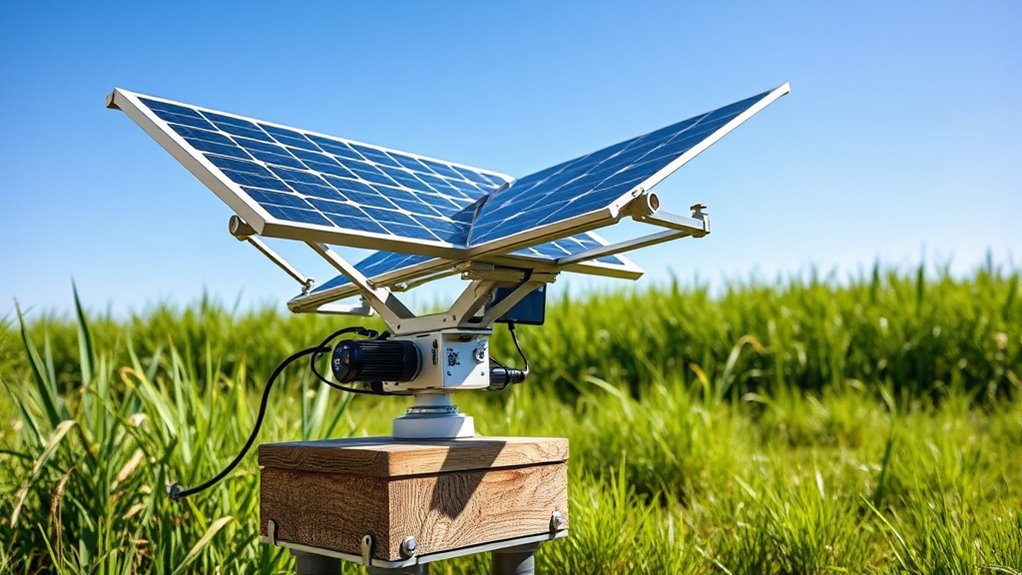

To build your own solar tracker, start by designing a sturdy frame using lightweight materials like aluminum or treated wood. Attach small motors or servos controlled by an Arduino or Raspberry Pi, and use light sensors or sun position algorithms to guide movement along one or two axes. Calibrate the system for accuracy, ensuring it follows the sun from sunrise to sunset. Keep exploring further to discover detailed steps and tips for creating an efficient, cost-effective solar tracker.

Get the latest gadgets delivered free — and shop member deals
- Fast, free delivery on millions of items
- Access to Prime Big Deal Days deals on October 6–7
- Prime Video, Amazon Music and more included
Key Takeaways
- Select lightweight, durable materials like aluminum or treated wood to build a stable frame for the tracker.
- Use small, energy-efficient motors or servos controlled by an Arduino or Raspberry Pi for smooth panel movement.
- Incorporate sun position algorithms or light sensors to accurately track the sun’s path throughout the day.
- Assemble and calibrate the system carefully to ensure precise alignment and optimal energy capture.
- Regularly maintain and fine-tune the tracker to adapt to seasonal changes and maximize efficiency.
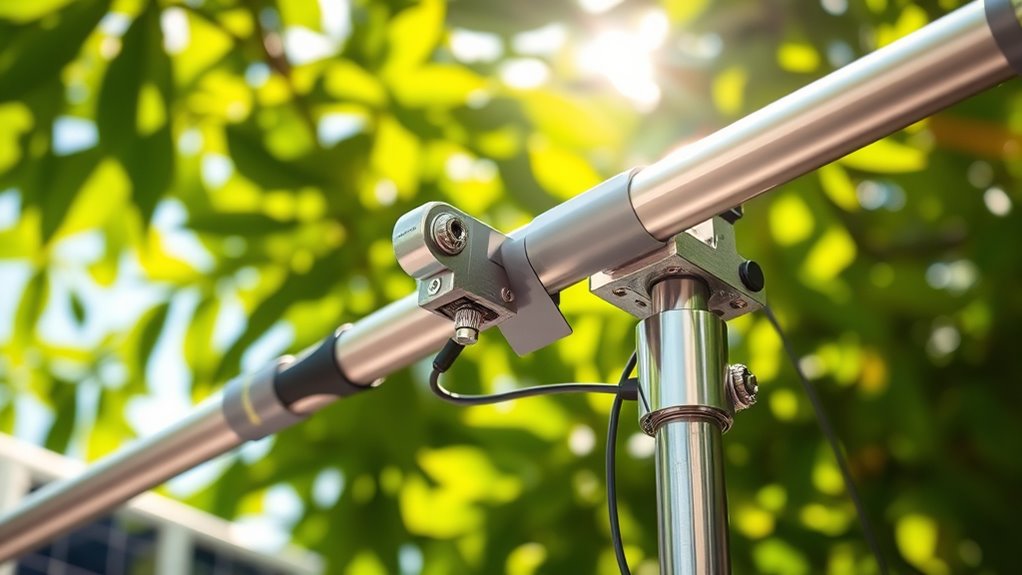
Have you ever wondered how to maximize your solar panel’s efficiency without breaking the bank? Building a DIY solar tracker is a smart way to do just that. By adjusting the angle of your panels throughout the day, you can increase solar panel efficiency considerably, ensuring you get the most energy possible. The key lies in understanding how solar trackers work and integrating them effectively with your current setup to boost renewable energy integration into your home or project.
A solar tracker follows the sun’s path, keeping your panels oriented ideally from sunrise to sunset. Without one, your panels only perform at their peak during certain times, but with a tracker, they can harvest sunlight more consistently. You don’t need to purchase expensive commercial trackers; a simple DIY design can do the trick. The basic idea involves creating a mechanism that moves your panels along one or two axes—either east-west or east-west and north-south—depending on your skill level and needs.
To get started, you’ll need some basic materials: a sturdy frame, small motors or servos, and a control system. For the frame, use lightweight but durable materials like aluminum or treated wood. The motors should be powerful enough to turn the panels smoothly but energy-efficient so they don’t consume more power than they generate. As for the control system, a simple Arduino or Raspberry Pi can be programmed to track the sun’s position. You can install light sensors that detect the sun’s location or use astronomical algorithms to calculate its position throughout the day. This ensures your tracker adjusts precisely, maximizing solar panel efficiency.
Additionally, understanding the contrast ratio of your setup can help you fine-tune the system for optimal performance under various lighting conditions. Once assembled, calibrate your tracker to ensure it follows the sun accurately. Regular adjustments might be necessary, especially if you’re in an area with variable weather or seasonal changes. Keep in mind, a well-designed DIY solar tracker not only increases energy output but also enhances your understanding of renewable energy integration. It’s an educational project that offers tangible benefits—more power and lower energy costs—while giving you the satisfaction of building something yourself.
As an affiliate, we earn on qualifying purchases.
Frequently Asked Questions
What Are the Optimal Materials for Building a Solar Tracker?
You should choose lightweight, durable materials like aluminum or PVC for your tracking mechanism, as they resist corrosion and are easy to work with. For the solar panel, use tempered glass and sturdy framing to withstand weather. Incorporate precise sensors and motor components like servos or stepper motors to guarantee smooth tracking. These materials optimize performance, longevity, and efficiency of your solar panel, making your DIY solar tracker effective and reliable.
How Much Does a DIY Solar Tracker Typically Cost?
A DIY solar tracker usually costs between $50 and $200, depending on materials and complexity. Did you know that a simple tracker can boost energy efficiency by up to 25%? When planning your budget, consider the cost estimate for motors, sensors, and framing. This helps you allocate funds wisely and guarantees your project stays affordable while maximizing panel performance. Budget planning is key to a successful DIY solar tracker.
Can a Solar Tracker Work Autonomously Without External Power?
Yes, a solar tracker can work autonomously without external power by using passive components like solar-powered sensors and wind or sun tracking mechanisms. This setup offers power independence, allowing your tracker to adjust smoothly without relying on the grid or batteries. You’ll benefit from increased efficiency while maintaining autonomous operation, making your DIY solar tracker eco-friendly and cost-effective. Just verify your system’s design supports these passive, self-sufficient features.
What Safety Precautions Are Necessary During Construction?
Think of safety as your guiding star, much like the North Star for explorers. During construction, prioritize electrical safety by wearing insulated gloves and avoiding water contact. Guarantee structural stability by securely fastening all parts and checking for weak points. Use proper tools and follow instructions carefully. Remember, taking these precautions protects you from hazards and guarantees your solar tracker’s longevity and safe operation.
How Do Weather Conditions Affect the Tracker’s Performance?
Weather conditions greatly affect your solar tracker’s performance. Weather stability is key; storms or heavy winds can cause mechanical issues or misalignment, reducing efficiency. Seasonal variations also matter, as shorter days or overcast skies limit sunlight exposure. To maximize output, guarantee your tracker is sturdy against weather fluctuations and consider seasonal adjustments. Regular maintenance and weatherproofing help maintain peak tracking and protect your system from weather-related damage.
As an affiliate, we earn on qualifying purchases.
Conclusion
Building your own solar tracker isn’t just a project—it’s like giving your panels a pair of eyes that follow the sun’s journey across the sky. With a little ingenuity and effort, you turn your system into a diligent sun-chaser, soaking up more rays and boosting your energy harvest. Think of it as planting a seed of innovation that grows into a powerful, eco-friendly force—lighting up your world while respecting the environment. Your solar journey begins now—shine on!
As an affiliate, we earn on qualifying purchases.
light sensors for solar tracking
As an affiliate, we earn on qualifying purchases.
As an affiliate, we earn on qualifying purchases.
Fall Picks
fall essentials
As an affiliate, we earn on qualifying purchases.