
To guarantee your spectrometer’s accuracy, regularly perform spectral calibration using standard light sources that emit at known wavelengths. Verify and adjust detector alignment to prevent data distortion, and compare measurements with certified spectral standards to identify any deviations. Consistent calibration maintains reliable, precise results over time, reducing measurement errors. Keeping up with proper calibration procedures helps avoid misinterpretations and ensures your instrument produces trustworthy data—continue exploring to learn how to implement these essential steps effectively.
Key Takeaways
- Regularly verify wavelength accuracy using calibration lamps with known emission lines to detect and correct deviations.
- Ensure proper detector alignment to prevent spectral distortion and maintain measurement precision across the spectral range.
- Utilize standardized light sources and calibration routines to maintain instrument accuracy and consistency over time.
- Perform periodic calibration checks to prevent measurement drift and uphold data reliability.
- Proper instrument maintenance and alignment practices are essential for stable, reproducible spectral measurements.
Have you ever wondered how scientists guarantee that spectrometers produce accurate measurements? The answer lies in meticulous spectral calibration, a process that ensures your instrument’s readings are both reliable and precise. Central to this process are two critical factors: wavelength precision and detector alignment. These elements work together to allow you to measure spectral data with confidence, whether you’re analyzing chemical compositions, studying astronomical phenomena, or conducting quality control in manufacturing.
Spectral calibration ensures accurate, reliable measurements through wavelength precision and detector alignment.
Wavelength precision is fundamental because it determines how accurately your spectrometer can identify specific wavelengths of light. If your instrument’s wavelength scale isn’t exact, the data you gather might be misinterpreted, leading to incorrect conclusions. To maintain wavelength precision, calibration involves comparing the instrument’s readings against known reference standards—such as spectral lines from calibration lamps that emit at precise wavelengths. By regularly verifying these standards, you can detect and correct any deviations, ensuring your spectrometer consistently aligns with true wavelength values. This process is especially important in applications where even tiny errors can considerably impact results.
Alongside wavelength precision, detector alignment plays a pivotal role in spectral calibration. The detector captures the light dispersed by your spectrometer, converting it into an electronic signal. If the detector isn’t properly aligned, the spectral data may be distorted or shifted, compromising measurement accuracy. Proper detector alignment involves carefully positioning the detector relative to the optical path, ensuring that the entire spectral range is accurately mapped onto its surface. This alignment minimizes artifacts such as spectral broadening or uneven signal distribution, which can obscure or distort real spectral features. Regular checks and adjustments are essential, particularly after instrument movement or maintenance, to keep the detector correctly aligned. Maintaining instrument stability is also crucial to sustain calibration accuracy over time.
Effective calibration procedures often include using standard light sources with well-characterized spectra to verify both wavelength precision and detector alignment. These procedures might involve software routines that automatically adjust the instrument settings, or manual adjustments based on observed discrepancies. By doing so, you ensure that your spectrometer’s measurements are trustworthy, reproducible, and aligned with internationally accepted standards.

Adjustable Fiber-Free Mercury Argon Lamp Calibration Light Source
Wavelength Range: 200–1100 nm
As an affiliate, we earn on qualifying purchases.
As an affiliate, we earn on qualifying purchases.
Frequently Asked Questions
How Often Should Spectral Calibration Be Performed?
You should perform spectral calibration regularly, ideally after any significant changes or if you notice spectral stability issues. For most instruments, monthly or quarterly calibration is sufficient, but high-precision applications may require weekly checks. Calibration frequency depends on your instrument’s stability, usage intensity, and environmental conditions. Regular calibration helps maintain accuracy, prevents drift, and guarantees reliable measurements over time.
What Are Common Causes of Calibration Drift?
Think of your instrument as a ship steering through fog; calibration drift happens when sensor degradation weakens its compass or optical misalignment shifts its course. These issues, caused by environmental factors like temperature changes, mechanical stress, or aging components, gradually throw off accuracy. Regular checks catch these deviations early, preventing misdirection. By understanding these common causes, you keep your instrument sailing true, ensuring consistent, reliable measurements over time.
Can Spectral Calibration Be Automated?
Yes, spectral calibration can be automated. You can leverage automation potential by integrating calibration algorithms that continuously monitor and adjust instrument settings. These algorithms analyze spectral data in real-time, identifying deviations and applying corrections automatically. This process reduces manual effort, increases accuracy, and guarantees consistent instrument performance. Automated spectral calibration is especially useful in high-throughput environments, where maintaining precise measurements is critical for reliable results.
How Do Environmental Factors Affect Calibration Accuracy?
Environmental influences act like mischievous gremlins, quietly disturbing your calibration stability. Temperature shifts, humidity, and vibrations can warp measurements, making your instrument less reliable. These factors interfere like ripples on a calm pond, disrupting accuracy. To keep calibration stable, you must vigilantly control environmental conditions, ensuring your device remains a steady lighthouse amid turbulent seas, providing precise readings vital for trustworthy results.
What Are the Costs Associated With Calibration Procedures?
Calibration costs vary based on the instrument type, calibration frequency, and complexity of procedures, and you should contemplate these expense considerations carefully. You might face expenses for professional calibration services, specialized equipment, and ongoing maintenance. While initial costs can be significant, investing in regular calibration ensures your instrument’s accuracy and longevity, ultimately saving you money by preventing costly errors and ensuring reliable measurements over time.

mocsenber Upgraded Wheel Alignment Tool with 2 Measuring Tapes, Car Alignment Tool Kit, Automotive Toe Alignment Tool for Home Use, Compatible with More Vehicle Models, Black, Toe Plates
No Need to Remove the Caliper: Our upgraded design lets you align wheels effortlessly without the hassle of…
As an affiliate, we earn on qualifying purchases.
As an affiliate, we earn on qualifying purchases.
Conclusion
By understanding spectral calibration, you ensure your instruments deliver accurate readings every time. Did you know that even a tiny calibration error can cause up to a 10% deviation in measurements? This highlights how essential proper calibration is for reliable data. When you regularly calibrate your instruments, you not only boost precision but also save time and resources in the long run. So, keep calibration a priority—your results depend on it.

Continuum Reagents Refractometer Calibration Standard – Seawater Reference for Calibration of Density Measuring Equipment, 60 ml
Designed to provide an accurate reference for the calibration of seawater refractometers, hydrometers and other density measuring equipment
As an affiliate, we earn on qualifying purchases.
As an affiliate, we earn on qualifying purchases.
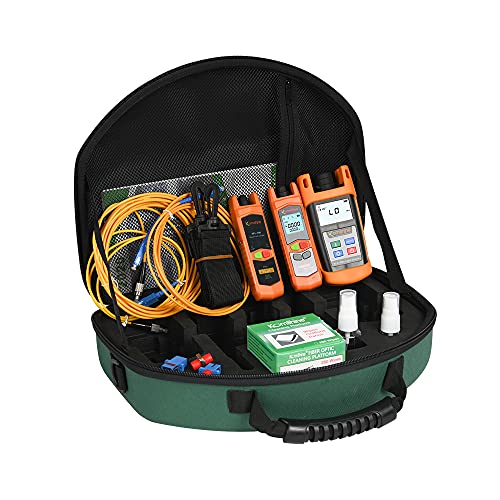
Optical Fiber FTTH Loss Tester Kit Komshine KLT-12E Fiber Toolkit with Optic Power Meter KPM-11 OPM+Optical Light Source SM 1310/1550nm OLS+Visual Fault Locator VFL +Jump Cable 1m
Optical Fiber FTTH Loss Tester Kit Komshine KLT-12E Fiber Toolkit With Optic Power Meter KPM-11 OPM+Optical Light Source…
As an affiliate, we earn on qualifying purchases.
As an affiliate, we earn on qualifying purchases.