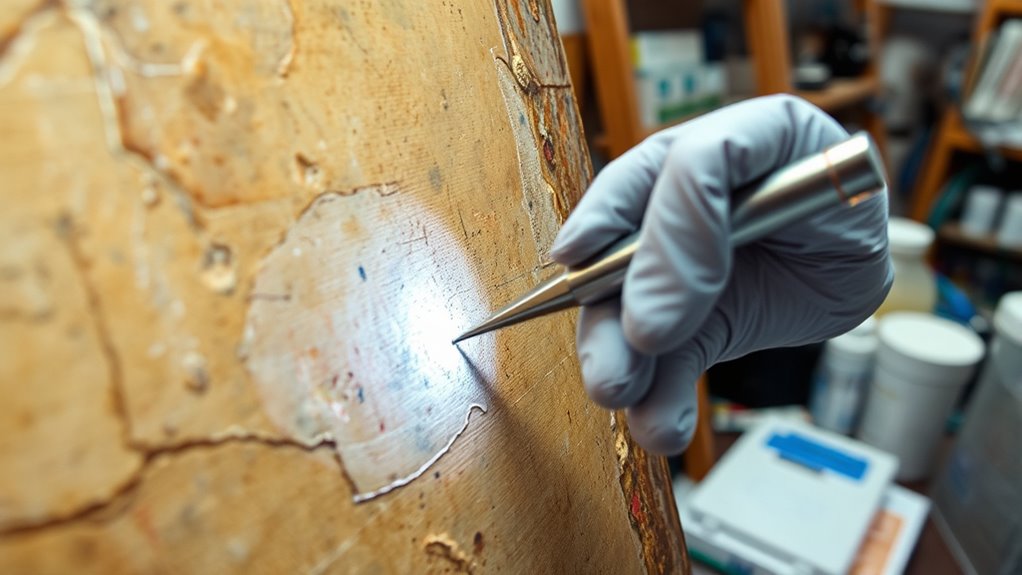

Spectrometry plays a key role in art conservation by allowing you to analyze materials without causing damage. It helps you identify pigments, determine the artwork’s origin, and authenticate its age. Techniques like Raman spectroscopy and X-ray fluorescence give you detailed insights on-site, making preservation safer and more accurate. As you explore further, you’ll discover how these advanced tools revolutionize the way experts protect and restore precious art pieces for future generations.

Get the latest gadgets delivered free — and shop member deals
- Fast, free delivery on millions of items
- Access to Prime Big Deal Days deals on October 6–7
- Prime Video, Amazon Music and more included
Key Takeaways
- Spectrometry enables non-invasive analysis of artworks, identifying materials and pigments without physical sampling.
- Techniques like Raman and X-ray fluorescence help determine the origin, age, and authenticity of art pieces.
- It distinguishes between natural and synthetic pigments, aiding in understanding historical and cultural contexts.
- Portable spectrometers allow in situ examination, supporting conservation and monitoring of delicate artworks.
- Advancements in spectrometry improve decision-making in restoration, ensuring preservation of masterpieces for future generations.
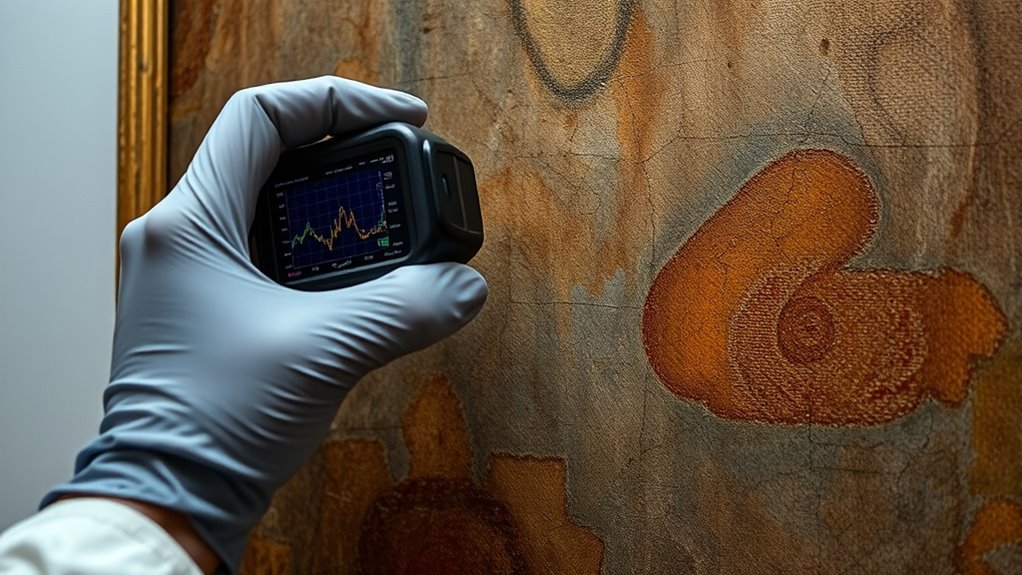
Spectrometry has become a critical tool in art conservation, enabling experts to analyze materials with remarkable precision. When it comes to understanding the history and authenticity of artworks, historical pigment identification plays a essential role. Using spectrometry, conservators can determine the specific pigments used by artists centuries ago, revealing clues about the artwork’s origin, age, and original appearance. This process is particularly valuable because it allows for detailed analysis without damaging the piece, preserving its integrity while uncovering its secrets.
One of the most significant advantages of spectrometry in art conservation is its capacity for non-invasive analysis techniques. Traditional methods often required taking tiny samples from artworks, which could be risky or damaging, especially for fragile or priceless pieces. Spectrometry sidesteps this issue by providing a way to examine materials through the surface without physically touching or removing parts of the artwork. Techniques like Raman spectroscopy and X-ray fluorescence (XRF) enable you to identify pigments and materials with high accuracy, all while keeping the artwork intact.
When you utilize spectrometry for historical pigment identification, you benefit from its ability to differentiate between similar materials that might look alike to the naked eye. For example, ancient artists often used different types of red ochre, but spectrometry can distinguish between natural and synthetic varieties, helping you establish a more precise timeline. This detailed information can be essential for authentication, restoration, and understanding the cultural context of a piece.
Furthermore, these non-invasive analysis techniques are especially useful in conservation projects involving delicate or deteriorating artworks. You can analyze the composition of a pigment or material in situ, even in cases where traditional sampling would be impractical or impossible. This approach minimizes risk, reduces costs, and speeds up the overall conservation process. It also allows you to monitor changes over time, tracking how materials age or respond to previous restoration efforts, ensuring that future interventions are well-informed.
In essence, spectrometry empowers you as a conservator to make data-driven decisions. Its ability to perform non-invasive analysis techniques—like portable XRF or Raman spectroscopy—means you can gather detailed material information without endangering the artwork. This combination of precision, safety, and depth of insight makes spectrometry an indispensable tool in modern art conservation, helping you preserve and understand masterpieces for generations to come. Additionally, advancements in spectrometry are continuously expanding its material analysis capabilities, making it an even more vital resource in the field.
As an affiliate, we earn on qualifying purchases.
Frequently Asked Questions
What Are the Latest Advancements in Spectrometry Techniques for Art Conservation?
You’ll find that recent spectrometry innovations offer faster, more precise analysis for art conservation. Analytical breakthroughs like portable devices and enhanced resolution allow you to identify pigments and materials non-invasively. These advancements help you make informed decisions quickly, preserving artworks more effectively. By integrating these cutting-edge techniques, you can detect subtle changes and damage early, ensuring better conservation outcomes and extending the lifespan of valuable pieces.
How Cost-Effective Is Spectrometry Compared to Traditional Art Analysis Methods?
You’ll find spectrometry to be quite the gentle giant in your toolkit, offering a subtle yet powerful way to analyze art. When you do a cost comparison, it often proves more budget-friendly over time, saving money on destructive testing. While the initial investment might seem steep, the efficiency and precision it provides make it a smart choice for your budget analysis, ultimately enhancing your conservation efforts without draining resources.
Can Spectrometry Detect Forgeries or Counterfeit Artworks?
Yes, spectrometry can detect forgeries or counterfeit artworks by analyzing materials precisely. You can identify inconsistencies in pigments, binders, or layering that don’t match authentic pieces. This technology enhances forgery detection and material analysis, allowing you to verify an artwork’s provenance and authenticity quickly. Its ability to detect subtle differences makes spectrometry a powerful tool for preventing art fraud and ensuring works are genuine.
What Are the Safety Considerations When Using Spectrometry Equipment in Museums?
When using spectrometry equipment in museums, you should prioritize hazard prevention by wearing proper protective gear and ensuring good ventilation. Handle the equipment carefully to prevent damage and exposure to potentially harmful substances. Follow manufacturer instructions for equipment handling and calibration, and keep the workspace organized to avoid accidents. Regularly inspect your tools for safety issues, and train staff properly to maintain a safe environment during spectrometry analysis.
How Accessible Is Spectrometry Technology for Small or Independent Art Conservators?
Remember, “Where there’s a will, there’s a way.” Spectrometry technology is becoming more accessible for small or independent conservators through portable devices that are easier to operate. While initial costs and the need for user training can be barriers, many companies now offer affordable options and tutorials. With some effort, you can incorporate spectrometry into your conservation toolkit, making advanced analysis more attainable outside big institutions.
As an affiliate, we earn on qualifying purchases.
Conclusion
Imagine spectrometry as a gentle brushstroke, revealing hidden colors and secrets beneath the surface. It’s your silent detective, guiding your hand through the layers of history with precision and care. Like a lighthouse illuminating the darkness, it sheds light on the unseen, helping you preserve masterpieces for generations to come. Embrace this tool, and let it be your compass, steering the delicate dance between science and art, ensuring every detail remains vibrant and alive.
As an affiliate, we earn on qualifying purchases.
As an affiliate, we earn on qualifying purchases.
Fall Picks
fall essentials
As an affiliate, we earn on qualifying purchases.