Organic photonics enable you to improve sustainable greenhouses by providing dynamic light control tailored to plant needs. Using biodegradable, flexible materials, you can optimize light intensity, spectrum, and direction, boosting crop growth while reducing energy use. These systems minimize environmental impact and enhance durability against greenhouse conditions. As a result, you can create more eco-friendly, efficient farming environments. If you want to explore how these innovations can transform your greenhouse practices, there’s more to discover below.
Key Takeaways
- Organic photonics enable adaptive light management, optimizing photosynthesis and crop yields sustainably.
- They utilize biodegradable, renewable materials, reducing environmental impact in greenhouse systems.
- Organic light modulators offer flexible, tunable solutions for dynamic greenhouse lighting environments.
- Integration of organic photonics improves energy efficiency and durability of greenhouse lighting components.
- Ongoing research enhances organic photonics’ performance, supporting eco-friendly, resource-efficient farming practices.
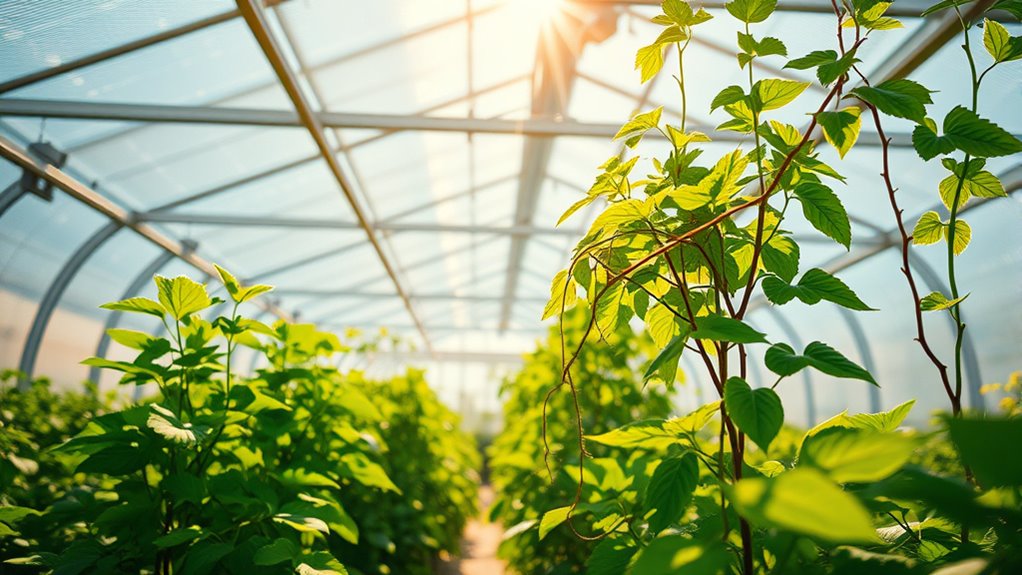
Have you ever wondered how organic materials are transforming the world of photonics? It’s a fascinating shift, especially when it comes to developing smarter, more sustainable greenhouses. Organic photonics harness the unique properties of organic compounds to manipulate light in ways that traditional materials can’t match. This opens up new possibilities for light modulation—controlling the intensity, wavelength, and direction of light that plants receive. By adjusting the light environment inside a greenhouse, you can optimize photosynthesis, improve crop yields, and reduce energy consumption. Organic materials excel at this because they are inherently flexible and tunable, allowing you to create dynamic systems that adapt to plant needs throughout different growth stages.
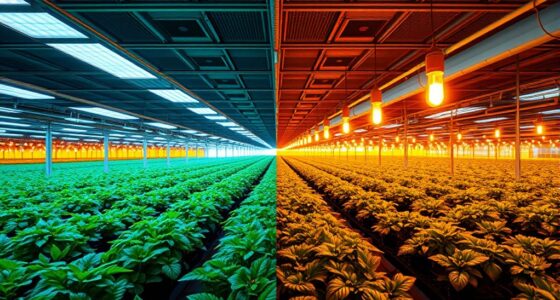
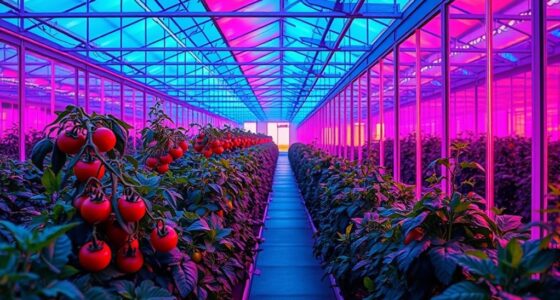
Organic photonics enable dynamic light control, boosting crop growth and sustainability in greenhouses.
Beyond performance, material sustainability plays an essential role in these innovations. Organic photonics rely on biodegradable, renewable resources, making them a more environmentally friendly choice compared to conventional inorganic counterparts. When you choose organic options, you’re reducing reliance on rare or toxic materials, which aligns with broader efforts to create eco-friendly agricultural practices. These materials are often derived from plant-based sources or other natural compounds, which can be replenished easily and processed with less energy. As a result, integrating organic photonics into greenhouses doesn’t just enhance plant growth; it also minimizes ecological footprints, supporting sustainable farming initiatives.
The ability to modulate light effectively with organic materials directly influences plant development. For instance, by using organic light modulators, you can tailor light spectra to match the specific needs of different crops, boosting growth rates and nutrient content. Because these materials are lightweight and flexible, they can be incorporated into various greenhouse components—like transparent films or internal lighting systems—without adding significant weight or complexity. Their compatibility with existing agricultural infrastructure means you can retrofit or upgrade your greenhouse with minimal disruption, making the transition to organic photonics both practical and cost-effective.
Furthermore, the durability of organic materials is continually improving, ensuring they withstand the environmental conditions typical of greenhouses. This resilience means you won’t have to replace these components often, which enhances overall sustainability. As research advances, organic photonics are becoming more efficient at light modulation, offering precise control over the microenvironment inside your greenhouse. This precision not only maximizes plant health but also reduces waste and energy use, aligning with the goals of sustainable agriculture. Additionally, ongoing research into AI vulnerabilities and safety measures highlights the importance of developing reliable and secure technologies, which can inform the design of robust organic photonic systems. When you leverage these technologies, you’re not just growing plants—you’re fostering an ecosystem that values innovation, eco-consciousness, and resource efficiency.
organic light modulators for greenhouses
As an affiliate, we earn on qualifying purchases.
As an affiliate, we earn on qualifying purchases.
Frequently Asked Questions
How Does Organic Photonics Reduce Energy Costs in Greenhouses?
Organic photonics reduces your energy costs in greenhouses by improving lighting efficiency, making sure plants get the right amount of light with less energy. This technology optimizes light distribution, so you use less electricity while maintaining healthy growth. As a result, you experience significant cost savings on your energy bills. Plus, it’s environmentally friendly, helping you create a more sustainable greenhouse operation with lower overall expenses.
What Are the Environmental Impacts of Organic Photonics Materials?
Organic photonics materials generally have positive environmental impacts because they’re biodegradable and sourced sustainably. You might worry about biodegradability concerns, but these materials break down naturally, reducing waste and pollution. Sourcing sustainability guarantees minimal harm to ecosystems and promotes eco-friendly practices. By choosing organic photonics, you help lower your greenhouse’s carbon footprint, supporting a healthier environment while maintaining effective light management for your crops.
Can Organic Photonics Be Integrated With Existing Greenhouse Technologies?
Yes, you can integrate organic photonics with existing greenhouse technologies. Photonics integration enhances greenhouse compatibility by improving light management and energy efficiency. You might incorporate organic photonic materials into your lighting systems or sensors, which can optimize plant growth. This seamless compatibility helps you upgrade your greenhouse without overhauling the entire setup, leading to sustainable, cost-effective improvements that support healthier crops and reduced environmental impact.
What Are the Longevity and Durability of Organic Photonics Devices?
Sure, your organic photonics devices are practically immortal—well, almost. With proper care, their device lifespan can stretch several years, thanks to impressive material resilience. Unlike your favorite houseplant, these devices don’t wilt easily under sunlight or humidity. So, rest assured, they’ll keep working reliably, making your greenhouse smarter and greener without frequent replacements. Just avoid overwatering the tech, and it’ll stay resilient for ages.
How Do Organic Photonics Influence Plant Growth and Yield?
Organic photonics influence your plant growth and yield by optimizing the light spectrum, which enhances photosynthesis efficiency. When you use organic photonics, they direct specific wavelengths of light that plants need most, leading to faster growth and higher productivity. This technology guarantees your greenhouse plants receive the right light at the right time, boosting overall health and maximizing your crop yields efficiently and sustainably.

JESLED Indoor Greenhouse with Grow Light – Full Spectrum 5000K LED for Seed Starting, Tiered Lighting Control, Built-in Timer & Thermo-Hygrometer, Rolling Metal Plant Stand (23.6×13.8×59 in)
【Adjustable Height】 The JESLED indoor greenhouse features 4 adjustable-height layers, with overall dimensions of 23.6" L x 13.8"…
As an affiliate, we earn on qualifying purchases.
As an affiliate, we earn on qualifying purchases.
Conclusion
By embracing organic photonics, you’re planting the seeds for a greener future. These innovative materials can help optimize light, reduce energy use, and foster sustainability in greenhouses. Think of it as turning over a new leaf—embracing change that promises to bloom into a healthier planet. With your support, these technologies can truly shine, illuminating the path toward eco-friendly farming. Remember, every small step can make a world of difference in nurturing our environment.

Flexible Greenhouse Film Cover Designed to Improve Light Penetration and Humidity Control for Crops (3m*10m)
【 and Weather-Resistant】Constructed with superior strength and toughness, our greenhouse clear plastic film is designed to withstand various…
As an affiliate, we earn on qualifying purchases.
As an affiliate, we earn on qualifying purchases.

4Pack 2026 Ultra-Thin Panel Grow Lights for Seed Starting, Vegetables, Greenhouse & Under Cabinet & Shelf Plants with Timer 4/8/12/16/20H, Free Connect Full Spectrum Indoor LED Plant Growing Lamps
Chain 'em, stack 'em, no bad connections — our snap-fit panel grow lights make wiring foolproof.
As an affiliate, we earn on qualifying purchases.
As an affiliate, we earn on qualifying purchases.