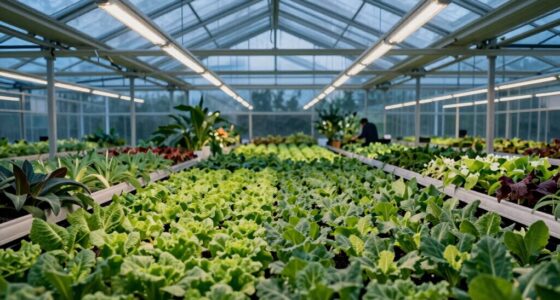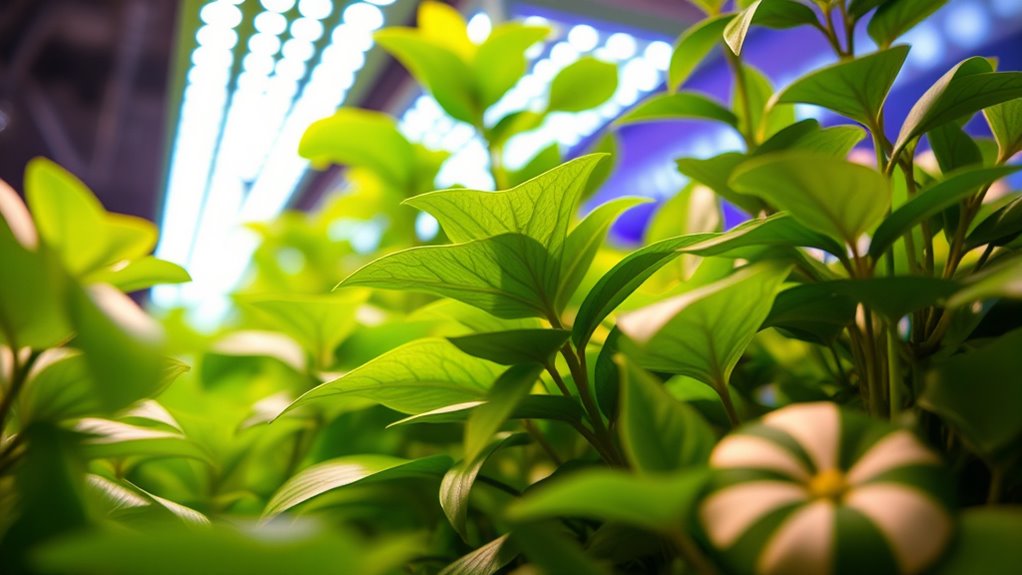

Smart LED systems with feedback dynamically adjust light spectra based on real-time sensor data to meet your plants’ needs. They monitor environmental factors like temperature, humidity, and leaf color, then fine-tune the lighting to promote healthy growth, better flowering, and efficient resource use. These systems mimic natural sunlight more accurately and respond to stress signals, helping your plants thrive. If you keep exploring, you’ll discover how these innovative systems can transform your plant care experience.
Key Takeaways
- Smart LED systems dynamically adjust light spectrum based on real-time sensor feedback to optimize plant growth.
- Feedback mechanisms detect environmental stress, enabling the system to modify lighting for plant health.
- These systems mimic natural sunlight more accurately, supporting different growth stages with tailored light conditions.
- They reduce energy consumption by targeting specific wavelengths and adjusting output according to plant needs.
- Feedback-driven control enhances plant vigor, resource efficiency, and overall environmental adaptability.
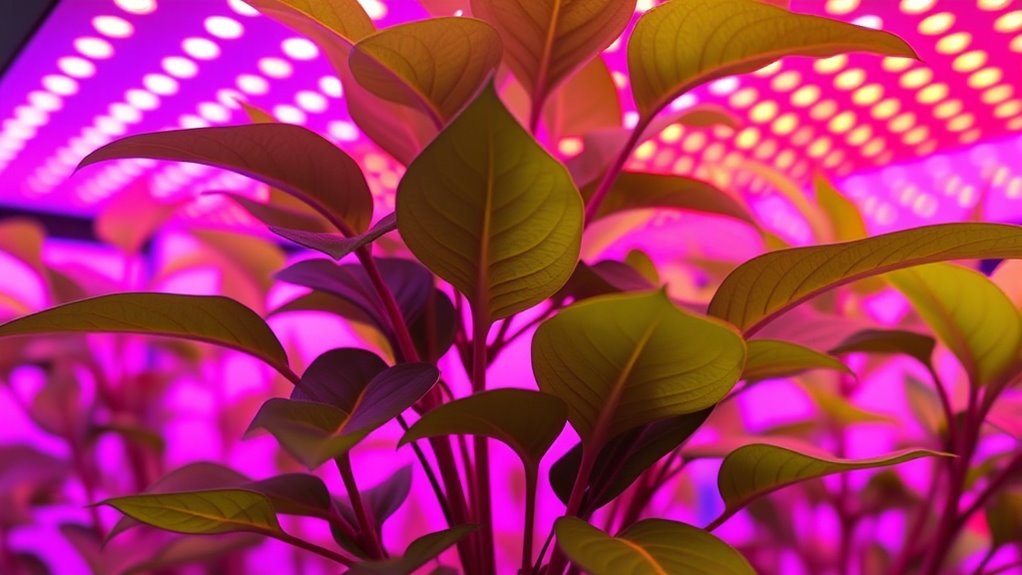
Smart LED systems are transforming how you grow plants by providing tailored lighting solutions that optimize growth and health. These advanced systems aren’t just about turning lights on and off; they actively monitor your plants’ needs and adjust accordingly. By integrating sensors and feedback mechanisms, smart LEDs can fine-tune the light spectrum to match the specific requirements of different plants at various growth stages. This means you’re delivering precise light conditions, which directly influence critical factors like plant nutrient uptake and overall vitality.
When you use a smart LED setup, you’re leveraging the significance of the light spectrum in plant development. Different wavelengths of light trigger specific responses in plants, from germination to flowering. For instance, blue light encourages vegetative growth, while red light promotes flowering and fruiting. With real-time data from sensors measuring parameters like leaf color, temperature, and humidity, the system can dynamically adjust the light spectrum. This ensures your plants receive ideal wavelengths for their current growth phase, leading to healthier, more vigorous plants.
The benefit of this feedback-driven approach is that it mimics natural sunlight conditions more accurately than static lighting. Instead of providing a one-size-fits-all solution, your smart LED system can adapt to changes in environmental conditions or plant needs. If the sensors detect stress signs or suboptimal growth patterns, the system can modify the light spectrum to compensate, ensuring your plants get the right signals to thrive. This adaptability can also enhance plant nutrient absorption, as proper lighting influences how effectively plants utilize nutrients from the soil or hydroponic solutions.
Furthermore, by refining the light spectrum, you’re not only improving plant health but also increasing efficiency. You use less energy because the system targets specific wavelengths rather than wasting light on unnecessary parts of the spectrum. This precision reduces overall power consumption and can lower your energy bills while maintaining ideal plant growth conditions. Over time, the feedback mechanism helps you identify patterns, enabling better planning and adjustments for future crops or different plant varieties.
In addition, understanding the importance of specialized lighting can help optimize plant growth conditions more effectively. In essence, smart LED systems with feedback give you a powerful tool to create a controlled environment that responds to your plants’ needs. They improve plant health, enhance nutrient utilization, and increase energy efficiency—all by intelligently managing the light spectrum based on real-time data. With these systems, you gain a level of control and precision that traditional lighting methods can’t match, helping you achieve healthier, more productive plants with less effort.

GLOWRIUM Smart Full Spectrum LED Grow Light for Indoor Plants (Black 4PCS)
- Full Spectrum Light: Mimics natural sunlight for growth
- Stepless Dimming: Adjust brightness from 1–100% easily
- Smart APP Control: Manage settings via mobile app
As an affiliate, we earn on qualifying purchases.
As an affiliate, we earn on qualifying purchases.
Frequently Asked Questions
How Do Smart LED Systems Impact Plant Growth Speed?
Smart LED systems boost your plant growth speed by optimizing the light spectrum, providing plants with the exact wavelengths they need for photosynthesis. This targeted lighting encourages growth acceleration, making plants develop faster and healthier. You can adjust the spectrum based on plant type and growth stage, ensuring they receive the right light at the right time. As a result, your plants thrive more efficiently, saving time and effort in cultivation.
Can Smart LEDS Be Customized for Different Plant Species?
Yes, you can customize smart LEDs for different plant species, turning your garden into a symphony of tailored lighting. With species specificity and lighting customization, you become the maestro, orchestrating perfect conditions for each plant’s unique needs. Adjust the spectrum, intensity, and timing to nurture delicate herbs or vigorous veggies. This personalized approach helps your plants thrive, transforming your space into a lush, vibrant oasis that responds beautifully to your care.
What Is the Energy Consumption of These Smart LED Systems?
You’ll find that these smart LED systems are designed for energy efficiency, substantially reducing power consumption compared to traditional grow lights. They typically use adaptive lighting strategies, adjusting brightness and spectrum based on plant needs, which helps conserve energy. On average, their power consumption ranges from 10 to 50 watts, depending on size and features. This efficient design not only supports healthy plant growth but also minimizes electricity costs.
How Do Feedback Mechanisms Improve Plant Health?
You can improve plant health by using feedback mechanisms that detect plant disease and nutrient deficiencies early. These systems monitor the plants’ responses and adjust the LED light spectrum or intensity accordingly, promoting ideal growth. By actively managing conditions, you prevent issues before they worsen, ensuring healthier plants. This real-time feedback helps optimize nutrient uptake and disease prevention, leading to stronger, more resilient plants with better yields.
Are Smart LED Systems Suitable for Outdoor Gardening?
Think of your garden as a delicate symphony, and smart LED systems as the conductor that guides it. These systems are suitable for outdoor gardening because they mimic sunlight through advanced sunlight simulation, ensuring your plants thrive even on cloudy days. Plus, their weather resistance shields them from rain and wind, letting you nurture your garden year-round. With this technology, you turn nature’s chaos into harmony.

APICDOM LED Grow Light Full Spectrum Light Linkable 5000K Daylight + 660nm Red Indoor Plant Lighting Fixture (2 FT)
- Full Spectrum Light: Imitates sunlight for optimal growth
- Linkable Design: Daisy chain up to 4 units
- Easy Installation: Versatile hanging or mounting options
As an affiliate, we earn on qualifying purchases.
As an affiliate, we earn on qualifying purchases.
Conclusion
Think of your plant’s growth as a delicate dance, where each step depends on the right light and timely feedback. With smart LED systems, you become the choreographer, guiding your green partner through a harmonious performance. These systems act like a wise conductor, adjusting the rhythm to guarantee vibrant, healthy growth. Embrace this technology, and watch your plants flourish like a symphony, perfectly tuned and full of life, all under your attentive, digital baton.
energy-efficient LED grow lights
As an affiliate, we earn on qualifying purchases.
As an affiliate, we earn on qualifying purchases.
As an affiliate, we earn on qualifying purchases.