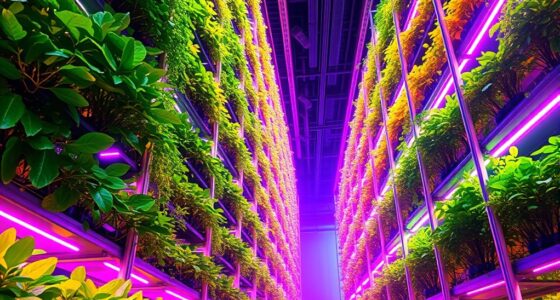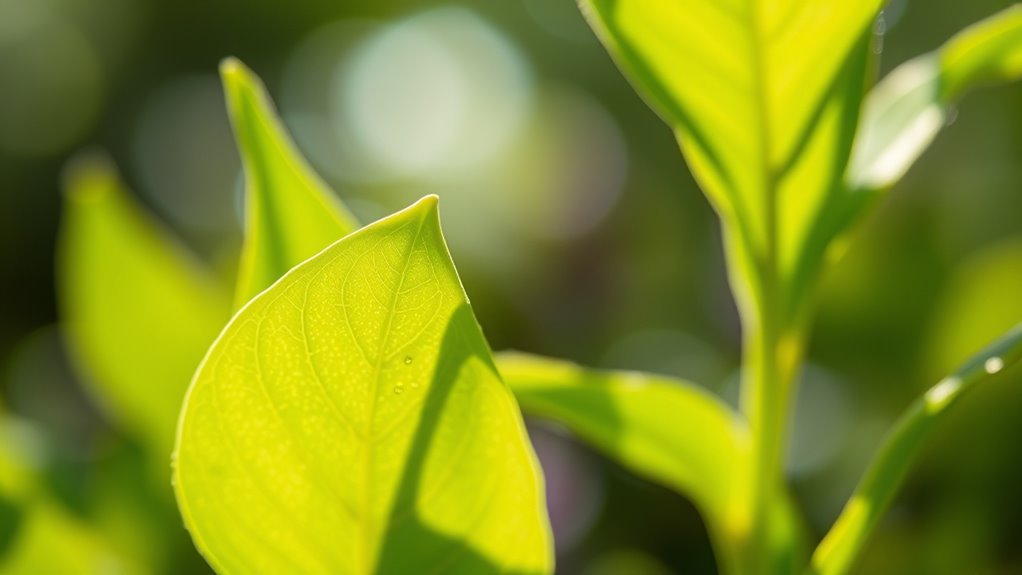

Plant photoreceptors like phytochromes and cryptochromes help you understand how plants sense and respond to light. Phytochromes detect red and far-red light, guiding growth and shade avoidance, while cryptochromes respond to blue and ultraviolet light, regulating processes like flowering and circadian rhythms. These sensors work together to enable plants to adapt efficiently to their environment. If you keep exploring, you’ll discover how they coordinate detailed plant responses to light cues.
Key Takeaways
- Phytochromes detect red and far-red light, regulating seed germination, flowering, and shade avoidance.
- Cryptochromes respond mainly to blue and ultraviolet light, influencing circadian rhythms and developmental processes.
- Both photoreceptors modulate gene expression and coordinate plant responses to environmental light changes.
- Phytochromes switch between inactive and active forms to signal growth adjustments based on light quality.
- Cryptochromes help synchronize internal biological clocks with day-night cycles for optimal plant function.
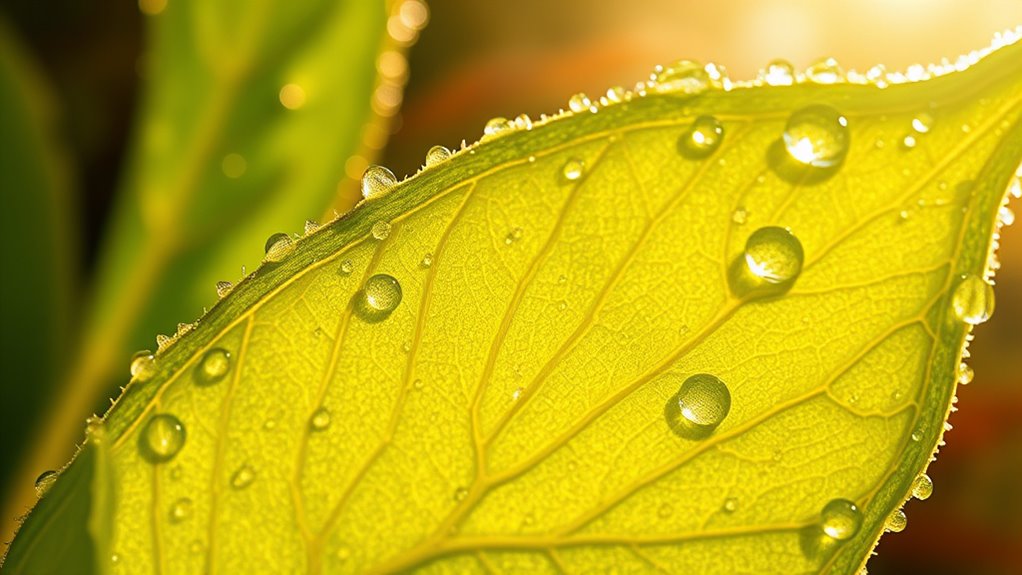
Plants rely on specialized molecules called photoreceptors to detect and respond to light in their environment. These photoreceptors play a pivotal role in light signaling, allowing plants to interpret various wavelengths of light and initiate appropriate responses. Among the most important are phytochromes and cryptochromes, which work together to regulate growth, development, and daily biological rhythms. When light hits these molecules, it triggers a cascade of signals that influence processes like seed germination, flowering, and leaf movement. This sophisticated system guarantees plants adapt to their surroundings efficiently.
Plants use photoreceptors like phytochromes and cryptochromes to detect light and regulate growth and development.
Phytochromes are sensitive mainly to red and far-red light. When they absorb red light, they switch from an inactive to an active form, setting off a chain of events within the plant cell. This activation affects how the plant perceives its environment, especially in terms of shading and competition with other plants. For example, if a plant detects more far-red light, it interprets this as being shaded by neighboring plants. Consequently, it might stretch taller or alter its growth pattern to reach more light, maximizing photosynthesis. This light signaling mechanism is essential for plants to balance growth and conserve resources.
Cryptochromes, on the other hand, primarily respond to blue and ultraviolet light. They are crucial for regulating circadian rhythms—the internal biological clock that aligns plant activities with day-night cycles. As daylight changes, cryptochromes adjust gene expression accordingly, ensuring flowering, photosynthesis, and nutrient uptake happen at the most suitable times. This circadian regulation helps plants anticipate environmental changes, even before they occur, so they can prepare for dawn or dusk. For instance, cryptochromes influence the opening and closing of stomata, which control water loss and gas exchange, aligning these processes with daylight hours.
Both phytochromes and cryptochromes exemplify how light signaling integrates with circadian regulation to maximize plant function. They enable plants to detect subtle changes in their environment and respond with precision, guaranteeing survival and reproductive success. As you observe a plant, remember that these molecules are constantly working behind the scenes, translating light cues into actions that sustain plant life. Through these photoreceptors, plants not only perceive their surroundings but also synchronize their internal clocks with external light conditions, making their growth and development finely tuned to the environment. This intricate system highlights the remarkable ways plants interpret and adapt to their world through specialized light receptors.

Grow Light Bulbs, Briignite LED Grow Light Bulb A19 Bulb, Full Spectrum Grow Light Bulb, Plant Light Bulbs E26 Base, 11W Grow Bulb 100W Equivalent, Grow Light for Indoor Plants, Seed Starting, 2Pack
Full Spectrum & Natural Light: A19 full spectrum grow light appears 4000K white to the eye but has…
As an affiliate, we earn on qualifying purchases.
As an affiliate, we earn on qualifying purchases.
Frequently Asked Questions
How Do Phytochromes Influence Flowering Time?
Phytochromes influence flowering time by detecting light signaling cues, especially red and far-red light, which trigger changes in gene regulation. When exposed to specific light conditions, they activate or repress genes responsible for flowering, helping you plants know when to bloom. This process guarantees flowering occurs at ideal times, coordinating growth with environmental cues, and ultimately affecting the plant’s reproductive success.
Can Cryptochromes Affect Plant Growth Under Artificial Lighting?
You might not realize it, but cryptochromes can considerably influence plant growth under artificial lighting. Their signaling responds to blue light, which is common in artificial sources, affecting growth patterns, flowering, and even stress responses. As you control artificial light environments, understanding cryptochrome signaling helps optimize conditions, ensuring your plants thrive. Ignoring this could mean missing out on healthier, more vigorous growth, making cryptochromes a crucial piece of the puzzle.
Are Plant Photoreceptors Present in All Plant Species?
You’ll find plant photoreceptors in most species, but their presence varies due to species variation and evolutionary conservation. While many plants have phytochromes and cryptochromes, some species may lack certain types or have unique adaptations. This variation helps plants respond to their specific light environments, and evolutionary conservation guarantees these photoreceptors remain vital for plant development across diverse species.
How Do Photoreceptors Interact With Plant Hormones?
You see, photoreceptors play a vital role in hormone signaling by detecting light changes and regulating plant growth responses. When exposed to light, they activate or suppress certain hormones like auxins and gibberellins, guiding processes such as seed germination and flowering. This photoreceptor regulation guarantees plants adapt effectively to their environment, aligning their hormonal balance with light conditions for ideal development and survival.
What Role Do Photoreceptors Play in Plant Stress Responses?
You rely on photoreceptors to detect environmental changes, helping your plant respond to stress. They trigger stress mitigation mechanisms by activating specific genes that enhance tolerance to factors like drought, light, or temperature fluctuations. By sensing light quality and intensity, photoreceptors enable your plant to adapt efficiently, ensuring survival and growth despite environmental challenges. This process is essential for your plant’s overall health and resilience.
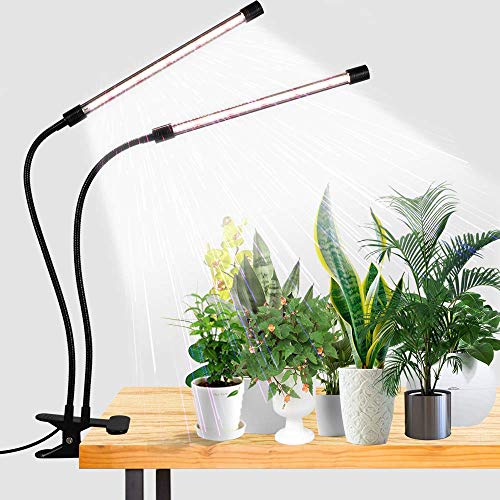
GooingTop LED Grow Light,6000K Full Spectrum Clip Plant Growing Lamp with White Red LEDs for Indoor Plants,5-Level Dimmable,Auto On Off Timing 4 8 12Hrs
6000K White Light – equipped with 10 Red + 74 White LEDs, this growing Lamp is similar to…
As an affiliate, we earn on qualifying purchases.
As an affiliate, we earn on qualifying purchases.
Conclusion
In the gentle dance of nature, plant photoreceptors like phytochromes and cryptochromes quietly guide growth and development. While they might seem subtle, their influence is truly profound, shaping how plants respond to light’s tender touch. By understanding these delicate systems, you gain a deeper appreciation for the unseen symphony happening within every leaf and stem. Embrace this knowledge, and you’ll see the world of plants in a new, more enchanting light.
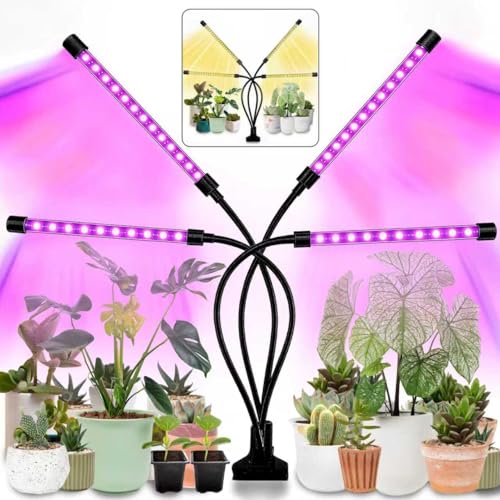
LEOTER Grow Light for Indoor Plants – Upgraded Version 80 LED Lamps with Full Spectrum & Red Blue Spectrum, 3/9/12H Timer, 10 Dimmable Level, Adjustable Gooseneck,3 Switch Modes
grow lights
As an affiliate, we earn on qualifying purchases.
As an affiliate, we earn on qualifying purchases.

Jet Lag Remedy – Business & Vacation Homeopathic Travel Aid – Trusted for Over 18 Years – Immune – Circadian Rhythm – Fatigue – Exhaustion – Tired – Insomnia – Covers 48hrs Flying Time – 30 Chewables
ONE OF THE ORIGINAL JET LAG REMEDIES – JetZone is one of the first homeopathic (all natural) jet…
As an affiliate, we earn on qualifying purchases.
As an affiliate, we earn on qualifying purchases.