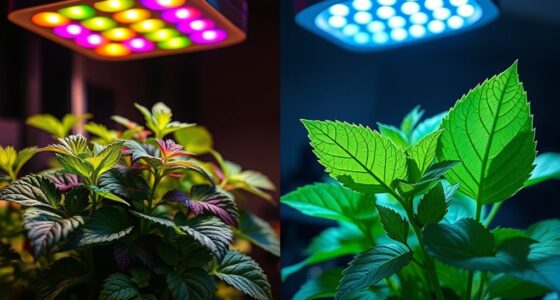
To reduce bitter notes in basil, you can use spectral balancing by adjusting light conditions and environmental factors that influence flavor compounds. Focus on optimizing the spectral signature reflected from the leaves, which can help enhance aromatic oils and suppress phenolics responsible for bitterness. Controlling factors like light exposure, humidity, and harvest timing can improve flavor harmony and aromatic qualities. Keep exploring these techniques to learn how spectral cues can help you grow better-tasting basil.
Key Takeaways
- Adjust light exposure and spectral properties during growth to suppress phenolic compounds responsible for bitterness.
- Use spectral analysis to identify wavelengths linked to bitter flavors and modify environmental conditions accordingly.
- Employ sensory evaluation alongside spectral data to detect and minimize bitter notes in basil.
- Control post-harvest treatments and humidity to influence spectral signatures that correlate with flavor quality.
- Develop skills to recognize spectral cues indicating optimal flavor balance and reduce undesirable bitterness.
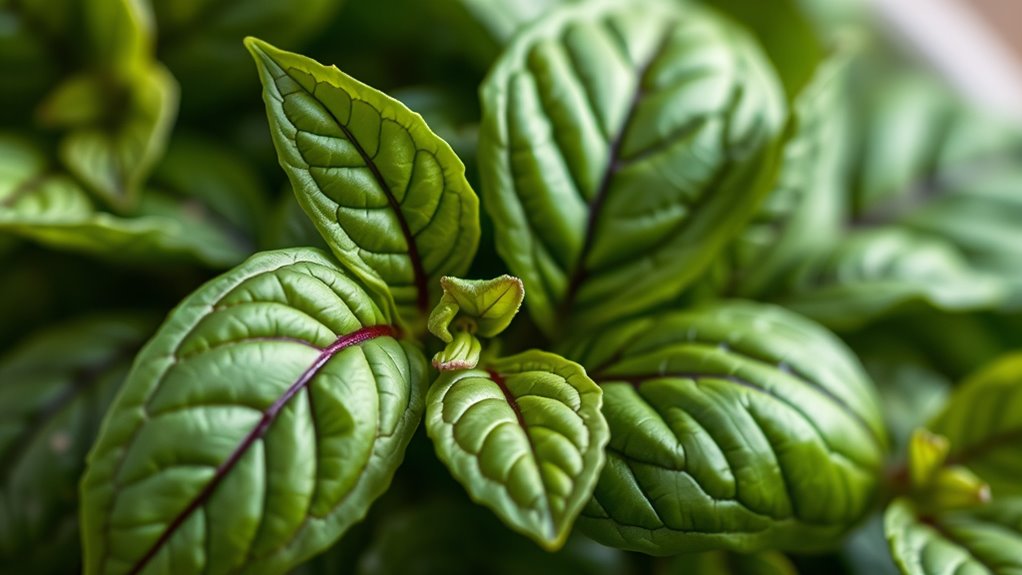
Basil’s vibrant flavor can be marred by bitter notes, especially when grown or harvested improperly. When you’re aiming for the perfect herb to elevate your dishes, bitterness can overshadow its natural sweetness and aromatic qualities. That’s where spectral balancing comes into play, a technique designed to fine-tune the herb’s flavor profile and minimize undesirable bitterness. By understanding and applying spectral balancing, you can achieve a more harmonious basil flavor that enhances your culinary creations.
Spectral balancing involves analyzing the light spectrum reflected or transmitted by basil leaves, which reveals the specific compounds responsible for flavor and bitterness. Using sensory analysis, you can identify the subtle differences in aroma and taste that contribute to bitterness. This method allows you to assess the herb’s qualities more precisely than traditional tasting alone. When you perform sensory analysis, you’re essentially tuning into the herb’s full profile, noticing how different wavelengths of light correlate with flavor components, such as phenolics that contribute to bitterness. The goal is to adjust the growing, harvesting, or processing conditions to enhance desirable flavors while suppressing the bitter notes.
Spectral analysis reveals compounds linked to flavor and bitterness, guiding precise herb quality assessments.
To implement spectral balancing effectively, you need to understand the relationship between specific light spectra and flavor compounds. For instance, certain wavelengths may amplify bitter phenolics, while others enhance aromatic oils that give basil its sweet, fresh notes. By controlling environmental factors like light exposure, humidity, or even post-harvest treatments, you can influence the spectral signature of your basil. This process isn’t just about visual appeal; it directly impacts flavor enhancement by reducing the bitter undertones that can diminish the herb’s overall quality.
As you analyze basil through spectral methods, you’ll develop a more refined sensory analysis skill set. This means you’ll recognize which spectral cues indicate bitterness levels and which suggest ideal flavor balance. Over time, you’ll learn how to manipulate conditions to favor the spectral qualities associated with the most desirable flavor profiles. Additionally, understanding the role of color accuracy in the spectral analysis process can further improve your ability to fine-tune herb quality. The result is a more consistent, high-quality basil that retains its vibrant aroma and taste, free from overpowering bitterness.

LEOTER Grow Light for Indoor Plants – Upgraded Version 80 LED Lamps with Full Spectrum & Red Blue Spectrum, 3/9/12H Timer, 10 Dimmable Level, Adjustable Gooseneck,3 Switch Modes
80 High-Efficiency Full Spectrum LED Grow Lights-LEOTER plant grow light features 80 high-efficiency LEDs (32 Red, 12 Blue,…
As an affiliate, we earn on qualifying purchases.
As an affiliate, we earn on qualifying purchases.
Frequently Asked Questions
How Does Spectral Balancing Affect Basil’S Overall Flavor Profile?
When considering how spectral balancing impacts basil’s flavor profile, you’ll notice it primarily enhances flavor by reducing bitterness. This technique adjusts the frequency spectrum, allowing the bright, fresh notes to come forward while mellowing out harsher, bitter tones. As a result, your basil tastes more vibrant and balanced, making your dishes more appealing. Spectral balancing effectively boosts flavor enhancement and guarantees a smoother, more harmonious basil flavor in your culinary creations.
Are There Specific Basil Varieties Better Suited for Spectral Balancing?
Did you know that some basil varieties contain up to 50% more essential oils than others? When choosing a basil cultivar, opt for those with milder, sweeter profiles, like Genovese or sweet basil, as they respond better to spectral adjustment techniques. These varieties’ chemical makeup allows spectral balancing to effectively reduce bitterness, resulting in a fresher, more vibrant flavor. So, your cultivar selection directly influences how well spectral adjustments work for you.
Can Spectral Balancing Be Applied During Basil Cultivation or Only Post-Harvest?
You might wonder if spectral balancing can be applied during basil cultivation or only after harvest. While it’s primarily a post-harvest technique to adjust flavors, researchers are exploring ways to influence plant growth through light spectra during cultivation. However, current methods focus on post-harvest spectral balancing to reduce bitter notes. To improve basil flavor early, consider optimizing growth conditions, but spectral balancing itself is mainly used after harvesting.
What Equipment Is Necessary for Implementing Spectral Balancing Techniques?
Imagine wielding a mystical wand—your spectral sensors and LED lighting—ready to tame basil’s bitterness. You’ll need high-tech spectral sensors to analyze light absorption, plus adjustable LED lighting to fine-tune the spectrum. This combo allows precise control during cultivation, helping you balance the plant’s flavors. With these tools, you become the wizard of basil, steering its taste journey from bitter to blissful, right in your greenhouse.
How Does Spectral Balancing Compare to Traditional Methods of Reducing Bitterness?
When comparing spectral balancing to traditional bitterness reduction methods, you’ll find it offers a more precise approach for flavor enhancement. Traditional methods might involve altering ingredients or cooking techniques, but spectral balancing targets specific compounds causing bitterness. This allows you to reduce bitter notes without compromising overall flavor, making your basil taste richer and more balanced. It’s a modern technique that helps you fine-tune bitterness reduction with greater control and effectiveness.
Boveda 62% Two-Way Humidity Control Packs For Storing ½ oz – Size 4 – 10 Pack – Moisture Absorbers for Small Storage Containers – Humidifier Packs – Hydration Packets in Resealable Bag
WHY THIS BOVEDA: Keep IT fresh for months! Boveda 62 is for you for stickier, fluffier & bouncier…
As an affiliate, we earn on qualifying purchases.
As an affiliate, we earn on qualifying purchases.
Conclusion
By mastering spectral balancing, you open the secret to transforming bitter basil into a symphony of flavors. Imagine the vibrant aroma blooming like a sunrise, each note perfectly harmonized. With this technique, you hold the brush to paint a more balanced, delightful basil experience. So next time bitterness threatens to overshadow, remember you have the power to tune the spectral notes, turning your culinary canvas into a masterpiece of taste.

SONKIR Soil pH Meter, MS02 3-in-1 Soil Moisture/Light/pH Tester Gardening Tool Kits for Plant Care, Great for Garden, Lawn, Farm, Indoor & Outdoor Use (Green)
Kindly NOTE: This soil tester can not be applied to test pH value of any other liquid. If…
As an affiliate, we earn on qualifying purchases.
As an affiliate, we earn on qualifying purchases.

Outspoken: Snow Queen
As an affiliate, we earn on qualifying purchases.
As an affiliate, we earn on qualifying purchases.