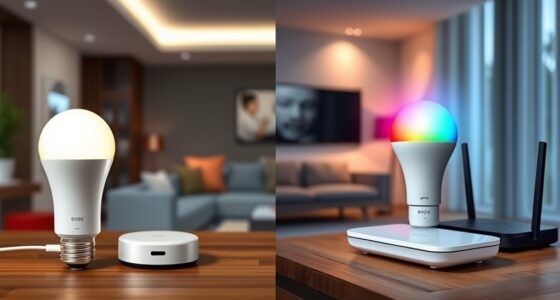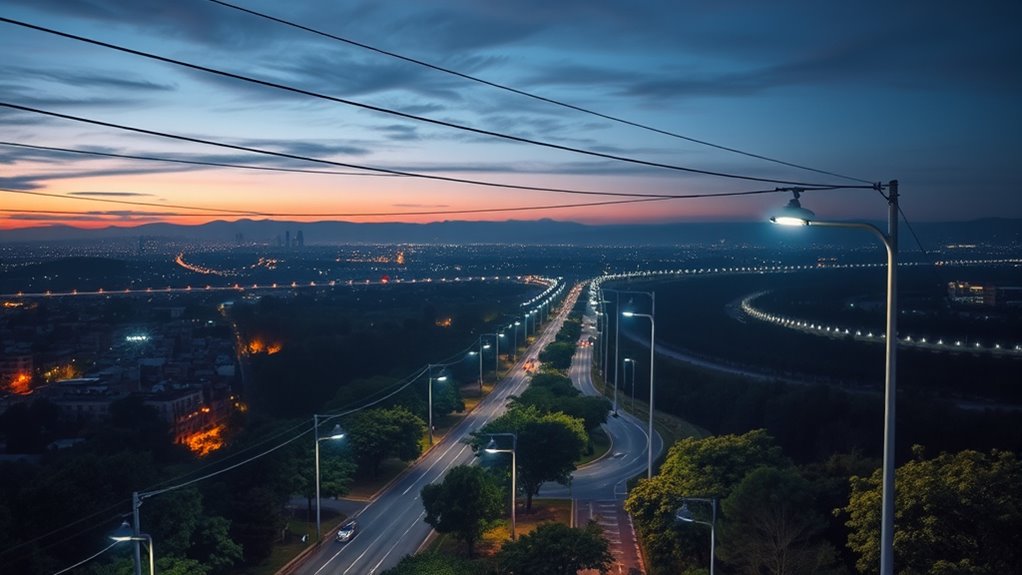

IoT lighting networks improve energy efficiency by reducing unnecessary power use and lowering emissions, helping the environment. However, manufacturing, installing, and maintaining these systems consume resources and create electronic waste that needs proper disposal to prevent pollution. Excessive or poorly planned lighting can also contribute to light pollution and disrupt ecosystems. To fully understand the environment’s benefits and challenges, explore how managing electronic waste and optimizing system design plays a vital role.
Key Takeaways
- IoT lighting reduces energy consumption and greenhouse gas emissions through smart, adaptive illumination.
- Manufacturing and disposal of IoT devices contribute to resource depletion and electronic waste concerns.
- Proper calibration and control are essential to prevent light pollution and minimize ecological disruption.
- Energy used by IoT infrastructure, including data centers, may offset some environmental benefits if not sourced sustainably.
- Responsible e-waste management and recycling are critical for maintaining the environmental advantages of IoT lighting systems.

The rise of Internet of Things (IoT) lighting networks offers significant benefits for energy efficiency and urban management, but it also raises important environmental concerns. As you integrate IoT lighting into your city or facility, you’ll notice how these systems can dramatically improve energy conservation. Smart lighting adjusts brightness based on real-time data, reducing unnecessary power consumption during low-traffic periods or in unoccupied areas. This targeted approach ensures that energy isn’t wasted, leading to lower electricity bills and less strain on power grids. In turn, reduced energy use directly contributes to pollution reduction because less reliance on fossil fuels means fewer greenhouse gas emissions. These systems enable you to optimize lighting schedules seamlessly, ensuring that lights are only on when needed, which minimizes carbon footprints and supports broader environmental sustainability goals.
However, while energy conservation is a clear advantage, the environmental impact of deploying vast IoT lighting networks isn’t entirely positive. The manufacturing, installation, and maintenance of these advanced systems involve resource extraction and energy-intensive processes, which can contribute to environmental degradation if not managed responsibly. You need to contemplate the lifecycle of IoT devices, including the environmental costs associated with producing sensors, controllers, and communication infrastructure. Proper disposal and recycling of electronic waste are critical to prevent pollution from hazardous materials that can leach into soil and water sources. Furthermore, as these networks expand, the increased electronic waste and energy used in producing new components might offset some of the environmental gains achieved through energy conservation. Electronic waste management is essential to mitigate these negative effects and ensure sustainable deployment.
Another concern is the potential for increased light pollution if IoT lighting isn’t carefully designed and managed. You might find that poorly calibrated or overly bright lighting, even if smart, can disrupt local ecosystems and contribute to skyglow, affecting nocturnal wildlife and human health. Balancing the benefits of illumination with environmental preservation requires precise control systems and thoughtful planning. Additionally, the energy used to operate data centers and communication networks that support IoT systems should not be overlooked. These infrastructural elements consume significant power, and if they rely on non-renewable energy sources, the overall environmental impact may diminish the benefits of reduced traditional lighting.

Govee Smart Light Bulbs, Color Changing Light Bulb, Work with Alexa and Google Assistant, 16 Million Colors RGBWW, WiFi & Bluetooth LED Light Bulbs, Music Sync, A19, 800 Lumens, 4 Pack
16 Million DIY Colors: Govee smart light bulbs own millions of color and 54 preset scene modes, you…
As an affiliate, we earn on qualifying purchases.
As an affiliate, we earn on qualifying purchases.
Frequently Asked Questions
How Does Iot Lighting Reduce Overall Energy Consumption?
IoT lighting reduces your overall energy consumption by automatically adjusting brightness based on occupancy and natural light, leading to significant energy savings. You benefit from optimized lighting schedules that minimize waste, which in turn lowers your carbon footprint. By using smart sensors and controls, you guarantee lights are on only when needed, making your energy use more efficient and environmentally friendly, all while saving you money on electricity bills.
What Are the Privacy Concerns Associated With Iot Lighting Networks?
Imagine your smart home in 1984, and now, with IoT lighting networks, you face privacy concerns. You might worry about data security breaches or unauthorized access to your personal preferences. These networks collect user data, risking exposure of your habits and routines. Protecting user privacy means securing data and implementing robust encryption. Stay vigilant about potential vulnerabilities to make sure your IoT lighting system remains private and secure.
How Do Iot Lights Impact Local Wildlife and Ecosystems?
IoT lights can disrupt local wildlife and disturb ecosystem balance by altering natural light cycles. You might notice nocturnal animals avoiding lit areas or changing their behaviors, which can affect food chains and reproduction. Artificial lighting can also confuse migratory species, leading to disorientation or habitat loss. To minimize this impact, you should consider using wildlife-friendly lighting and turning off IoT lights during critical periods.
Can Iot Lighting Systems Be Recycled or Reused Sustainably?
You can recycle or reuse IoT lighting systems sustainably, but recycling challenges exist due to complex electronic components. To improve sustainability, choose systems made from sustainable materials and designed for easy disassembly. Proper recycling reduces waste and environmental impact, so always follow local e-waste disposal guidelines. By prioritizing these practices, you help minimize pollution and conserve resources, making your IoT lighting usage more eco-friendly and sustainable in the long run.
What Regulations Govern the Environmental Standards of Iot Lighting?
You need to guarantee your IoT lighting systems meet regulatory compliance and follow environmental legislation. These regulations set standards for energy efficiency, hazardous materials, and recycling practices. Stay updated on local, national, and international rules to avoid penalties and reduce environmental impact. By adhering to these standards, you help promote sustainable development and responsible usage of IoT technology, ensuring your lighting solutions are environmentally friendly and legally compliant.

BTF-LIGHTING 2.4G WiFi DR04W SPI RGBW Controller RC03RF RF Remote Tuya APP/Smart Life/Google Home/Alexa Control Support SK6812RGBW SMD/FCOB WS2814 IC etc Addressable RGB+W LED Strip STA Mode
【WIFI Control】Control by Tuya/Smart Life APP. It only works with 2.4G Wi-Fi home network. DON'T use 5.0 GHz…
As an affiliate, we earn on qualifying purchases.
As an affiliate, we earn on qualifying purchases.
Conclusion
By embracing IoT lighting networks thoughtfully, you can markedly reduce resource waste and environmental wear. As you optimize operations, you empower eco-friendly efforts, easing ecological exhaustion. Remember, mindful management makes a mighty difference—minimizing misused energy, reducing runoff, and restoring natural rhythms. Together, your actions can spark sustainable shifts, showcasing how small steps in smart lighting can lead to a more balanced, beautiful, and better planet. Make your move—mingle technology with mindful care for a brighter, greener future.

BulbCycle Large Electronics Recycling Box (Holds up to 70 lbs. of E-Waste, E-Scrap) RecyclePak 061CH
Ewaste Mail back Kit
As an affiliate, we earn on qualifying purchases.
As an affiliate, we earn on qualifying purchases.

FLSNT Dusk to Dawn Outdoor Sensor ST19 LED Light Bulb, 7W (60W Eqv.), 800LM,Vintage Filament E26 Base, Auto On/Off Photocell Automatic for Energy-Efficient Outdoor Lighting, 2700K Soft White, 2 Pack
【Dusk to Dawn Sensor】: With a built-in light sensor, the A19 light bulb can automatically turn on at…
As an affiliate, we earn on qualifying purchases.
As an affiliate, we earn on qualifying purchases.