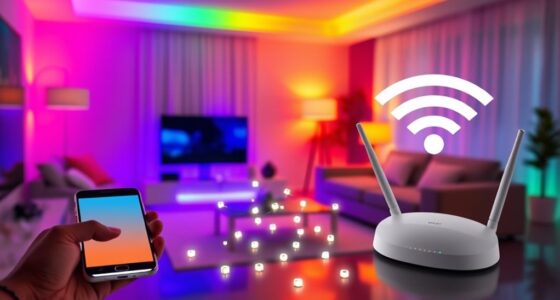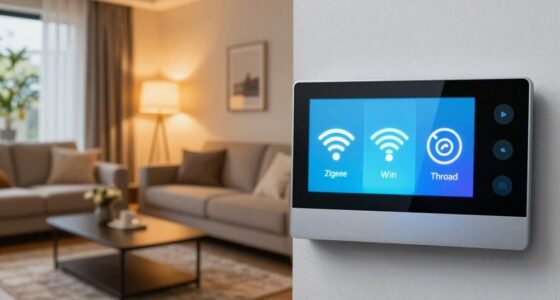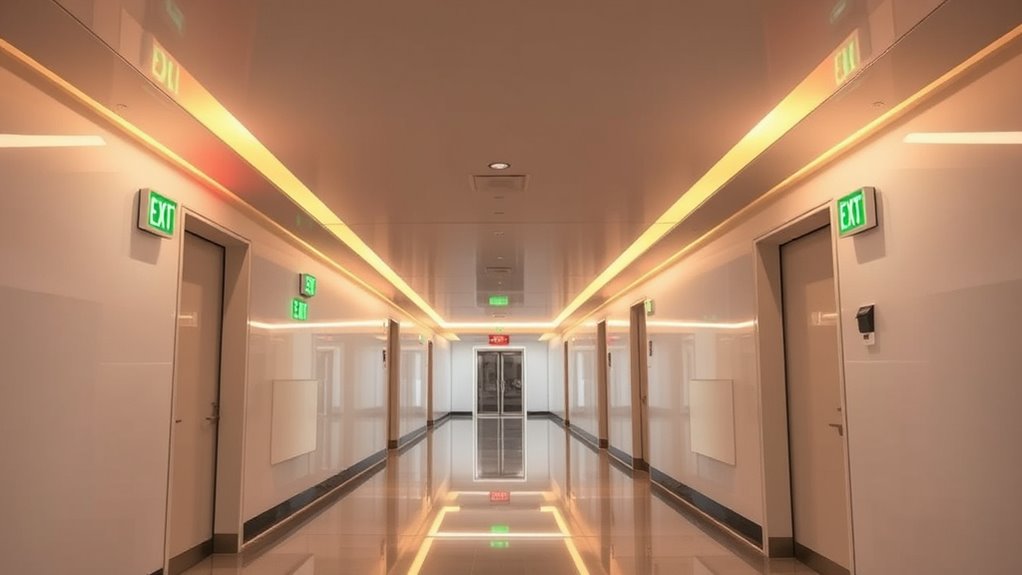

Smart lighting and emergency systems use sensors and automation to boost safety and save energy. Motion sensors detect movement and adjust lights automatically, ensuring well-lit areas and reducing waste. During emergencies, these systems activate emergency lighting and alarms to guide people to safety without manual effort. They also allow remote control and monitoring, making management easier. By integrating safety with efficiency, these solutions create smarter environments—keep exploring to learn how this technology can protect and optimize your space.
Key Takeaways
- Smart lighting uses motion sensors and automation to enhance safety and reduce energy waste in buildings.
- Integration with emergency systems enables automatic activation of lighting and alarms during crises.
- Occupancy-based control allows centralized monitoring, remote adjustments, and efficient energy management.
- Emergency functions ensure safe evacuation by guiding occupants and activating necessary lighting automatically.
- Overall, these systems improve safety, operational efficiency, and resource conservation within building environments.
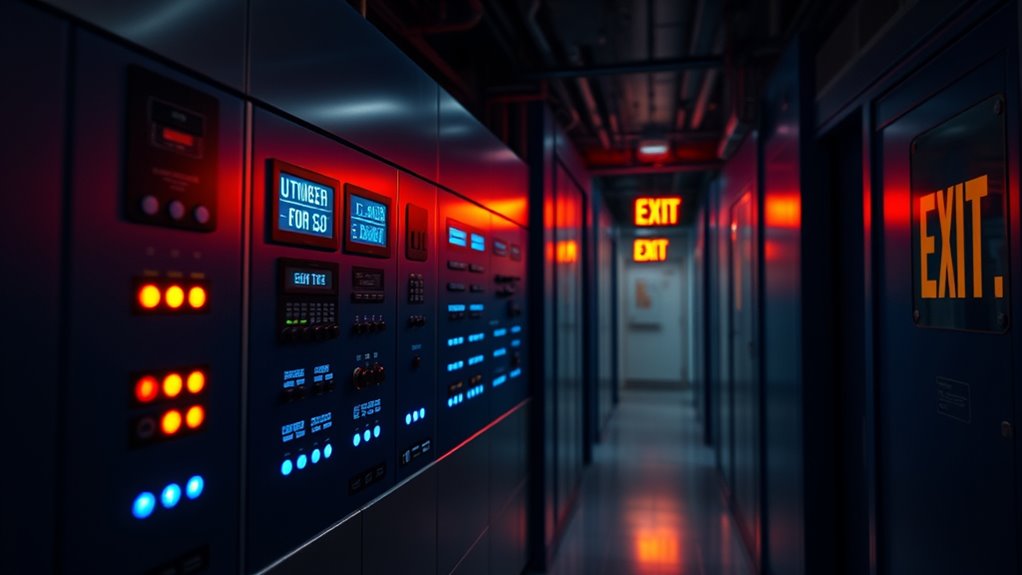
Smart lighting and emergency systems are transforming how buildings guarantee safety and energy efficiency. With advances in technology, you now have smarter ways to manage lighting and emergency responses, making spaces safer while conserving energy. One of the key innovations driving this change is the use of motion sensors. These sensors detect movement in a space, allowing lights to turn on automatically when someone enters and turn off when the area is unoccupied. This not only reduces energy waste but also ensures that lighting is available precisely when needed, enhancing safety and convenience. Motion sensors can be integrated seamlessly with existing lighting systems through automation integration, creating a cohesive network that responds intelligently to occupancy patterns.
Smart lighting with motion sensors enhances safety and saves energy through automated, integrated occupancy detection.
When motion sensors are part of an integrated system, you benefit from a dynamic environment that adapts in real-time. For example, in hallways or stairwells, lights turn on instantly as you approach, providing better visibility and reducing the risk of accidents. When you leave the area, the lights switch off after a short delay, saving energy without requiring manual switches. This automation integration also allows for centralized control and monitoring, so facility managers or building owners can oversee multiple systems from a single interface. They can adjust sensitivity settings, set schedules, or troubleshoot issues remotely, ensuring the system remains peak at all times.
Furthermore, these smart systems can be programmed to incorporate emergency functions. In case of a fire or power outage, emergency lighting can activate automatically, guiding occupants safely out of the building. Motion sensors and automation integration work together here to enhance safety protocols. For instance, if an emergency occurs during off-hours, the system can turn on all necessary lighting and activate alarms without manual intervention. This ensures swift responses, reducing panic and confusion during critical moments. The integration of smart lighting with emergency systems also means that alerts can be sent directly to building management or emergency services, speeding up response times.
Ultimately, your experience with smart lighting and emergency systems becomes more intuitive and reliable. You gain peace of mind knowing that the building responds intelligently to occupancy and emergencies, reducing energy costs while enhancing safety. By leveraging motion sensors and automation integration, you create a smarter environment that not only conserves resources but also prioritizes the well-being of everyone inside. This seamless blend of technology and safety protocols marks a significant step forward in building management, making spaces safer, more efficient, and easier to control.

Ring Motion Sensor — Battery-powered outdoor sensor for Ring smart lights, works with Amazon Sidewalk, White
Activate lights with motion – Battery-powered outdoor Motion Sensor that turns on connected Ring smart lights, doorbells, and…
As an affiliate, we earn on qualifying purchases.
As an affiliate, we earn on qualifying purchases.
Frequently Asked Questions
How Do Smart Lighting Systems Integrate With Existing Home Automation?
You can seamlessly integrate smart lighting systems with your existing home automation by connecting them to your smart hub or app. Use voice control to turn lights on or off and customize settings effortlessly. Remote monitoring allows you to check and manage your lighting from anywhere, ensuring security and energy efficiency. This integration makes your home more convenient, responsive, and smart, enhancing your everyday comfort and control.
What Are the Costs Associated With Installing Smart Emergency Lighting?
Coincidentally, the costs of installing smart emergency lighting vary based on your needs. You should consider a detailed cost analysis, including installation fees, which can range from a few hundred to over a thousand dollars. Factors like the number of fixtures, system complexity, and integration with existing security add to the expense. Planning ahead guarantees you budget properly and get the most reliable, efficient emergency lighting for your home.
Are Smart Lighting Systems Energy-Efficient Compared to Traditional Lighting?
Yes, smart lighting systems are more energy-efficient than traditional lighting. They automatically adjust brightness based on occupancy and natural light, leading to significant energy savings. This reduces your environmental impact by lowering electricity consumption. You’ll notice lower utility bills and a smaller carbon footprint, making smart lighting a sustainable choice. Plus, their longevity and adaptive features guarantee you get the most out of your investment while helping the environment.
How Reliable Are Smart Emergency Systems During Power Outages?
Think of smart emergency systems as your safety net—reliable even when the power’s out. They usually have a battery backup that keeps them running, and signal redundancy guarantees communication remains intact. This means you can trust them to activate during outages, guiding you safely. While no system is perfect, these features make smart emergency systems highly dependable, giving you peace of mind when you need it most.
Can Smart Lighting Be Customized for Different Emergency Scenarios?
Yes, you can customize smart lighting for different emergency scenarios through adaptive lighting and scenario customization features. You simply select or program specific lighting patterns, brightness levels, and colors tailored for each situation. For example, you might set flashing lights for fire alarms or dim, steady illumination for medical emergencies. This flexibility helps improve safety and response times, ensuring your emergency lighting adapts seamlessly to various situations.

Lithonia Lighting Basics LED Emergency Light, Emergency Lighting with Dual Adjustable LED Lamp Heads, Wall Mount, Damp Location Rated, 90-Minute Backup, 120/277V, White (EU2C M6)
ESSENTIAL EMERGENCY LIGHTING: The Lithonia Lighting Basics emergency light is ideal for stairways, hallways, and egress paths; It…
As an affiliate, we earn on qualifying purchases.
As an affiliate, we earn on qualifying purchases.
Conclusion
By integrating smart lighting with emergency systems, you guarantee safety and efficiency are always at your fingertips. These modern solutions adapt instantly, much like a trusty robot sidekick, guiding you through any crisis. Don’t get caught in the dark like a cave dweller from the Stone Age—embrace the future now. With smart tech on your side, you’ll stay prepared and illuminated, no matter what surprises come your way.

Automated Lighting: The Art and Science of Moving and Color-Changing Lights
Automated Lighting: The Art and Science of Moving and Color Changing Lights
As an affiliate, we earn on qualifying purchases.
As an affiliate, we earn on qualifying purchases.

WiFi Door Alarm System, Wireless DIY Smart Home Security System, with Phone APP Alert, 8 Pieces-Kit (Alarm Siren, Door Window Sensor, Remote), Work with Alexa, for House, Apartment, by tolviviov
WIFI Network: WIFI connection, Only works on 2.4GHz WiFi network, does NOT support 5GHz WiFi networks.
As an affiliate, we earn on qualifying purchases.
As an affiliate, we earn on qualifying purchases.