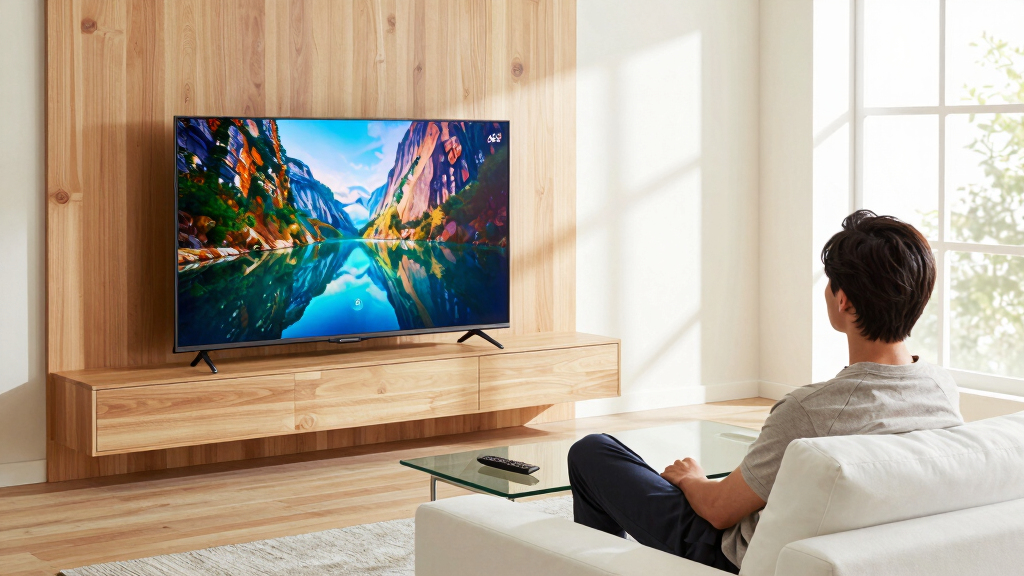
The LG 65-Inch OLED evo C5 is my best overall TV because its OLED contrast, Dolby Vision support, and balanced feature set suit movies, games, and everyday streaming. For brighter rooms, the TCL QM6K Mini-LED offers stronger light output and a larger 75-inch screen without moving into premium OLED territory. The Roku 65-Inch Plus Series is the value standout, combining Mini-LED backlighting, QLED color, Dolby Vision, and a simple interface. The main tradeoffs are OLED black levels versus Mini-LED brightness, screen size versus picture quality, and polished smart software versus advanced gaming hardware. Continue reading for the full breakdown of which model fits each room, budget, and viewing habit.

Get the latest gadgets delivered free with Prime
- Fast, free delivery on millions of items
- Prime Video, Amazon Music and more included
- Member-only deals all year
Complete the kit


Key Takeaways
- LG’s OLED evo C5 earned the top position because it offers the most balanced mix of cinematic contrast, gaming ability, HDR compatibility, and daily usability.
- Mini-LED produced the strongest alternatives to OLED: the amazon.com/dp/B0FTT4P85X?tag=spectralore.com-20&ascsubtag=dc-282066″ target=”_blank” rel=”nofollow sponsored noopener”>TCL QM6K favors large, bright presentation, while the Roku Plus Series pairs the technology with simpler streaming software.
- Among the 75-inch models, the TCL T7 and Hisense E6 emphasize screen size and QLED color, while the Sony BRAVIA is better suited to buyers who place more weight on image processing.
- The premium OLED choice splits by priority: the LG C5 favors broad movie compatibility, while the Samsung S90F’s advertised 144Hz motion capability gives gaming-focused buyers a clearer reason to pay more.
- Compact buyers should favor the 43-inch Samsung U8000H or Toshiba C350 for 4K; the 40-inch Samsung F6000 saves space but its Full HD panel is a meaningful resolution compromise.




| TV | Screen Size | Resolution | Smart Platform | HDR |
|---|---|---|---|---|
| Sony 75 Inch BRAVIA 4K HDR Sma | 75 inches | 4K UHD | Google TV | HDR and Dolby Vision |
| Samsung 43-Inch Class Crystal | 43 inches | 4K UHD | — | — |
| TCL 75 Inch Class T7 Series 4K | 75 inches | 4K Ultra HD | Google TV with Chromecast, AirPlay 2, and voice control | HDR |
| TCL 75 Inch Class QM6K Series | 75 inches | 4K HDR | Google TV with voice remote and Alexa compatibility | — |
| Samsung 55-Inch Class Mini LED | 55 inches | 4K | — | Mini LED HDR |
| Hisense 55-Inch Hi-QLED S7 Can | 55 inches | 4K UHD | Google TV | — |
| Amazon Ember 55-Inch 4-Series | 55 inches | 4K Ultra HD | Fire TV | HDR10+ |
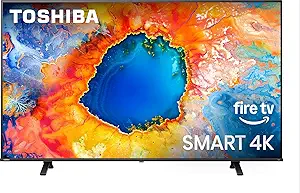
| Toshiba 43-Inch Class C350 Ser | 43 inches | 4K UHD | Fire TV | Dolby Vision |
| Roku 65-Inch Select Series 4K | 65 inches | 4K | Roku | HDR10 |
| Samsung 65-Inch Class OLED S90 | 65 inches | 4K | — | HDR+ |
| Hisense 75-Inch E6 Cinema Seri | 75 inches | 4K UHD | Fire TV | — |
| Roku 65-Inch Plus Series 4K QL | 65 inches | 4K | Roku OS | Dolby Vision |
| LG 65-Inch Class OLED evo AI 4 | 65 inches | 4K | — | — |
| Hisense 65-Inch U6 Pro Series | 65 inches | 4K UHD | Fire TV with Alexa+ | — |
| Samsung 40-Inch Class Full HD | 40 inches | Full HD | — | Supported |
More Details on Our Top Picks
Sony 75 Inch BRAVIA 4K HDR Smart Google TV (K-75S30)
I rank the Sony BRAVIA K-75S30 as the strongest choice for movie fans who also own a PlayStation 5. Its Dolby Vision and Triluminos Pro color favor rich, accurate-looking images, while Auto HDR Tone Mapping adapts PS5 output with less manual adjustment. Compared with the TCL 75T7, the Sony emphasizes cinematic processing and console-specific convenience rather than a 144Hz refresh rate. The TCL QM6K remains the better all-around performer for contrast and fast motion, but Sony counters with Dolby Atmos and X-Balanced speakers for a more complete built-in presentation. My reservations are the premium pricing, room-dominating dimensions, and potentially involved setup. This is a refined big-screen package, though competitive gamers may prefer the faster TCL alternatives.
Pros:- Triluminos Pro produces a broad, vivid color range
- Dolby Vision and Dolby Atmos support cinematic content
- Auto HDR Tone Mapping and Auto Genre Picture Mode suit PlayStation 5 owners
- Google TV, Chromecast, and AirPlay 2 offer flexible streaming
Cons:- Premium positioning may exceed value-focused budgets
- The 75-inch screen requires substantial viewing distance and furniture space
- Setup and picture options may feel involved for casual users
Best for: Movie-focused PS5 owners with a large living room who want cinematic HDR and console-specific picture features
Not ideal for: Competitive gamers seeking a stated 144Hz refresh rate, or apartment dwellers without space for a 75-inch screen
- Screen Size:75 inches
- Resolution:4K UHD
- HDR:HDR and Dolby Vision
- Processor:4K HDR Processor X1
- Color Technology:Triluminos Pro
- Audio:Dolby Atmos with X-Balanced Speaker
- Smart Platform:Google TV
- Gaming Features:Auto HDR Tone Mapping and Auto Genre Picture Mode
Our verdict“I recommend this Sony to movie-loving PS5 owners who value polished processing more than the fastest available refresh rate.”
Samsung 43-Inch Class Crystal UHD U8000H Series Smart TV (2026 Model, 43U8000H)
The Samsung U8000H earns my compact-value spot because it combines a manageable 43-inch footprint with 4K upscaling and an unusually large supply of free channels. It fits bedrooms, dorms, and smaller living rooms more naturally than the 55-inch Samsung M70H or either 75-inch TCL. Samsung TV Plus with 2,700-plus channels also gives cord-cutters plenty to watch without adding another subscription. Motion Xcelerator and Color Booster help everyday sports and streaming look cleaner, but the product data does not list Dolby Vision or another specific HDR format. That makes the Mini LED M70H a stronger picture-quality choice, especially for darker scenes and bright highlights. I would pick this for convenience and scale, while home-cinema buyers should accept the higher cost and larger footprint of a more advanced display.
Pros:- Compact 43-inch size works well in constrained rooms
- Crystal Processor provides 4K upscaling for lower-resolution video
- Samsung TV Plus includes more than 2,700 free channels
- Motion Xcelerator and Color Booster improve everyday viewing
Cons:- A 43-inch screen can feel undersized in a large living room
- The supplied product data does not specify Dolby Vision support
- Its Crystal UHD panel cannot match the contrast potential of Mini LED models
Best for: Bedroom, dorm, or small-apartment viewers who want 4K streaming and abundant free television in a compact size
Not ideal for: Home-theater buyers who want a large screen, Mini LED contrast, or clearly specified premium HDR support
- Model:43U8000H
- Series:U8000H
- Screen Size:43 inches
- Resolution:4K UHD
- Processor:Crystal Processor
- Content Access:Samsung TV Plus with 2,700+ free channels
- Picture and Smart Features:Motion Xcelerator, Color Booster, 4K Upscaling, and Alexa Built-in
Our verdict“I would choose the U8000H for a smaller room where easy content access and sensible sizing matter more than premium HDR performance.”
TCL 75 Inch Class T7 Series 4K QLED HDR Smart Google TV (75T7, Latest Model)
I place the TCL 75T7 in the gaming-value role because its 75-inch QLED panel and 144Hz refresh rate pair big-screen scale with smoother fast movement. That is a more gaming-oriented specification than the Sony K-75S30 provides, while four HDMI ports leave greater flexibility for consoles, a sound system, and other sources. The TCL QM6K also reaches 144Hz, but its Mini LED backlight and broader HDR support make it the more ambitious—and likely costlier—picture choice. The T7 instead makes sense for buyers prioritizing speed, color, and connectivity without paying for that higher display tier. Google TV, AirPlay 2, and Chromecast broaden device support, though setup may challenge less technical owners. Its standard QLED construction also cannot promise the same black-level control as the Mini LED QM6K.
Pros:- 144Hz refresh rate supports smooth gaming and sports
- Quantum Dot technology delivers a broad, vibrant color range
- Four HDMI ports provide room for multiple source devices
- Google TV supports Chromecast, AirPlay 2, and voice control
Cons:- Standard QLED lacks the Mini LED backlight control of the QM6K
- The 75-inch-only configuration is unsuitable for small rooms
- Smart features and device setup may be complex for new users
Best for: Console and PC gamers who want a 75-inch screen, 144Hz motion, and four HDMI inputs without moving to Mini LED
Not ideal for: Viewers who prioritize the strongest dark-scene contrast or need a screen smaller than 75 inches
- Screen Size:75 inches
- Resolution:4K Ultra HD
- Display Technology:QLED
- HDR:HDR
- Refresh Rate:144Hz
- Processor:TCL AIPQ Pro Processor
- Audio:Dolby Atmos
- Connectivity:4 HDMI ports including eARC and Wi-Fi 5
- Smart Platform:Google TV with Chromecast, AirPlay 2, and voice control
Our verdict“I favor the T7 for gamers who want 75-inch scale and 144Hz motion but do not need the QM6K’s upgraded Mini LED picture system.”
TCL 75 Inch Class QM6K Series Mini LED QLED 4K HDR Smart Google TV
The TCL QM6K takes my top position because it covers the widest range of demanding viewing: movies, sports, streaming, and gaming. Its Mini LED QLED panel combines vivid color with tighter light control than the standard QLED TCL 75T7, which can produce stronger contrast and more convincing HDR. Both TCL models offer 144Hz motion, but the QM6K adds Dolby Vision, HDR10+, HDR10, and HLG, making it the more adaptable screen across varied content. Onkyo audio with Dolby Atmos also gives it a richer built-in sound proposition than many thin TVs. The tradeoffs are size, price, and the possibility of visible blooming around bright objects in dark scenes. I rank it above the Sony K-75S30 for its broader HDR support and faster panel, though Sony remains appealing for PS5-specific automation.
Pros:- Mini LED and QLED combine strong contrast with vivid color
- 144Hz refresh rate and Motion Rate 480 suit gaming and sports
- Supports Dolby Vision, HDR10+, HDR10, and HLG
- Onkyo audio and Dolby Atmos strengthen built-in sound
Cons:- Blooming may appear around bright highlights in dark scenes
- The 75-inch cabinet demands considerable room
- Its premium display hardware may cost more than standard QLED alternatives
Best for: Big-room households that split viewing among HDR movies, fast sports, streaming, and high-refresh-rate gaming
Not ideal for: Small-room viewers or OLED-minded movie fans who are highly sensitive to blooming around bright objects
- Screen Size:75 inches
- Series:QM6K
- Display Technology:Mini LED QLED
- Resolution:4K HDR
- HDR Formats:Dolby Vision, HDR10+, HDR10, and HLG
- Refresh Rate:144Hz
- Motion Rate:480
- Audio:Onkyo Audio with Dolby Atmos
- Smart Platform:Google TV with voice remote and Alexa compatibility
Our verdict“I rate the QM6K as the best-balanced choice for buyers who want one large TV to handle cinema, sports, and gaming equally well.”
Samsung 55-Inch Class Mini LED M70H Series Smart TV (2026 Model, 55M70H)
I give the Samsung M70H the midsize all-rounder role: its 55-inch screen is easier to place than the 75-inch Sony and TCL models, yet Mini LED hardware offers deeper blacks and brighter highlights than the 43-inch Samsung U8000H’s Crystal UHD display. The 120Hz motion system is well suited to games and sports, while Gaming Hub and Soccer Mode make those priorities explicit. Samsung TV Plus supplies more than 2,700 free channels, giving it the same cord-cutting appeal as the smaller U8000H. It falls behind the TCL QM6K’s 144Hz refresh rate and clearly listed Dolby Vision, HDR10+, and HLG support. New owners may also need time to learn its many modes and content menus. For mixed household viewing, though, I find its 55-inch footprint and Mini LED contrast more practical than chasing maximum screen size.
Pros:- Mini LED produces deep blacks and bright highlights
- 120Hz motion technology supports fluid games and sports
- Gaming Hub and Soccer Mode serve specific entertainment uses
- More than 2,700 free channels reduce reliance on paid services
Cons:- Its 120Hz refresh rate trails the 144Hz TCL models
- The supplied specifications do not identify supported named HDR formats
- Numerous modes and content options may create a learning curve
Best for: Families and mixed-use viewers who want Mini LED contrast, sports features, gaming support, and a living-room-friendly 55-inch screen
Not ideal for: Buyers seeking a 75-inch cinematic display, 144Hz gaming, or explicitly listed Dolby Vision support
- Screen Size:55 inches
- Display Technology:Mini LED
- Resolution:4K
- Refresh Rate:120Hz
- HDR:Mini LED HDR
- Content Options:2,700+ free streaming channels
- Gaming Features:Gaming Hub and Motion Xcelerator with DLG 120Hz
- Color Technology:Pure Spectrum Color and Color Booster
- Special Mode:Soccer Mode
Our verdict“I recommend the M70H to households seeking a practical 55-inch Mini LED TV for varied viewing rather than the biggest or fastest screen.”
Hisense 55-Inch Hi-QLED S7 Canvas TV Series
I rank the Hisense S7 Canvas TV as the strongest choice for buyers who want a television to blend into a designed living space. Its anti-glare Hi-Matte panel, included teak frame, UltraSlim mount, and art mode give it a decorative role that the Samsung S90F and Amazon Ember cannot match. The 144Hz Hi-QLED display also makes this more capable for games and sports than many style-led TVs, while the ambient light sensor helps artwork and video suit the room. Still, the Samsung S90F delivers deeper OLED blacks, and the Hisense may cost more than a standard 55-inch QLED. I also see art-mode upkeep and the busier Google TV interface as drawbacks for buyers seeking a basic screen.
Pros:- Hi-Matte anti-glare panel supports both daytime viewing and artwork display
- Native 144Hz refresh rate provides smoother gaming and sports motion
- Included teak frame and UltraSlim wall mount strengthen its furniture-like presentation
- Hi-QLED panel produces vivid 4K color
Cons:- Likely costs more than conventional 55-inch QLED televisions
- Cannot match the black levels of the Samsung S90F OLED
- Art selections may need regular updating, while Google TV can feel busy
Best for: I recommend it to design-conscious buyers who want a wall-mounted 55-inch TV that can display artwork without giving up 144Hz motion.
Not ideal for: I would skip it for buyers who prioritize OLED-level black depth or want the least expensive route to a 55-inch 4K television.
- Screen Size:55 inches
- Resolution:4K UHD
- Display Type:Hi-QLED
- Refresh Rate:144Hz
- Art Mode:Yes
- Panel:Hi-Matte anti-glare
- Included Hardware:Teak frame and UltraSlim wall mount
- Audio:2.0.2-channel DTS Virtual:X
- Smart Platform:Google TV
Our verdict“I would choose the S7 Canvas when décor integration matters nearly as much as picture quality and gaming speed.”
Amazon Ember 55-Inch 4-Series 4K Smart TV
The Amazon Ember 4-Series earns its place by packaging 4K, HDR10+, Wi-Fi 6, and four HDMI inputs into an approachable 55-inch Fire TV. I place it ahead of the Toshiba C350 for buyers who want a larger screen and more clearly documented connectivity, while the quad-core processor and Wi-Fi 6 support should keep app browsing responsive on a strong network. Alexa also makes this a natural fit for an Amazon-centered smart home. The compromise is picture ambition: the Toshiba lists Dolby Vision and Dolby Atmos, while the Roku 65-Inch Select supplies QLED color on a larger panel. The Ember is sold only at 55 inches in this listing, and its recommendation-heavy interface may frustrate viewers who prefer a neutral home screen. Paid streaming services add ongoing costs.
Pros:- HDR10+ adds scene-based contrast enhancement to compatible content
- Wi-Fi 6 and a quad-core processor support responsive streaming
- Four HDMI inputs accommodate multiple consoles and media devices
- Alexa voice control fits naturally into Amazon smart homes
Cons:- No Dolby Vision support is listed, unlike the Toshiba C350
- The recommendation-led Fire TV interface may feel cluttered
- This model listing offers only a 55-inch size
Best for: I recommend it to Alexa households seeking an affordable 55-inch 4K TV with fast wireless streaming and enough HDMI inputs for several devices.
Not ideal for: I would skip it for home-cinema buyers who want Dolby Vision, QLED color, or a screen larger than 55 inches.
- Screen Size:55 inches
- Resolution:4K Ultra HD
- HDR:HDR10+
- Processor:Quad-core
- Wireless:Wi-Fi 6
- HDMI Inputs:4
- Remote:Alexa Voice Remote Enhanced
- Smart Platform:Fire TV
Our verdict“I would buy the Ember for straightforward 55-inch Fire TV value, not for premium home-cinema performance.”
Toshiba 43-Inch Class C350 Series 4K Fire TV
I see the Toshiba C350 as the most balanced small-screen choice here for bedrooms, apartments, and secondary rooms. At 43 inches, it gives up the scale of the Amazon Ember and Roku Select, but Dolby Vision and Dolby Atmos make compatible films more appealing than its compact dimensions suggest. Upscaling helps lower-resolution broadcasts look cleaner, while ALLM, VRR, and eARC give console owners more flexibility than a basic bedroom TV. Compared with the 43-inch Samsung U8000H elsewhere in the roundup, the Toshiba stands out through its listed gaming features and Fire TV integration. I would still hesitate if build quality or wired connectivity is a priority because port details are not supplied. The smaller panel also limits immersion across a long viewing distance, and Ultimate Motion cannot substitute for a documented high native refresh rate.
Pros:- Dolby Vision improves compatible HDR presentation
- Dolby Atmos and eARC support a more capable audio setup
- ALLM and VRR provide useful console-gaming flexibility
- 4K upscaling helps improve lower-resolution television sources
Cons:- A 43-inch screen offers limited impact at longer seating distances
- Port count and connectivity details are not provided
- Native panel refresh rate and build quality remain unspecified
Best for: I recommend it to apartment dwellers, bedroom viewers, and casual console players who need a feature-rich 43-inch television.
Not ideal for: I would skip it for large living rooms or serious high-frame-rate gaming setups that need a documented native refresh rate and full port details.
- Screen Size:43 inches
- Resolution:4K UHD
- Display Type:LED
- HDR:Dolby Vision
- Audio:Dolby Atmos
- Gaming Features:ALLM, VRR, and eARC
- Motion Technology:Ultimate Motion
- Contrast:Super Contrast Booster
- Smart Platform:Fire TV
Our verdict“I would pick the C350 for a smaller room where Dolby formats and gaming conveniences matter more than screen scale.”
Roku 65-Inch Select Series 4K QLED Smart TV
The Roku 65-Inch Select Series is my choice for viewers who value a large screen and an uncomplicated streaming menu over advanced theater hardware. Its QLED panel should deliver richer color than the Amazon Ember, and the extra ten inches create a more cinematic result from typical living-room seating. Roku’s interface, voice remote, AirPlay support, and Bluetooth Headphone Mode also make daily viewing easy without adding external equipment. I rank it below the Roku Plus Series for picture enthusiasts because that alternative adds Mini-LED backlighting and Dolby Vision, giving it finer contrast control. Audio specifications for the Select are vague, so a soundbar may be needed, and HDR support stops at HDR10 in the supplied data. Like most streaming-first TVs, its convenience also depends heavily on stable Wi-Fi.
Pros:- 65-inch QLED panel offers a large image with vibrant color
- Roku interface keeps app access simple and approachable
- Bluetooth Headphone Mode enables private listening
- AirPlay and multi-assistant voice compatibility broaden device support
Cons:- HDR10 is less flexible than the Dolby Vision support found on the Roku Plus Series
- Built-in audio specifications are not detailed
- Streaming performance depends on reliable Wi-Fi
Best for: I recommend it to families and cord-cutters who want a roomy 65-inch QLED with a simple interface and private Bluetooth listening.
Not ideal for: I would skip it for movie enthusiasts seeking Mini-LED contrast, Dolby Vision, or clearly specified built-in audio performance.
- Screen Size:65 inches
- Resolution:4K
- Display Type:QLED
- HDR:HDR10
- Smart Platform:Roku
- Remote:Enhanced voice remote with shortcuts
- Wireless Connectivity:Wi-Fi and Bluetooth
- Casting:Apple AirPlay
- Design:Frameless
Our verdict“I would choose this Roku for easy, colorful big-screen streaming while reserving the Plus Series for more demanding movie viewing.”
Samsung 65-Inch Class OLED S90F 4K Smart TV
I rank the Samsung S90F highest in this group for buyers chasing premium contrast and high-frame-rate gaming. OLED pixels create deep blacks without the blooming associated with LED backlights, while the 144Hz refresh rate gives compatible PC games and fast sports a cleaner sense of motion. Samsung’s NQ4 AI Gen3 processor also upscales mixed-quality streaming and broadcast sources, though results will vary with poor material. Against the Hisense S7 Canvas, the S90F sacrifices art-focused styling but wins on black depth; against the LG C5, it lacks the listed Dolby Vision advantage found on that rival. Full 4K at 144Hz also requires suitable PC hardware, and the premium OLED price will be hard to justify for casual television viewing. Built-in Alexa is useful, but it is not the reason to pay extra.
Pros:- OLED technology delivers deep blacks and precise pixel-level contrast
- 144Hz motion support suits compatible gaming PCs and fast sports
- NQ4 AI Gen3 processor enhances lower-resolution sources
- Pantone-validated color supports a rich, accurate-looking image
Cons:- Premium OLED pricing is excessive for casual viewing
- Full 4K 144Hz gaming requires compatible PC hardware
- Upscaling quality varies with the condition of the source
Best for: I recommend it to PC gamers, sports fans, and movie viewers who want a 65-inch OLED with deep contrast and 144Hz motion.
Not ideal for: I would skip it for budget buyers, Dolby Vision devotees, or console owners who cannot make use of 4K gaming above 120Hz.
- Screen Size:65 inches
- Resolution:4K
- Display Technology:OLED
- Processor:NQ4 AI Gen3
- HDR:HDR+
- Refresh Rate:144Hz
- Motion:Motion Xcelerator 144Hz
- Color Validation:Pantone validated
- Voice Assistant:Alexa built-in
Our verdict“I would pay for the S90F when OLED contrast and 144Hz PC gaming are priorities, but value-focused viewers have cheaper choices.”
Hisense 75-Inch E6 Cinema Series Hi-QLED 4K UHD Smart Fire TV (75E6QF)
I rank the Hisense 75E6QF as the big-screen value pick because it combines a room-filling 75-inch panel with Hi-QLED color and broad HDR support. It makes more sense for movie nights than the 65-inch Roku Plus Series when screen size carries more weight than precise Mini-LED backlight control. Dolby Vision, HDR10+, Filmmaker Mode, and the light sensor help movies retain their intended character across changing room conditions, while WiFi 6 supports steadier high-resolution streaming. The compromise is contrast: without the Roku model’s Mini-LED backlighting or the LG C5’s self-lit pixels, dark scenes may have less depth. Motion Rate 120 is not a native 120Hz specification, either, so serious gamers should favor the Hisense U6 Pro. I also find Fire TV convenient but busy, especially for buyers who prefer a restrained interface.
Pros:- Large 75-inch screen offers a more cinematic viewing scale
- Hi-QLED color with Dolby Vision, HDR10+, and HLG support
- AI Light Sensor adapts the picture to changing room light
- WiFi 6 and integrated Fire TV suit frequent streaming
Cons:- Lacks the localized backlight control of Mini-LED competitors
- Motion Rate 120 should not be confused with a native 120Hz panel
- The 75-inch footprint is unsuitable for compact rooms
Best for: Movie-focused households with a large living room that want a 75-inch screen, broad HDR support, and Fire TV without moving into flagship pricing
Not ideal for: Competitive gamers or viewers seeking OLED-grade black levels and tightly controlled Mini-LED contrast
- Screen Size:75 inches
- Resolution:4K UHD
- Color Technology:Hi-QLED
- HDR Formats:Dolby Vision, HDR10+, HLG
- Sound Technology:Dolby Atmos
- Motion Rating:Motion Rate 120
- Smart Platform:Fire TV
- Picture Features:AI Light Sensor, AI 4K Upscaler, Filmmaker Mode, MEMC
- Wireless Connectivity:WiFi 6
Our verdict“I recommend this model for buyers who want maximum screen size and flexible HDR playback, provided gaming speed and deep-black performance are secondary.”
Roku 65-Inch Plus Series 4K QLED Smart TV with Mini-LED, Dolby Vision & Enhanced Voice Remote
The Roku 65-Inch Plus Series earns its place by pairing an approachable streaming system with Mini-LED contrast, a combination that suits viewers who want better picture control without a complicated daily experience. Compared with the Hisense 75E6QF, it gives up ten inches of screen space but gains finer backlight control, which can make highlights brighter and dark scenes more convincing. Roku OS, AirPlay, broad voice-assistant support, and the remote finder reduce friction for households using several streaming services. Its built-in subwoofer also gives everyday viewing more weight than thin television speakers usually provide. Still, Mini-LED can show blooming around bright objects, so the LG C5 remains stronger for black-level purity. I would also steer buyers tied to Fire TV or Google TV elsewhere, since platform preference shapes daily use more than the extensive app selection suggests.
Pros:- Mini-LED backlighting improves contrast and highlight control
- Roku OS offers straightforward access to a broad streaming library
- AirPlay and support for several voice assistants fit mixed-device homes
- Built-in subwoofer adds more low-end presence than standard TV speakers
Cons:- Mini-LED blooming can remain visible in demanding dark scenes
- Costs more than simpler QLED televisions such as the Roku Select Series
- Roku OS may not suit buyers invested in another smart-TV ecosystem
Best for: Streaming-heavy households that want a simple interface, strong app coverage, AirPlay, and better-than-basic Mini-LED picture quality
Not ideal for: Home-cinema buyers who demand perfect blacks or households already committed to the Fire TV or Google TV interface
- Screen Size:65 inches
- Display Technology:QLED with Mini-LED backlighting
- Resolution:4K
- HDR:Dolby Vision
- Smart Platform:Roku OS
- Remote:Enhanced Voice Remote with finder
- Casting:Apple AirPlay
- Voice Control:Roku Voice, Siri, Alexa, Google Assistant
- Audio:Dolby Atmos, built-in subwoofer, Bluetooth Headphone Mode
Our verdict“I would choose this Roku for uncomplicated streaming and balanced picture quality, but not as a substitute for OLED in a dark home theater.”
LG 65-Inch Class OLED evo AI 4K C5 Series Smart TV with Dolby Atmos and Dolby Vision
I place the LG OLED evo C5 first among these five because its self-lit pixels deliver perfect blacks and precise contrast without the blooming that can affect the Roku Plus Series or Hisense U6 Pro. That advantage carries across films, games, and off-angle viewing rather than serving one narrow use. Four HDMI 2.1 inputs, 144Hz support, VRR, G-Sync, FreeSync Premium, and a 0.1ms response time also make it the most accommodating gaming display here, especially for buyers connecting several current-generation sources. The Brightness Booster and glare reduction improve daytime flexibility, though Mini-LED models such as the U6 Pro remain appealing in very bright rooms. Its drawbacks are substantial: the price sits well above value-led TVs, OLED still calls for care around persistent static graphics, and the many picture and gaming controls can feel dense. Even so, its all-around performance sets the ranking.
Pros:- Self-lit OLED pixels produce perfect blacks without backlight blooming
- 144Hz refresh rate and 0.1ms response time support fast gaming
- Four HDMI 2.1 inputs accommodate multiple modern gaming and video sources
- G-Sync, FreeSync Premium, and VRR provide broad gaming compatibility
Cons:- Commands a much higher price than mainstream QLED and LED models
- OLED panels carry some long-term image-retention risk with persistent static content
- Dense picture and gaming menus may overwhelm casual users
Best for: Film enthusiasts and serious gamers who want elite contrast, four full-bandwidth inputs, and smooth 144Hz play from a single 65-inch television
Not ideal for: Budget buyers, rooms exposed to intense daylight, or households that display static news tickers and game interfaces for long daily sessions
- Screen Size:65 inches
- Display Technology:OLED evo
- Resolution:4K
- HDR Formats:Dolby Vision, HDR10
- Processor:Alpha 9 AI Processor Gen8
- Maximum Refresh Rate:144Hz
- Response Time:0.1ms
- Gaming Support:NVIDIA G-Sync, AMD FreeSync Premium, VRR
- Inputs:4 HDMI 2.1
Our verdict“I rank the LG C5 as the best overall choice for buyers willing to pay for the strongest mix of movie contrast, gaming speed, and connection flexibility.”
Hisense 65-Inch U6 Pro Series Mini-LED ULED 4K UHD HDR Gaming AI Smart Fire TV
The Hisense U6 Pro takes the bright-room gaming role through a rare mix of 144Hz speed, Mini-LED control, and an anti-reflection screen. Compared with the LG C5, it cannot match pixel-level blacks or the OLED model’s 0.1ms response, but it is better suited to sunlit family rooms where glare resistance and strong backlight output carry more weight. Dolby Vision IQ, HDR10+, Pantone validation, and IMAX Enhanced broaden its appeal beyond games, while the built-in subwoofer supplies fuller sound without an immediate soundbar purchase. I rank it above the Hisense 75E6QF for sports and fast play because the native 144Hz panel has a clear motion advantage. The tradeoffs are possible Mini-LED blooming, a feature-heavy setup process, and a price premium over basic QLED sets. Fire TV also favors content discovery over a sparse interface, which will divide buyers.
Pros:- Native 144Hz refresh rate supports smoother gaming and sports
- Mini-LED and Hi-QLED combine strong contrast with vivid color
- Anti-reflection display is designed for bright-room viewing
- Built-in subwoofer gives movies and games more low-frequency impact
Cons:- Mini-LED backlighting may produce halos around bright objects on dark backgrounds
- Feature-rich menus and picture controls require setup effort
- Costs more than basic LED and QLED televisions
Best for: Console and PC gamers playing in a bright multipurpose room who also want punchy HDR movies, sports, and stronger built-in bass
Not ideal for: Dark-room film purists seeking OLED blacks or casual viewers who would not benefit from a 144Hz panel and advanced gaming controls
- Screen Size:65 inches
- Display Technology:Mini-LED, ULED, Hi-QLED
- Resolution:4K UHD
- HDR Support:Dolby Vision IQ, HDR10+, HDR10, HLG
- Refresh Rate:144Hz native
- Smart Platform:Fire TV with Alexa+
- Audio:Built-in subwoofer
- Color Certification:Pantone Validated
- Cinema Certification:IMAX Enhanced
Our verdict“I recommend the U6 Pro when bright-room visibility and high-refresh gaming matter more than OLED-level black depth.”
Samsung 40-Inch Class Full HD F6000 Smart TV (2025 Model)
I include the Samsung F6000 for buyers whose space matters more than resolution. Its 40-inch, three-bezel-less design fits bedrooms, kitchens, and compact apartments more naturally than any 65- or 75-inch model in this batch. Tizen supplies streaming apps and free channels, while mobile mirroring makes casual sharing easy. Object Tracking Sound Lite can create a wider sense of movement than basic stereo processing, and Knox adds a security layer around the connected platform. The limitation is plain: Full HD is a step behind 4K. The 43-inch Toshiba C350 and Samsung U8000H deliver higher resolution with only a modest increase in size, making either a better match for close viewing or detailed 4K sources. Q Symphony also requires a compatible Samsung soundbar, and no advanced high-refresh gaming package is listed. This is a placement-driven choice, not a picture-performance leader.
Pros:- Compact 40-inch size fits spaces that cannot accommodate larger televisions
- Three-bezel-less design keeps the footprint visually tidy
- Tizen provides access to streaming apps and free channels
- Mobile mirroring and Knox Security add practical connected features
Cons:- Full HD resolution is less detailed than similarly sized 4K competitors
- Q Symphony requires a compatible Samsung soundbar
- No advanced 120Hz or variable-refresh gaming features are specified
Best for: Bedroom, kitchen, dorm, or studio-apartment viewers who need a compact smart TV and mainly watch broadcast or streamed HD content
Not ideal for: Buyers sitting close to the screen, watching native 4K material, or seeking high-refresh gaming and room-filling built-in audio
- Screen Size:40 inches
- Resolution:Full HD
- HDR:Supported
- Sound Technology:Object Tracking Sound Lite, Q Symphony
- Operating System:Samsung Tizen
- Connectivity:Wi-Fi, Mobile Mirroring
- Bezel Design:Three-bezel-less
- Security:Samsung Knox Security
- Model Year:2025
Our verdict“I would buy the F6000 for a genuinely tight space, but the nearby 43-inch 4K alternatives are stronger choices whenever they fit.”
How We Picked
I compared these TVs through the buyer outcomes created by their specifications rather than treating every feature as equally valuable. I gave the most weight to picture technology and HDR performance, followed by motion handling, gaming capability, screen size, smart-platform usability, and connectivity. I treated OLED, Mini-LED, QLED, and standard LED as different tools for different rooms, since a bright living room rewards different strengths than a dark movie space. Resolution alone did not determine placement because every 4K panel does not deliver the same contrast, color, or backlight control.
I then judged how much versatility each model offers relative to its likely market position. Models rose when they combined strong picture fundamentals with broad everyday appeal, while specialist sets earned recommendations for clear roles such as gaming, art display, compact installation, or affordable 75-inch viewing. Lower-ranked models remain useful when their size, interface, or price direction matches a narrow need, but they carry larger compromises in brightness, resolution, backlighting, or premium features. My final order reflects overall balance first, value next, and specialist appeal after that, which is why the LG C5 leads even though another set may be better for one particular room.
Factors to Consider When Choosing Best TVs
I would start with the room and viewing habits, then choose the display technology and size that fit them. A more expensive television is not automatically the better purchase if its main strength is wasted in that setting. The sections below explain the tradeoffs that change picture quality in daily use and where paying extra creates a visible buyer benefit.
Choose OLED or Mini-LED Based on the Room
I see OLED as the stronger fit for movie nights, controlled lighting, and viewers who care about black-level precision. Each OLED pixel can control its own light, which creates deep blacks without bright halos around subtitles or stars. Mini-LED televisions use many small backlight zones and usually make more sense in sunny rooms where brightness and glare resistance matter more. QLED describes a color-enhancing layer rather than a backlight type, so a QLED set may use Mini-LED or a simpler LED system. Buyers sometimes assume every QLED competes directly with OLED, but backlight control creates much of the real difference. For mixed daytime and evening viewing, I would accept slightly less perfect black reproduction in exchange for the higher brightness of a good Mini-LED model.
Match Screen Size to Distance and Source Quality
I would not choose the largest screen that merely fits on the wall. A 75-inch television creates a more cinematic image, but it also makes compression, weak broadcasts, and poor upscaling easier to see. At closer distances, processing quality can matter as much as raw size, especially for cable channels and older streaming programs. A 43-inch set is easier to place in a bedroom, office, or small apartment, while 55 and 65 inches are more flexible living-room sizes. Full HD can remain acceptable on a compact secondary screen, but 4K is the safer long-term choice when the difference in price is modest. Before buying, I would measure the wall, stand width, seating distance, and delivery path rather than relying on the diagonal measurement alone.
Read Past the HDR Label
HDR support on a specification sheet does not guarantee dramatic HDR images. The panel needs enough brightness, contrast, color range, and backlight precision to show the difference between a dim scene and a bright highlight. I give local dimming and panel control more weight than a long list of format logos on an inexpensive LED television. Dolby Vision can help compatible movies and programs adapt their presentation scene by scene, while strong base panel performance still matters with every format. I would prioritize real display capability over format count, then check that the services and devices I use support the chosen format.
Pay for Gaming Features Only When Your Hardware Uses Them
I separate casual gaming needs from features aimed at newer consoles and gaming PCs. A 120Hz or 144Hz panel can make fast movement look smoother, but the source device and game must supply a compatible frame rate. Players using current hardware should look for high-bandwidth HDMI inputs, variable refresh rate, and low-latency modes, not just an impressive refresh figure. The number of capable HDMI ports also matters when a soundbar, console, and PC share the television. Casual players using a 60Hz console can save money without losing the core 4K experience. I would pay extra for advanced gaming hardware only when it supports a specific device and connection plan.
Pick a Smart Platform You Will Enjoy Daily
The smart platform affects every viewing session, so I treat it as more than a secondary feature. Google TV suits buyers who want broad app access, personalized suggestions, and integration with Google services. Fire TV makes sense for Alexa users and Amazon-focused households, while Roku remains appealing for its straightforward menus and low learning curve. Interface speed, account requirements, advertising, and remote design can matter more than small differences in app counts. I would favor the system that matches existing subscriptions and voice assistants, but I would not reject a strong panel solely because of its software. An external streaming device can replace an aging interface later, whereas the panel and backlight cannot be upgraded.
Know When Paying More Changes the Experience
Higher prices make the most sense when they buy a visible improvement that matches the room. Premium OLED can justify its cost for frequent movie viewing, while advanced Mini-LED earns its place in a bright space through stronger highlights and more precise dimming. Midrange QLED often provides the best balance of color, size, and price for general television viewing. Entry-level sets commonly reduce backlight sophistication, refresh capability, processing power, or speaker quality before they reduce resolution. Art TVs charge partly for design, mounting style, and ambient presentation, which has little value if the screen will sit on a media stand. I would set the budget after identifying the two improvements I can actually see or use, leaving room for audio if built-in speakers will not meet my needs.
Frequently Asked Questions
Should I buy an OLED or Mini-LED TV for a bright living room?
I would usually choose Mini-LED for a bright living room because its higher light output can preserve punch when sunlight or lamps compete with the screen. OLED remains better at producing perfect blacks and avoiding halos, which becomes easier to appreciate after dark. Room placement matters too, since direct reflections can weaken either technology. If daytime sports and general television dominate, the TCL QM6K or another strong Mini-LED model makes more sense than paying mainly for OLED contrast. If evening films are the priority, the LG C5’s pixel-level light control is the more rewarding advantage.
Is a 75-inch TV too large for a normal living room?
A 75-inch screen can work well in a normal living room when the seating position is far enough away to make the whole image comfortable to follow. I would also check whether low-quality cable channels are common, since a larger picture exposes compression and weak source detail. Wall dimensions alone can be misleading because the stand, speakers, windows, and viewing angle also affect placement. The TCL T7 and Hisense E6 make large-screen ownership more accessible, while the Sony BRAVIA may appeal more to buyers concerned about processing. If seating is close or the room is narrow, a better 65-inch panel may beat a basic 75-inch model.
Do I need a 120Hz or 144Hz TV if I own a game console?
I would pay for 120Hz capability when a newer console, compatible games, and frequent gaming make smoother motion worthwhile. A 144Hz mode is aimed more directly at PC gaming, so console owners should not treat it as an automatic upgrade over 120Hz. Variable refresh rate and low input lag can have a larger effect on play than the headline number alone. Buyers who mostly stream films and play slower games can remain happy with a 60Hz television and spend more on picture quality. The Samsung S90F’s 144Hz positioning makes the strongest case for performance-focused players in this lineup.
Should the built-in smart platform decide which TV I buy?
I use the smart platform as a tie-breaker rather than the main measure of picture quality. Roku offers the easiest starting point for many buyers, Fire TV fits Alexa-centered homes, and Google TV provides broad discovery and account integration. Ads, menu organization, and remote layout can affect daily satisfaction, so software simplicity still deserves weight. Yet an inexpensive external streamer can replace a platform that becomes slow or loses support. I would choose the better display when the picture difference is large, then solve software preferences separately because streaming hardware is easier to replace than a panel.
Is a discounted 2025 TV a better buy than a 2026 model?
A discounted 2025 television can be the smarter purchase when it offers a higher display tier than a similarly priced 2026 model. Model year alone says little about black levels, brightness, refresh capability, or processing quality. In this roundup, the 2025 LG C5 and Samsung S90F remain premium choices beside newer sets because their display technologies matter more than the date in their names. I would compare warranty coverage, software support, ports, and the actual sale price before choosing. A new entry-level model should not outrank an older flagship solely because its number is newer.
Conclusion
For the broadest mix of films, streaming, and games, I recommend the LG 65-Inch OLED evo C5 as the best overall TV. The Roku 65-Inch Plus Series is my best-value choice because it combines Mini-LED, QLED color, Dolby Vision, and approachable software without relying on a basic backlight. Buyers seeking a premium gaming display should choose the Samsung S90F, particularly when its 144Hz capability fits a PC or high-frame-rate setup. For beginners, the Amazon Ember is the easiest entry point; the TCL QM6K suits bright rooms; the Hisense S7 fits art-focused spaces; and the Samsung U8000H works for compact 4K setups. Large-screen value seekers should compare the TCL T7 with the Hisense E6, while buyers who care more about processing may prefer the 75-inch Sony BRAVIA. I would make the final choice by matching one clear strength to the room rather than paying for features that will rarely be used.
Halloween Picks
halloween
As an affiliate, we earn on qualifying purchases.