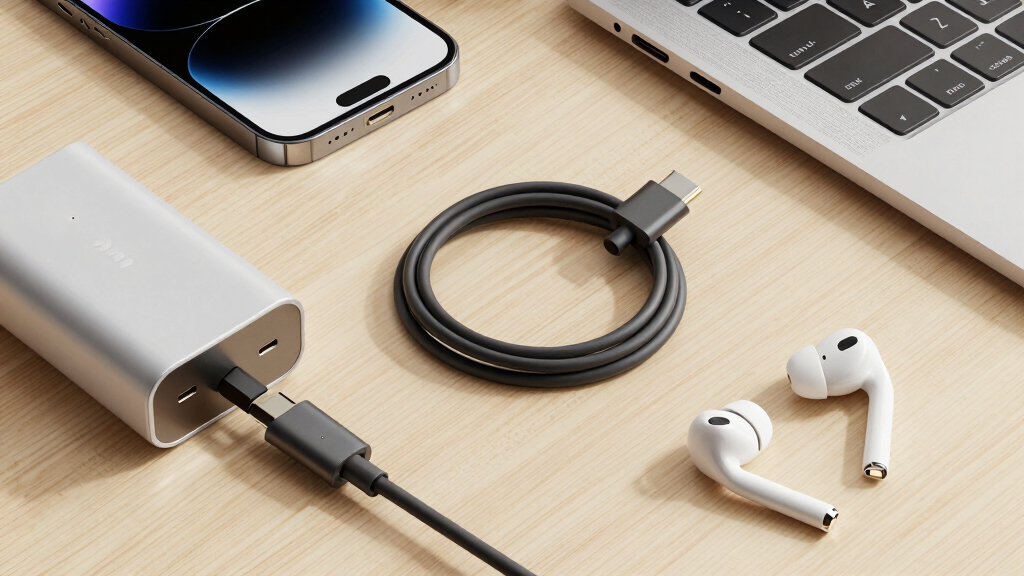

The Anker USB-C Hub 7-in-1 is my best overall pick among the best USB-C accessories because its broader port selection suits more laptop setups than the five-port alternatives. The BENFEI 5-in-1 is the better value choice for buyers who mainly need HDMI, charging, and three USB-A connections, while the Anker 7-in-2 MacBook Dock stands out for MacBook owners who want 4K at 60Hz and built-in card readers. The central choice is between a compact hub with core connections and a larger model that reduces reliance on extra adapters. Charging input, display refresh rate, card access, and laptop compatibility separate these options more clearly than port count alone. Continue reading for my full breakdown of which hub fits each buyer type.
Complete the kit



Key Takeaways
- The Anker 7-in-1 ranks first because its wider connectivity and broad laptop compatibility make it more adaptable than the five-port hubs.
- The BENFEI 5-in-1 offers the strongest value mix for a basic desk setup, combining 4K HDMI, 100W power input, and three USB-A ports without paying for specialized connections.
- The Anker 7-in-2 is the clear MacBook-focused premium pick, since it pairs 4K at 60Hz with SD and microSD access, but its fitted design is less flexible across different computers.
- A 100W label does not mean 100W reaches the laptop; the hub consumes some power, making the host charger and cable just as relevant as the adapter rating.
- Five-port models divide into distinct roles: Anker favors portability, UGREEN offers an approachable everyday layout, and the Anker HDMI splitter suits a display-centered workstation.
| Acer USB C Hub 7-in-1 Multi-Port Adapter |  | Best Overall | Total ports: 7 | Video output: HDMI, up to 4K at 30Hz | Power Delivery: Up to 100W | VIEW LATEST PRICE | See Our Full Breakdown |
| BENFEI USB C Hub 5-in-1 |  | Best for Fast Portable Setups | Hub configuration: 5-in-1 | USB-A ports: 3 | Maximum data rate: 10Gbps | VIEW LATEST PRICE | See Our Full Breakdown |
| Anker USB C Hub 5-in-1 with 90W Power Delivery |  | Best for USB-A-Heavy Desks | Total ports: 5 | USB-A ports: 3 | HDMI output: 4K at 30Hz | VIEW LATEST PRICE | See Our Full Breakdown |
| UGREEN USB C Hub 5-in-1 Multiport Adapter |  | Best for Broad Device Compatibility | Total ports: 5 | USB-A ports: 3 | Fast USB-A rate: 5Gbps on one port | VIEW LATEST PRICE | See Our Full Breakdown |
| Anker USB C Hub 5-in-1 with USB-C Data Port |  | Best for Mixed USB-C and USB-A Storage | Hub configuration: 5-in-1 | USB-C data port: 1 x 5Gbps | USB-A ports: 2 x 5Gbps | VIEW LATEST PRICE | See Our Full Breakdown |
| Anker USB C Hub for MacBook, 7-in-2 Multi-Function Dock |  | Best for Multi-Display MacBooks | Port Count: 7 | Host Connection: Dual USB-C, 7-in-2 design | HDMI Output: Up to 4K at 60Hz | VIEW LATEST PRICE | See Our Full Breakdown |
| Anker USB C Hub 7-in-1 Multi-Port USB Adapter |  | Best Cross-Platform Pick | Port Count: 7 | HDMI Output: Up to 4K at 60Hz | USB-A Ports: 2 | VIEW LATEST PRICE | See Our Full Breakdown |
| USB-C Adapter for MacBook Pro/Air 2020-2023, 6-in-1 USB-C Hub |  | Best for Older MacBooks | Port Count: 6 | USB-A Ports: 3 USB 3.0 | Maximum Data Speed: Up to 5Gbps | VIEW LATEST PRICE | See Our Full Breakdown |
| USB-C accessorie | USB-A ports | HDMI output | Power Delivery | Card slots |
|---|---|---|---|---|
| Acer USB C Hub 7-in-1 Multi-Po | — | — | Up to 100W | SD and microSD |
| BENFEI USB C Hub 5-in-1 | 3 | 4K at 30Hz | — | — |
| Anker USB C Hub 5-in-1 with 90 | 3 | 4K at 30Hz | Up to 90W | — |
| UGREEN USB C Hub 5-in-1 Multip | 3 | 4K at 30Hz | Up to 100W | — |
| Anker USB C Hub 5-in-1 with US | 2 x 5Gbps | 4K at 30Hz | — | — |
| Anker USB C Hub for MacBook | — | Up to 4K at 60Hz | — | SD and microSD |
| Anker USB C Hub 7-in-1 Multi-P | 2 | Up to 4K at 60Hz | Up to 85W | SD and TF |
| USB-C Adapter for MacBook Pro/ | 3 USB 3.0 | — | Up to 100W through Thunderbolt 3 | SD and microSD |
More Details on Our Top Picks
Acer USB C Hub 7-in-1 Multi-Port Adapter
I rank the Acer USB C Hub as my best overall choice because its seven-port layout covers displays, charging, memory cards, and everyday peripherals in one aluminum body. Compared with the BENFEI 5-in-1 and UGREEN 5-in-1, it adds SD and microSD access, letting photographers and creators leave a separate reader at home. The 100W PD input and 5Gbps transfers also make it better rounded than the smaller Anker models. Its lead comes from port variety rather than display performance: 4K stops at 30Hz, and the extra USB-C connection handles data but not audio or video. I would choose it for a flexible travel desk, while gamers and 4K monitor owners should favor the Anker 7-in-2 hub listed elsewhere, which supports 4K at 60Hz.
Pros:- Seven ports cover video, charging, storage cards, and common peripherals
- 100W Power Delivery input supports demanding laptops
- Separate SD and microSD slots suit photo and video workflows
- Aluminum enclosure helps manage heat
Cons:- 4K HDMI output is limited to 30Hz
- USB-C data port cannot carry audio or video
- Display and charging functions depend on host-device Alt Mode and PD support
Best for: Laptop-based creators and hybrid workers who need HDMI, card readers, charging, and peripheral connections from one USB-C port
Not ideal for: Gamers and 4K monitor users who want 60Hz output, or owners of USB-C devices without DisplayPort Alt Mode
- Total ports:7
- Video output:HDMI, up to 4K at 30Hz
- Power Delivery:Up to 100W
- Maximum data rate:5Gbps
- Card slots:SD and microSD
- Material:Aluminum
- Operating systems:ChromeOS 137, macOS 12, and Windows 11 or later
- Dimensions:5.1 x 1.4 x 0.7 inches
Our verdict“I recommend the Acer as the strongest all-purpose pick for buyers who value connection variety more than 4K refresh rate.”
BENFEI USB C Hub 5-in-1
I place the BENFEI USB C Hub highest for travelers who prioritize fast accessory transfers in a small package. Its USB connection reaches up to 10Gbps, twice the stated ceiling of the Acer 7-in-1 and Anker B0BQLLB61B, which can shorten large drive backups. The 20cm silicone-woven lead is also better suited to repeated packing than a short, rigid cable. Compared with the Acer, however, BENFEI sacrifices SD and microSD slots, while its USB-C socket accepts power only rather than data or video. The 90W maximum charging output is useful for many laptops but falls below the advertised 100W input figure. Like every 5-in-1 hub here, HDMI is capped at 4K at 30Hz. I see it as a focused mobile-office pick, not a full creator dock.
Pros:- Data transfers reach up to 10Gbps
- Compact aluminum case suits travel bags
- Silicone-woven 20cm cable is designed for repeated handling
- 18-month warranty adds useful purchase protection
Cons:- No SD or microSD card reader
- USB-C port supports power input only, with no data or video
- 4K HDMI output is limited to 30Hz
Best for: Frequent travelers who connect USB-A storage or peripherals and want a compact hub with a durable 20cm cable
Not ideal for: Photographers needing card slots or buyers who expect the USB-C port to transfer data or drive a display
- Hub configuration:5-in-1
- USB-A ports:3
- Maximum data rate:10Gbps
- HDMI output:4K at 30Hz
- Power input:Up to 100W
- Maximum laptop charging:Up to 90W
- Cable length:20cm
- Warranty:18 months
Our verdict“I would pick BENFEI for a portable USB-A workstation where transfer speed matters more than card readers or USB-C data.”
Anker USB C Hub 5-in-1 with 90W Power Delivery
I rank the Anker USB C Hub 5-in-1 as the best fit for desks built around several USB-A devices. Its three USB-A ports let a keyboard, mouse, and storage drive remain connected together, while 90W pass-through charging can keep many laptops powered. Compared with Anker’s B0BQLLB61B model, this version supplies one more USB-A connection but drops the latter’s dedicated USB-C data port. That makes the choice clear: older peripherals favor this model, while mixed USB-A and USB-C storage favors the other Anker. The compromises extend beyond port selection. No charger is included, the power-input socket cannot power attached peripherals, and Linux is excluded from the stated compatibility. HDMI also tops out at 4K at 30Hz, making it more appropriate for documents and streaming than fluid 4K gaming.
Pros:- Three USB-A ports accommodate multiple legacy peripherals
- Pass-through charging reaches up to 90W
- Compact five-port layout covers common desk connections
- Supports MacBook, Windows, and ChromeOS systems
Cons:- External charger is not included
- Linux is outside the stated compatibility
- USB-C power input cannot supply power directly to peripherals
Best for: MacBook, Windows, and Chromebook users who keep three USB-A peripherals attached at a home or office desk
Not ideal for: Linux users, USB-C storage owners, or buyers expecting an included wall charger
- Total ports:5
- USB-A ports:3
- HDMI output:4K at 30Hz
- Power Delivery:Up to 90W
- macOS support:macOS 12 or later
- Windows support:Windows 10 and 11
- Other system support:ChromeOS; Linux not supported
- Charger included:No
Our verdict“My pick for a USB-A-heavy desk is this Anker, provided the buyer already owns a suitable charger and does not use Linux.”
UGREEN USB C Hub 5-in-1 Multiport Adapter
I give the UGREEN USB C Hub 5-in-1 the compatibility award because its stated device list stretches from MacBooks and Windows laptops to iPad Pro, Galaxy S23, and iPhone 16 Pro models. That range makes it less of a gamble for a household sharing one adapter across several devices. Compared with the Anker B0DKT8BB4M, it offers a higher 100W PD input, though actual charging depends on the connected device and charger. Its three USB-A ports are not equal: only one reaches 5Gbps, while the other two stop at 480Mbps. The Acer 7-in-1 remains better for photographers because UGREEN omits card readers, and both limit HDMI to 4K at 30Hz. I favor this model for broad everyday compatibility, not high-speed multi-drive work or smooth 4K gaming.
Pros:- Extensive stated compatibility across computers, tablets, and phones
- 100W Power Delivery input supports high-powered charging setups
- Three USB-A ports handle storage and everyday peripherals
- One 5Gbps USB-A port supports faster file transfers
Cons:- Two USB-A ports are restricted to 480Mbps
- No SD or microSD card slots
- 4K HDMI output is capped at 30Hz
Best for: Multi-device households and mixed-platform offices sharing a hub among MacBooks, iPads, Windows laptops, phones, and Chromebooks
Not ideal for: Creators needing memory-card slots or users who need several high-speed USB-A connections at once
- Total ports:5
- USB-A ports:3
- Fast USB-A rate:5Gbps on one port
- Standard USB-A rate:480Mbps on two ports
- HDMI output:4K at 30Hz
- Power Delivery:Up to 100W
- Apple compatibility:MacBook, iPad Pro, iMac, and iPhone 16 Pro series
- Other compatibility:XPS, ThinkPad, Chromebook, Surface, and Galaxy S23
Our verdict“I recommend UGREEN when one hub must serve many device types and peak speed on every port is not required.”
Anker USB C Hub 5-in-1 with USB-C Data Port
I choose the Anker USB C Hub 5-in-1 for buyers who need data connections in both USB formats. Its dedicated 5Gbps USB-C data port joins two equally fast USB-A ports, making it better suited to a modern SSD plus older accessories than the Anker B0DKT8BB4M, which provides three USB-A sockets but no USB-C data. The Acer 7-in-1 still offers more variety through its card slots, and BENFEI advertises a higher peak transfer rate. Charging is another measured compromise: the hub accepts 100W PD input but passes up to 85W to the laptop, with the balance reserved for operation. Its PD socket handles charging only, neither USB-C port outputs video, and 4K HDMI remains limited to 30Hz. I favor it for mixed external drives rather than multi-monitor or high-refresh work.
Pros:- Dedicated 5Gbps USB-C data port supports modern storage
- Two USB-A ports also provide 5Gbps transfers
- Pass-through charging reaches up to 85W
- Works with USB-C, USB4, and Thunderbolt host connections
Cons:- 100W PD input delivers no more than 85W to the laptop
- USB-C ports cannot output video
- External charger is required for pass-through charging
Best for: Laptop users who regularly connect both a USB-C external drive and USB-A storage or peripherals
Not ideal for: Buyers needing USB-C video output, memory-card readers, or the full 100W delivered to their laptop
- Hub configuration:5-in-1
- USB-C data port:1 x 5Gbps
- USB-A ports:2 x 5Gbps
- HDMI output:4K at 30Hz
- PD input:Up to 100W, charging only
- Pass-through charging:Up to 85W
- Host interfaces:USB-C, USB4, and Thunderbolt
- Operating systems:macOS 12 or later, Windows 10 or 11, and ChromeOS
Our verdict“I would buy this Anker for a mixed USB-C and USB-A storage setup, but not for USB-C displays or card-based media workflows.”
Anker USB C Hub for MacBook, 7-in-2 Multi-Function Dock
I rank the Anker 7-in-2 Multi-Function Dock highest for MacBook owners building a desk around external displays. Its 40Gbps connection and 100W charging support give it more bandwidth and power headroom than the Anker 7-in-1 Multi-Port USB Adapter, while 4K and 5K output options suit demanding monitor setups. The dual-connector design also feels tidier than a dangling universal hub and leaves MagSafe clear on supported models. That Mac-focused fit is also its main compromise: compatibility requires careful checking, some configurations can crowd MagSafe, and it is not compatible with MacBook Neo. M1 and M2 models cannot drive two external displays through it because of Apple’s display limits. I would choose this for a compatible newer MacBook, but cross-platform buyers have safer options elsewhere in the lineup.
Pros:- 40Gbps connectivity supports faster peripherals than the 5Gbps Anker 7-in-1
- Supports high-resolution 4K and 5K display configurations
- Passes through up to 100W charging power
- Seven-port layout includes USB-A and dual memory-card readers
Cons:- M1 and M2 MacBooks cannot use two external displays
- MacBook-specific dual-connector design limits use with other laptops
- May obstruct MagSafe on some MacBook configurations and does not support MacBook Neo
Best for: Owners of compatible newer MacBook Air or Pro models who want high-bandwidth storage, card readers, charging, and a multi-monitor desk setup
Not ideal for: MacBook Neo, M1, or M2 owners expecting two external displays, or buyers who need one hub for both Mac and Windows laptops
- Port Count:7
- Host Connection:Dual USB-C, 7-in-2 design
- HDMI Output:Up to 4K at 60Hz
- Maximum Supported Resolution:Up to 5K at 60Hz
- Maximum Data Speed:40Gbps
- Charging Support:Up to 100W
- Card Slots:SD and microSD
- Compatibility:MacBook Air M4/M5, MacBook Pro 13-inch, and Thunderbolt 4 models
Our verdict“This is my pick for compatible MacBook users who value display capability and 40Gbps bandwidth more than broad device compatibility.”
Anker USB C Hub 7-in-1 Multi-Port USB Adapter
I place the Anker 7-in-1 Multi-Port USB Adapter ahead of Mac-only designs for buyers who regularly switch between laptop brands. It combines 4K at 60Hz HDMI, two card slots, and three 5Gbps data connections in a compact universal format. Compared with the Anker 7-in-2 Multi-Function Dock, it sacrifices 40Gbps bandwidth and drops charging output from 100W to 85W, but its single-cable connection suits a wider range of USB-C laptops. It is also more workstation-friendly than the smaller Anker 5-in-1 hubs when SD and microSD access matters. The limitations affect cable planning: no charger is supplied, and the USB-C data port cannot carry video. I would pick it for flexible everyday connectivity, while photographers moving huge files or Mac users building dual-display desks should favor a faster, more specialized model.
Pros:- Single-cable design works across a broader laptop range than the MacBook-specific 7-in-2 model
- 4K at 60Hz HDMI provides smoother high-resolution monitor output
- Separate SD and TF slots suit camera and media workflows
- Two USB-A ports and one USB-C data port each support up to 5Gbps
Cons:- USB-C data port does not support video output
- Power adapter is not included
- 85W maximum laptop charging trails the 100W hubs in the lineup
Best for: Hybrid workers who use both Mac and USB-C Windows laptops and need HDMI, card readers, charging, and several data ports in one travel-friendly hub
Not ideal for: Buyers who need USB-C monitor output, an included power adapter, or 40Gbps transfer speeds for high-performance external storage
- Port Count:7
- HDMI Output:Up to 4K at 60Hz
- USB-A Ports:2
- USB-A Data Speed:Up to 5Gbps
- USB-C Data Ports:1
- USB-C Data Speed:Up to 5Gbps
- Power Delivery:Up to 85W
- Card Slots:SD and TF
Our verdict“This is the balanced choice for buyers who value broad laptop compatibility and a full port mix over maximum bandwidth.”
USB-C Adapter for MacBook Pro/Air 2020-2023, 6-in-1 USB-C Hub
I include this 6-in-1 MacBook USB-C Hub for owners of 2019–2023 Apple laptops who need more USB-A capacity without adding a cable-heavy dock. Its three USB 3.0 ports beat both Anker seven-port models in this batch for connecting keyboards, drives, and older accessories at once, while 100W Thunderbolt 3 power delivery preserves charging convenience. It can also route video up to 5K or dual 4K at 60Hz through its Thunderbolt connection. The tradeoffs are stricter than with the universal Anker 7-in-1: fitted MacBook cases prevent attachment, only one hard drive is supported, and power-hungry devices such as Apple’s USB SuperDrive are excluded. Its 5Gbps data ceiling also trails the Anker 7-in-2’s 40Gbps link. I see it as a practical legacy-port fix, not the strongest choice for newer MacBooks or storage-heavy desks.
Pros:- Three USB 3.0 ports accommodate more legacy accessories than the Anker hubs in this batch
- Thunderbolt 3 port supports up to 100W power delivery
- Supports video output up to 5K or dual 4K at 60Hz
- Aluminum body aids heat dissipation
Cons:- Cannot attach when the MacBook has a fitted case
- Supports only one hard drive at a time
- Does not support high-power peripherals or Apple USB SuperDrive
Best for: Owners of compatible 2019–2023 MacBook Air or Pro models who need three USB-A connections, memory-card access, and charging in a flush-mounted adapter
Not ideal for: MacBook users who keep a fitted case installed or need several external drives, high-power peripherals, or 40Gbps storage performance
- Port Count:6
- USB-A Ports:3 USB 3.0
- Maximum Data Speed:Up to 5Gbps
- Card Slots:SD and microSD
- Power Delivery:Up to 100W through Thunderbolt 3
- Video Output:Up to 5K or dual 4K at 60Hz
- Material:Aluminum
- Compatibility:MacBook Air 13-inch Retina and MacBook Pro 13-inch/15-inch Touch Bar models from 2019–2023
- Peripheral Limit:One hard drive maximum; Apple USB SuperDrive not supported
Our verdict“This hub makes the most sense for case-free 2019–2023 MacBooks that need several USB-A ports but only one external drive.”
How We Picked
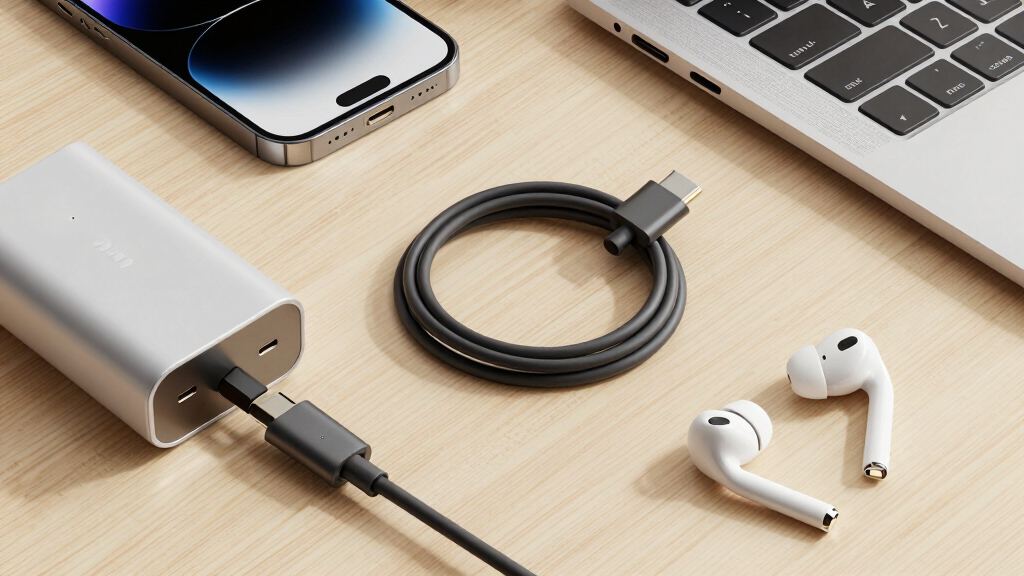
I ranked these accessories by connection usefulness, host compatibility, display capability, charging headroom, portability, and how clearly each port mix serves a recognizable buyer. A hub earned a higher position when it could replace several separate adapters without becoming tied to one laptop shape. I also gave extra weight to practical differences such as 4K at 60Hz, SD and microSD access, and enough USB-A ports for existing peripherals.
My ranking favors versatility at the top, followed by focused options that provide a strong combination of simplicity and value. The Anker 7-in-1 leads because it covers more use cases than the five-port models, while the MacBook 7-in-2 ranks as a premium specialist rather than the universal winner. Compact hubs score well when their reduced size still preserves the connections most buyers use. I treated value as useful capability per purchase, not merely the lowest listed price, and marked down designs whose fit or port arrangement limits future use.
| USB-C accessorie | Power Delivery | Card slots |
|---|---|---|
| Acer USB C Hub 7-in-1 Multi-Po | Up to 100W | SD and microSD |
| BENFEI USB C Hub 5-in-1 | — | — |
| Anker USB C Hub 5-in-1 with 90 | Up to 90W | — |
| UGREEN USB C Hub 5-in-1 Multip | Up to 100W | — |
| Anker USB C Hub 5-in-1 with US | — | — |
| Anker USB C Hub for MacBook | — | SD and microSD |
| Anker USB C Hub 7-in-1 Multi-P | Up to 85W | SD and TF |
| USB-C Adapter for MacBook Pro/ | Up to 100W through Thunderbolt 3 | SD and microSD |
Factors to Consider When Choosing Best USB-C Accessories
I would choose a USB-C accessory by starting with the devices that must connect every day, then allowing room for one or two future additions. Port count alone can mislead, since a seven-port hub filled with rarely used connections may be less useful than a focused five-port model. The factors below explain where paying more helps and where a simpler adapter is enough.
Match the Port Mix to Your Daily Setup
I recommend writing down every device that normally stays connected before comparing hubs. A mouse receiver, keyboard, storage drive, monitor, and charger can consume five ports immediately. Three USB-A ports are useful for older peripherals, but buyers moving toward USB-C storage may prefer a hub with an extra data-capable USB-C connection. Card readers matter more to photographers and video creators than to office users, while Ethernet may be a priority for unreliable wireless networks. A common mistake is counting the charging port as a general-purpose data port when many hubs reserve it for power input only. I would choose the smallest port layout that handles the regular workload with at least one connection left available.
Check What the USB-C Port Actually Supports
USB-C describes the connector shape, not every capability behind it. A laptop port may support data and charging yet lack video output, which would prevent an HDMI hub from driving a monitor. Some computers also have several USB-C ports with different feature sets. I would check the laptop manual for DisplayPort Alt Mode, Thunderbolt support, and charging compatibility before buying. Phone and tablet support can be even less predictable because their operating systems may limit external displays or connected storage. Confirming the host port first avoids blaming the hub for a capability the computer never provided.
Separate Charging Input From Delivered Power
A hub advertised with 100W power delivery usually accepts up to that amount rather than sending the full figure to the computer. The accessory keeps part of the incoming power for its own circuitry and attached devices. I would pair the hub with a charger and cable rated for the laptop’s normal demand, especially for performance-focused machines. A 100W input ceiling offers more headroom than 90W, but that difference may have little effect on a thin laptop that normally uses a 45W or 65W charger. High-drain notebooks can still charge slowly under load when connected through a hub. Buyers who run demanding software should prioritize real pass-through output information over the largest number printed in the product name.
Choose the Right Display Resolution and Refresh Rate
The phrase 4K HDMI does not reveal the whole display experience. A hub limited to 4K at 30Hz can show sharp text and video, but cursor movement and window scrolling appear less fluid than at 60Hz. I would seek 4K at 60Hz for a primary desktop monitor and accept 30Hz only for presentations, occasional media playback, or a secondary screen. Resolution may also fall when multiple displays share limited bandwidth. Buyers with gaming monitors should check refresh-rate and resolution combinations rather than relying on a general 4K claim. The monitor, cable, hub, and host computer must all support the requested mode, so the slowest link sets the result.
Balance Compactness Against Cable and Heat Management
Compact hubs travel easily, but crowded ports can make wide plugs block neighboring connections. Short attached cables also leave the adapter hanging from elevated laptop stands, adding strain to the computer’s port. I prefer a short, flexible lead for mixed-device use and a fitted dual-port design only when it matches a dedicated MacBook setup. Aluminum housings can spread heat across the case, so warmth during charging or file transfers is not automatically a fault. Heavy thermal buildup, repeated disconnects, and unstable displays are different concerns and should prompt troubleshooting. For a permanent workstation, stable cable placement and accessible ports often matter more than saving a few centimeters in a bag.
Frequently Asked Questions
Is a 7-in-1 USB-C hub better than a 5-in-1 model?
A 7-in-1 hub is better when its extra connections replace adapters that would otherwise occupy bag or desk space. The Anker 7-in-1 and Acer 7-in-1 suit buyers with varied peripherals, while the five-port BENFEI, Anker, and UGREEN models cover simpler monitor-and-accessory setups. More ports can add size, cost, and power demand without helping someone who only uses HDMI and two USB devices. I would choose by useful ports rather than total ports. A focused five-port hub can be the smarter purchase when every connection has a clear job.
Will a 100W USB-C hub charge my laptop at the full 100W?
Usually not, because the hub uses some incoming power to operate itself and connected accessories. A product’s 100W rating often describes input capacity, while the laptop receives a lower amount. The charger and USB-C cable must also support the requested wattage and charging protocol. For a laptop supplied with a 45W or 65W adapter, either a 90W or 100W hub may provide ample headroom. I would check the hub’s stated host output before relying on it for a machine that needs close to 100W under load.
Do I need 4K at 60Hz, or is standard 4K HDMI enough?
I would choose 4K at 60Hz for a monitor used throughout the workday because motion, scrolling, and pointer movement look smoother. A 4K 30Hz connection remains suitable for slides, movies, dashboards, or occasional second-screen use. Among these picks, the Anker 7-in-2 MacBook Dock explicitly targets 4K at 60Hz, giving it an advantage for display-focused MacBook setups. The laptop and HDMI cable must support the same output mode. Buyers using a 1080p monitor may gain little from paying extra for higher 4K refresh support.
Should a MacBook owner buy a fitted 7-in-2 dock or a cable-connected hub?
A fitted 7-in-2 dock creates a tidy setup and can provide a broad port layout without a dangling cable. The tradeoff is device-specific fit: cases, port spacing, and a future laptop change can make the accessory less useful. Cable-connected models such as the Anker 7-in-1 work across a wider range of MacBooks, Windows laptops, and tablets. I would choose the Anker 7-in-2 for a dedicated compatible MacBook workstation and a cable-connected hub for travel or shared use. Buyers who keep a protective shell on their MacBook should also check whether the fitted connector can seat fully.
Can I connect external drives, a monitor, and charging at the same time?
Yes, a suitable multiport hub can handle those tasks together, but every active device shares the available USB-C bandwidth and power. HDMI output and high-speed storage transfers may compete for resources, depending on the laptop and hub architecture. Multiple bus-powered drives can also draw more power than the host connection comfortably supplies. I would attach the hub’s power input before connecting demanding storage and avoid unplugging it during file transfers. Buyers who regularly move large media files while driving a high-resolution display should favor a wider-bandwidth dock over a basic travel hub.
Conclusion
For the broadest mix of users, I recommend the Anker USB-C Hub 7-in-1 as the best overall choice; its wider connectivity makes it easier to keep as a laptop setup grows. The BENFEI 5-in-1 is my best value pick for HDMI, charging, and several USB-A peripherals, while the UGREEN 5-in-1 is the friendliest starting point for beginners who want a straightforward everyday layout. MacBook owners seeking a cleaner premium workstation should choose the Anker 7-in-2 Dock, especially when 4K at 60Hz and card access matter. The compact Anker 5-in-1 makes more sense for frequent travel, the Acer 7-in-1 suits buyers prioritizing general-purpose port variety, and the 6-in-1 MacBook adapter is better for several USB-A devices plus memory cards. For a simple display-centered desk, the Anker 5-in-1 HDMI splitter keeps the focus on video output and power delivery without adding connections that may go unused.