
For filmmakers and videographers using mirrorless cameras, an anamorphic lens offers a distinctive cinematic look with wide aspect ratios and unique lens flares. The best options balance image quality, ease of use, and compatibility, but choosing the right one depends on your specific needs and budget. The overall best pick is the SIRUI Astra 50mm 1.33X for its versatile performance and autofocus capabilities, while the SIRUI 40mm T1.8 provides excellent low-light performance for handheld shooting. Tradeoffs are common: wider lenses may sacrifice some image sharpness, and more affordable options might lack autofocus or flare control. Continue reading for a detailed breakdown of these options and what to consider before buying.

Get the latest gadgets delivered free — and shop member deals
- Fast, free delivery on millions of items
- Access to Prime Big Deal Days deals on October 6–7
- Prime Video, Amazon Music and more included
Complete the kit



Key Takeaways
- Wider lenses like 20mm and 24mm offer more expansive cinematic shots but often come with higher price tags.
- Autofocus, available on select models like the Astra 50mm, simplifies run-and-gun shooting but can introduce tradeoffs in lens size and complexity.
- Blue flare effects are common on budget models, adding a stylistic element but sometimes at the cost of optical clarity.
- Compatibility with various mirrorless mounts varies; choosing a lens tailored to your camera system is crucial.
- Price ranges significantly, with more affordable lenses often lacking advanced features like autofocus or flare control.
| SIRUI 50mm F1.8 1.33X S35 Anamorphic Lens for RF Mount, Blue Flare |  | Best Overall for Professional Cinema Filmmaking | Focal Length: 50 mm | Aperture: F/1.8 – F/16 | Mount: RF | VIEW ON AMAZON | See Our Full Breakdown |
| SIRUI 40mm T1.8 1.33X Anamorphic Lens for Sony E Mount Cameras | 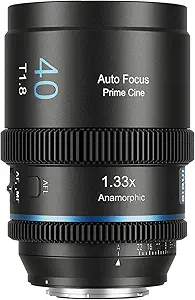 | Best for Compact, Mobile Filmmaking | Focal Length: 40 mm | Maximum Aperture: T1.8 | Lens Mount: Sony E | VIEW ON AMAZON | See Our Full Breakdown |
| SIRUI 24mm Anamorphic Lens F2.8 1.33X APS-C Camera Lens for EF-M Mount, Blue Flare |  | Best for Wide-Angle Cinematic Shots on APS-C | Focal Length: 24 mm | Aperture: F2.8 | Aspect Ratio: 2.4:1 | VIEW ON AMAZON | See Our Full Breakdown |
| SIRUI Astra 50mm 1.33X Autofocus Full Frame Anamorphic Cine Lens for E Mount Cameras |  | Best for Full-Frame Professional Cinematography | Focal Length: 50 mm | Squeeze Factor: 1.33X | Image Circle: 44 mm | VIEW ON AMAZON | See Our Full Breakdown |
| SIRUI 24mm Anamorphic Lens F2.8 1.33X APS-C Camera Lens for E Mount, Blue Flare | | Best for Wide-Angle Cinematic Shots on E Mount | Focal Length: 24 mm | Aperture: F2.8 | Magnification: 1.33x | VIEW ON AMAZON | See Our Full Breakdown |
| SIRUI 35mm Anamorphic Lens F1.8 1.33X APS-C Cinema Lens for M4/3 Mount |  | Best Overall for Compact Cinematic Filmmaking | Focal Length: 35mm | Aperture: F/1.8 to F/16 | Squeeze Factor: 1.33x | VIEW ON AMAZON | See Our Full Breakdown |
| SIRUI 24mm Anamorphic Lens F2.8 1.33X S35 Camera Lens for Z Mount, Blue Flare | | Best for Z Mount Users Seeking Compact Wide-Angle Cinematic Effects | Focal Length: 24mm | Aperture: F2.8 | Magnification: 1.33x | VIEW ON AMAZON | See Our Full Breakdown |
| SIRUI 20mm T1.8 1.33X Anamorphic Lens for Sony E Mount Cameras |  | Best for Wide-Angle Low-Light Cinematics on Sony E Mount | Focal Length: 20mm | Maximum Aperture: T1.8 | Mount: Sony E | VIEW ON AMAZON | See Our Full Breakdown |
| SIRUI 35mm T2.9 1.6X Full-Frame Anamorphic Lens (Z Mount) |  | Best for Full-Frame Professionals Needing Classic Anamorphic Effects | Focal Length: 35mm | Maximum Aperture: T2.9 | Squeeze Factor: 1.6x | VIEW ON AMAZON | See Our Full Breakdown |
| anamorphic lens for mirrorless | Focal Length | Aperture | Mount | Weight |
|---|---|---|---|---|
| SIRUI 50mm F1.8 1.33X S35 Anam | 50 mm | F/1.8 – F/16 | RF | 579.2 g |
| SIRUI 40mm T1.8 1.33X Anamorph | 40 mm | — | — | 614 g |
| SIRUI 24mm Anamorphic Lens F2. | 24 mm | F2.8 | EF-M | — |
| SIRUI Astra 50mm 1.33X Autofoc | 50 mm | T1.8 | — | — |
| SIRUI 24mm Anamorphic Lens F2. | 24 mm | F2.8 | — | — |
| SIRUI 35mm Anamorphic Lens F1. | 35mm | F/1.8 to F/16 | M4/3 | not specified |
| SIRUI 24mm Anamorphic Lens F2. | 24mm | F2.8 | — | — |
| SIRUI 20mm T1.8 1.33X Anamorph | 20mm | — | Sony E | 480g |
| SIRUI 35mm T2.9 1.6X Full-Fram | 35mm | — | Z Mount | 971g |
More Details on Our Top Picks
SIRUI 50mm F1.8 1.33X S35 Anamorphic Lens for RF Mount, Blue Flare
This lens stands out for its ability to deliver cinema-quality widescreen images with classic anamorphic effects like oval bokeh and light reflections, making it a top choice for serious filmmakers. Compared to the SIRUI Astra 50mm, it offers a wider field of view and a more lightweight design that’s easier to handle for handheld shooting. Its manual focus, while precise, can challenge users unfamiliar with traditional cinema lenses. The german Schott glass and 33% wider coverage than standard 50mm lenses make it ideal for capturing expansive cinematic scenes. However, its weight of over 1.2 pounds and limited RF mount compatibility mean it’s best suited for dedicated cinema setups rather than casual use. Overall, this lens provides a compelling balance of quality and cinematic character, making it perfect for filmmakers committed to high-end production.
Pros:- Creates authentic cinematic widescreen effects with oval bokeh
- High-quality German Schott glass for sharp images
- Supports S35 frame for professional-grade filming
- Wider field of view than standard 50mm lenses
Cons:- Manual focus may be difficult for beginners
- Relatively heavy for handheld shooting
- Limited to RF mount cameras
Best for: Professional filmmakers and videographers seeking cinema-grade anamorphic effects with a wide field of view.
Not ideal for: Amateur shooters or hobbyists without RF mount cameras or those needing autofocus and lightweight options.
- Focal Length:50 mm
- Aperture:F/1.8 – F/16
- Mount:RF
- Support Frame:S35
- Filter Size:M67x0.75
- Max Magnification:1:15.38 (V), 1:20.17 (H)
- Focus Ring Rotation:143.6°
- Length:104 mm
- Weight:579.2 g
Our verdict“This lens is best suited for professional filmmakers seeking high-quality anamorphic effects and a wider cinematic perspective.”
SIRUI 40mm T1.8 1.33X Anamorphic Lens for Sony E Mount Cameras
This lens excels for creators who want cinematic widescreen visuals in a compact package, with autofocus and a fast T1.8 aperture that rivals the manual focus of the SIRUI 50mm. Its autofocus capability, including eye and subject tracking, makes it more accessible than purely manual options, but it trades off some simplicity for versatility. Compared to the SIRUI 24mm F2.8, it offers a slightly longer focal length and better low-light performance thanks to its T1.8 aperture. Its small size and lightweight design make it ideal for handheld and mobile setups, though the lack of image stabilization means it demands careful handling. This lens makes a strong case for hybrid shooters wanting cinematic effects without bulk, though it’s limited to Sony E mount cameras.
Pros:- Produces cinematic 2.35:1 aspect ratio with anamorphic squeeze
- Fast T1.8 aperture for low-light shooting
- Compact and lightweight, perfect for mobile workflows
- Accurate autofocus with eye and subject tracking
Cons:- No image stabilization
- Fixed focal length limits versatility
- Requires Sony E mount compatibility
Best for: Videographers and content creators filming on Sony E mount cameras who prioritize portability and autofocus features.
Not ideal for: Photographers or videographers using non-Sony systems, or those needing stabilization for handheld shots.
- Focal Length:40 mm
- Maximum Aperture:T1.8
- Lens Mount:Sony E
- Focus Type:Auto/Manual
- Lens Design:Anamorphic
- Maximum Focal Length:40 mm
- Minimum Focal Length:40 mm
- Weight:614 g
- Flare Options:Blue/Neutral
Our verdict“This lens is ideal for Sony E users seeking a portable, autofocus anamorphic lens with excellent low-light capability.”
SIRUI 24mm Anamorphic Lens F2.8 1.33X APS-C Camera Lens for EF-M Mount, Blue Flare
This 24mm lens offers a wide-angle perspective with a 1.33x squeeze, making it suitable for capturing expansive scenes with cinematic flair. Its high-quality Schott glass and Nano-coating ensure sharp, aberration-free images, while the aluminum alloy housing provides durability for on-the-go shooting. Compared with the longer 50mm options, this lens’s wide focal length makes it ideal for landscape and architectural shots, but it limits versatility for tighter compositions. Its F2.8 aperture is decent but less effective in low-light conditions, which might be a concern for night scenes. This lens is best for APS-C shooters who need a wide, cinematic lens with distinctive anamorphic effects, though it might require adapters for some camera systems.
Pros:- Produces cinematic 2.4:1 aspect ratio with anamorphic effects
- High-quality Schott glass with Nano-coating for sharpness
- Durable aluminum alloy construction
- Wide 24mm focal length for expansive scenes
Cons:- Limited to EF-M mount, may need adapters
- Aperture less effective in low-light situations
- Specialized lens not suited for all photography styles
Best for: Videographers and photographers using APS-C cameras who want wide, cinematic shots with a durable build.
Not ideal for: Full-frame users or those requiring better low-light performance, as F2.8 may be limiting in darker environments.
- Focal Length:24 mm
- Aperture:F2.8
- Aspect Ratio:2.4:1
- Magnification:1.33x
- Mount:EF-M
- Minimum Focusing Distance:0.6 m
- Material:Aluminum alloy
Our verdict“This lens offers wide-angle cinematic capabilities for APS-C shooters prioritizing durability and unique effects.”
SIRUI Astra 50mm 1.33X Autofocus Full Frame Anamorphic Cine Lens for E Mount Cameras
The SIRUI Astra 50mm delivers full-frame coverage with a 1.33x squeeze, supporting seamless autofocus and manual focus switching for professional filmmaking. Its dual flare options—blue and neutral—allow for creative control over cinematic effects, setting it apart from simpler manual-focus lenses like the SIRUI 50mm F1.8. While its autofocus system simplifies operation, it comes at a higher cost and is limited to Sony E mount cameras, which could be restrictive for multi-platform shooters. The T1.8 aperture provides excellent low-light performance, making it suitable for a variety of lighting scenarios. This lens is well-suited for high-end productions where autofocus, quick focus adjustments, and full-frame coverage are priorities, but less so for budget-conscious or non-Sony users.
Pros:- Supports full-frame sensors with complete coverage
- Fast T1.8 aperture for low-light shooting
- Dual flare options for cinematic effects
- Seamless autofocus/manual focus switch
Cons:- Limited to Sony E mount cameras
- Higher price point
- Designed primarily for professional use
Best for: Professional filmmakers using Sony E mount cameras who need autofocus and cinematic flare options in a full-frame anamorphic lens.
Not ideal for: Casual videographers or those on a budget, due to its premium price and specific mount requirement.
- Focal Length:50 mm
- Squeeze Factor:1.33X
- Image Circle:44 mm
- Aperture:T1.8
- Compatibility:E Mount
- Focus Control:Autofocus/Manual Focus switch
- Flare Options:Blue flare, Neutral flare
Our verdict“This lens is perfect for Sony E users seeking full-frame autofocus anamorphic performance with versatile flare options for professional projects.”
SIRUI 24mm Anamorphic Lens F2.8 1.33X APS-C Camera Lens for E Mount, Blue Flare
This lens offers a cinematic 2.4:1 aspect ratio with a 1.33x squeeze, making it ideal for capturing wide vistas or architectural scenes on APS-C sensors. Its high-quality Schott glass and Nano-coating ensure sharp, consistent images, while the aluminum alloy body provides durability. Compared to the 50mm full-frame options, this 24mm lens is more suited for expansive shots, but its F2.8 aperture limits low-light flexibility. Its compatibility with E mount cameras makes it versatile, though users should be aware of the technical demands of shooting with anamorphic lenses. The blue flare adds creative options, but this lens is better suited for dedicated filmmakers comfortable with the technical aspects of anamorphic shooting.
Pros:- Produces cinematic 2.4:1 aspect ratio with anamorphic effects
- High-quality Schott glass with Nano-coating
- Durable aluminum alloy construction
- Wide 24mm focal length for broad vistas
Cons:- Limited to APS-C sensors
- Aperture less effective in low light
- Requires familiarity with anamorphic shooting
Best for: Cine-enthusiasts and professionals using APS-C E mount cameras who want wide, cinematic scenes with distinctive anamorphic effects.
Not ideal for: Full-frame shooters or those needing better low-light performance, as F2.8 may be restrictive in darker conditions.
- Focal Length:24 mm
- Aperture:F2.8
- Magnification:1.33x
- Compatibility:E Mount
- Minimum Focusing Distance:0.6 m
- Material:Aluminum alloy
Our verdict“This lens is well-suited for APS-C shooters seeking wide, cinematic images with a durable build and creative flare options.”
SIRUI 35mm Anamorphic Lens F1.8 1.33X APS-C Cinema Lens for M4/3 Mount
This lens stands out as the most versatile option for creators working with M4/3 cameras, offering a classic 35mm focal length with a 1.33x squeeze that produces a cinematic 2.4:1 aspect ratio without cropping. Its adjustable F/1.8 aperture allows for creative control over light streaks and star effects, making it ideal for narrative filmmaking. Compared to larger, more specialized options like the SIRUI 35mm T2.9 1.6X Full-Frame Lens, this model is more portable and easier to handle, though it sacrifices some of the full-frame coverage and maximum squeeze. The primary tradeoff is its limited mount compatibility, which restricts use to M4/3 bodies. Overall, this lens delivers high-resolution images with controlled chromatic aberration, perfect for users seeking a balance of quality and portability.
Pros:- Produces cinematic 2.4:1 aspect ratio videos without cropping
- Adjustable aperture for creative lighting effects
- High-resolution images with controlled chromatic dispersion
- Compact and portable design
Cons:- Limited to M4/3 mount cameras, reducing versatility
- Requires familiarity with anamorphic filming techniques for best results
Best for: Filmmakers and videographers with Micro Four Thirds cameras who need a flexible, cinematic lens for handheld or gimbal work
Not ideal for: Users with full-frame Z-mount cameras seeking maximum image quality and full-frame coverage, as this lens is incompatible
- Focal Length:35mm
- Aperture:F/1.8 to F/16
- Squeeze Factor:1.33x
- Mount:M4/3
- Field of View:26.3mm equivalent
- Weight:not specified
Our verdict“This lens is ideal for M4/3 users seeking a versatile, cinematic anamorphic option that balances quality with portability.”
SIRUI 24mm Anamorphic Lens F2.8 1.33X S35 Camera Lens for Z Mount, Blue Flare
Compared with the 35mm APS-C option, this 24mm lens offers a wider field of view suited for expansive landscapes or tight interiors, thanks to its 24mm focal length and 1.33x squeeze for a 2.4:1 aspect ratio. Its durable aluminum alloy construction and high-quality Schott glass with Nano-coating ensure sharp, aberration-free images with distinctive anamorphic effects like blue streaks and oval bokeh. The main limitation is its exclusive Z mount compatibility, which narrows its audience to Sony Z series cameras. Additionally, the higher price reflects its specialized features, making it less accessible for hobbyists. Nonetheless, for Z mount users wanting a compact, high-performance anamorphic lens, this device offers a compelling blend of durability and visual character.
Pros:- Produces cinematic 2.4:1 aspect ratio with distinctive anamorphic effects
- Wide 24mm focal length ideal for landscapes and interiors
- Durable construction with high-quality coatings
- Close focusing distance of 0.6m for creative flexibility
Cons:- Limited compatibility to Z mount cameras
- Higher cost due to specialized features
- Requires understanding of anamorphic shooting techniques
Best for: Z mount Sony shooters aiming for wide-angle cinematic effects with a durable build
Not ideal for: Owners of other mount systems or those on a tighter budget, since compatibility and cost are restrictive
- Focal Length:24mm
- Aperture:F2.8
- Magnification:1.33x
- Aspect Ratio:2.4:1
- Minimum Focusing Distance:0.6m
- Material:aluminum alloy
Our verdict“This lens is best suited for Z mount owners seeking a compact, wide-angle anamorphic lens with a unique visual signature.”
SIRUI 20mm T1.8 1.33X Anamorphic Lens for Sony E Mount Cameras
This compact 20mm lens offers a wide 54.4-degree field of view with a fast T1.8 aperture, making it excellent for capturing expansive landscapes or low-light scenes on Sony E mount cameras. Its autofocus and eye-tracking features stand out in fast-paced shooting environments, providing ease of use for handheld or gimbal operation. Compared to the 35mm options, this lens sacrifices some versatility in focal length but excels in low-light performance and wide-angle coverage. The absence of image stabilization means it’s less suited for shaky handheld work without additional support. Its autofocus capabilities, however, make it a strong choice for creators seeking quick focus shifts during dynamic shoots. Overall, this lens balances cinematic qualities with practical features for modern Sony users.
Pros:- Cinematic 2.35:1 aspect ratio enhances professional storytelling
- Fast T1.8 aperture for low-light scenes
- Compact, lightweight design ideal for handheld or gimbal use
- Autofocus and eye-tracking for quick, precise focus
Cons:- No image stabilization, which may require stabilization gear
- Limited to Sony E mount cameras
- Focus ring may be tight for some users
Best for: Sony E mount videographers and photographers needing a wide-angle, low-light capable anamorphic lens with autofocus
Not ideal for: Those without Sony E mount cameras or seeking a manual focus-only device for maximum control
- Focal Length:20mm
- Maximum Aperture:T1.8
- Mount:Sony E
- Image Circle:37mm
- Focus Type:Auto/Manual
- Weight:480g
Our verdict“This lens offers a wide-angle, low-light-friendly solution with autofocus for Sony E users seeking cinematic flexibility.”
SIRUI 35mm T2.9 1.6X Full-Frame Anamorphic Lens (Z Mount)
Compared to the smaller-squeeze 1.33x lenses, this 1.6x full-frame model produces more pronounced anamorphic flares and oval bokeh, ideal for cinematic storytelling with a traditional widescreen look. Its 35mm focal length is familiar for many filmmakers, and the 18-element, 13-group lens structure provides a robust, high-quality image with minimal aberration. The manual focus and geared aperture demand some skill but offer precise control, making it suitable for serious filmmakers. The heavier build at over 2 pounds and absence of autofocus mean this lens is best for controlled studio or tripod-based shoots rather than run-and-gun situations. For those wanting a classic anamorphic aesthetic and full-frame coverage, this lens delivers in spades, albeit with a steeper learning curve and weight penalty.
Pros:- Produces classic cinematic flares with 1.6x squeeze
- Full-frame coverage for maximum image quality
- Durable aluminum construction with smooth operation
- Geared focus and aperture for precise control
Cons:- Heavy and less portable for handheld shooting
- Manual focus may be challenging for quick adjustments
- No autofocus feature, requiring skill and patience
Best for: Professional filmmakers seeking a full-frame, manual-focus anamorphic lens with prominent lens flares and oval bokeh effects
Not ideal for: Run-and-gun shooters or those requiring autofocus, due to its manual operation and weight
- Focal Length:35mm
- Maximum Aperture:T2.9
- Squeeze Factor:1.6x
- Mount:Z Mount
- Weight:971g
- Support Format:Full-Frame
Our verdict“This lens is tailored for serious filmmakers prioritizing full-frame, manual control, and a traditional anamorphic aesthetic over portability.”

How We Picked
In selecting these anamorphic lenses, I prioritized performance metrics such as optical quality, flare control, and build durability. Compatibility with common mirrorless mounts was essential, along with ease of use features like autofocus. Price-to-value ratio was also a key factor—balancing affordability with essential features. Lenses with unique advantages, such as wider angles or distinctive flare characteristics, were highlighted to serve different shooting styles. The ranking reflects a combination of technical performance, versatility, and user-friendly features, ensuring options for both enthusiasts and professionals.| anamorphic lens for mirrorless | Aperture | Mount |
|---|---|---|
| SIRUI 50mm F1.8 1.33X S35 Anam | F/1.8 – F/16 | RF |
| SIRUI 40mm T1.8 1.33X Anamorph | — | — |
| SIRUI 24mm Anamorphic Lens F2. | F2.8 | EF-M |
| SIRUI Astra 50mm 1.33X Autofoc | T1.8 | — |
| SIRUI 24mm Anamorphic Lens F2. | F2.8 | — |
| SIRUI 35mm Anamorphic Lens F1. | F/1.8 to F/16 | M4/3 |
| SIRUI 24mm Anamorphic Lens F2. | F2.8 | — |
| SIRUI 20mm T1.8 1.33X Anamorph | — | Sony E |
| SIRUI 35mm T2.9 1.6X Full-Fram | — | Z Mount |
Factors to Consider When Choosing Anamorphic Lens For Mirrorless
Choosing the right anamorphic lens for your mirrorless camera involves considering several factors beyond raw specs. Understanding how each aspect impacts your workflow can help you make a more informed decision and avoid common pitfalls that lead to subpar results or unnecessary expenses.Mount Compatibility and Size
Matching the lens mount to your camera is non-negotiable; an incompatible lens won’t fit or function properly. Mirrorless systems like Sony E, M4/3, and Z Mount each require specific lens choices. Additionally, consider the lens size and weight—heavier lenses can strain camera mounts or tripods, impacting stability and handling during extended shoots.
Optical Quality and Flare Control
Optical clarity and flare performance define the cinematic look of your footage. Cheaper lenses often produce unwanted artifacts or inconsistent flare effects, which can detract from your project. Look for lenses with well-controlled blue or streak flare, but be aware that achieving this often involves tradeoffs in sharpness or contrast.
Autofocus vs. Manual Focus
Autofocus can be a game-changer for run-and-gun shooting or solo creators, but it usually adds complexity and cost. Manual focus lenses provide more precise control and are generally more affordable but require practice to master. Consider your shooting style and whether autofocus is worth the extra investment for you.
Focal Length and Field of View
The focal length determines your framing and storytelling style—wide lenses (20-30mm) for expansive shots, longer focal lengths for more intimate framing. Keep in mind that wider lenses may introduce optical distortions or vignetting, especially with budget models, which can affect the final look.
Budget and Future-proofing
Balance your current needs with future plans. Investing in a higher-quality lens with autofocus, better flare control, and robust build can be worthwhile if you plan to shoot professionally or for long-term projects. Cheaper lenses might suffice for casual use but could require upgrades sooner, costing more over time.
Frequently Asked Questions
Can I use an anamorphic lens on any mirrorless camera?
Not all anamorphic lenses are compatible with every mirrorless camera; you need to match the lens mount to your camera system, such as Sony E, M4/3, or Z Mount. Additionally, some lenses are designed for specific sensor sizes or formats, so double-check compatibility before purchase. Using an adapter might extend compatibility, but it can introduce issues like vignetting or focus accuracy, so select lenses designed for your system whenever possible.
Is it worth paying more for autofocus in an anamorphic lens?
Autofocus can significantly streamline shooting, especially for solo creators or dynamic environments. However, autofocus in anamorphic lenses often comes with increased cost, size, and sometimes optical compromises. If your work involves a lot of handheld or quick-paced shooting, investing in autofocus is likely justified. For controlled environments or cinematic projects where manual focus is manageable, saving money on manual lenses might be preferable.
What impact does lens flare have on my footage?
Lens flare adds a stylistic, cinematic quality to footage, often characterized by streaks or blue flare effects. Good flare control allows for a consistent look and minimizes unwanted artifacts that could distract viewers. Some filmmakers prefer lenses with pronounced flare for creative reasons, but if you need cleaner images or plan to color grade heavily, choosing lenses with controlled flare is advisable.
Should I prioritize wider focal lengths or optical quality?
Wider focal lengths like 20mm or 24mm enable expansive shots but can introduce optical distortions or vignetting, especially on budget lenses. Prioritizing optical quality ensures your footage remains sharp and free of artifacts, but may come at a higher cost. Your choice depends on your typical shooting style—if wide shots are essential, invest in a lens that balances width with optical clarity.
Are anamorphic lenses suitable for everyday shooting?
Anamorphic lenses are designed primarily for cinematic visuals, which makes them less suited for casual or quick-turnaround shooting due to their size, weight, and often manual operation. However, for creators focused on achieving a distinct aesthetic, they can be a valuable tool. Budget-friendly or smaller models might be more practical for everyday use, but overall, they are best used when visual style takes priority.
Conclusion
For most users, the SIRUI Astra 50mm 1.33X strikes the best balance of performance, autofocus, and versatility, making it the ideal choice as an overall pick. Budget-conscious shooters should consider manual lenses like the 24mm or 35mm options with flare control, which provide excellent cinematic looks without breaking the bank. Professionals or serious hobbyists seeking maximum image quality and features should look at premium models like the 35mm T2.9 1.6X for their robust build and superior optical performance.
Beginners or casual creators will benefit from lenses with autofocus and straightforward controls, while those with specific needs—such as ultra-wide shots or unique flare effects—should prioritize focal length and flare characteristics. Ultimately, selecting the right anamorphic lens depends on your camera system, budget, and creative goals, but clarity on these factors will lead to more satisfying results.
Evergreen bestsellers Picks
bestsellers
As an affiliate, we earn on qualifying purchases.