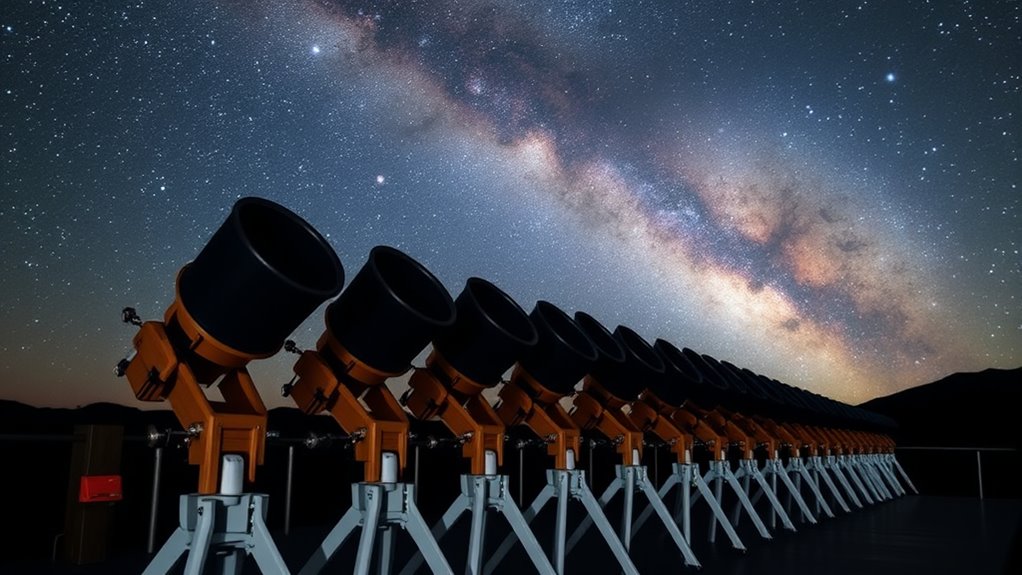

Choosing a dobsonian telescope for deep sky observation involves balancing aperture size, ease of setup, and budget. The Sky-Watcher Flextube 300 Dobsonian stands out as the best overall for its large aperture and collapsible design, making it ideal for serious deep sky viewing. The Celestron StarSense Explorer 150AZ offers excellent value with smart technology and ease of use, perfect for hobbyists looking to get started. However, larger models like the Sky-Watcher Flextube 300 require more space and handling, while smaller tabletop options may sacrifice some light-gathering power. Keep reading to see how each model stacks up and find the best fit for your stargazing needs.

Get the latest gadgets delivered free — and shop member deals
- Fast, free delivery on millions of items
- Access to Prime Big Deal Days deals on October 6–7
- Prime Video, Amazon Music and more included
Complete the kit



Key Takeaways
- Aperture size remains the most critical factor for deep sky viewing, with 8- to 12-inch models providing the best detail and brightness.
- Collapsible and tabletop designs offer portability but often come with tradeoffs in stability and maximum aperture size.
- Smartphone compatibility and integrated apps can significantly enhance the experience, especially for beginners.
- Higher-end models with computerized GoTo systems simplify locating objects but add to the cost and complexity.
- Budget-friendly options can be surprisingly capable, but often lack the stability and light-gathering power of larger, more expensive models.
| Celestron StarSense Explorer LT 114AZ App-Enabled Telescope with Smartphone Dock |  | Best for Beginners and Casual Stargazers | Aperture: 114mm | Focal Ratio: F/9 | Mount Type: Altazimuth | VIEW ON AMAZON | See Our Full Breakdown |
| Sky-Watcher Classic 200 Dobsonian 8-inch Telescope |  | Best for Bright Deep Sky Objects and Beginners Ready for More | Aperture: 8 inches | Focal Length: 1200 mm | Mirror Type: Parabolic primary | VIEW ON AMAZON | See Our Full Breakdown |
| Celestron StarSense Explorer 150AZ App-Enabled Telescope – 150mm Tabletop Dobsonian with Smartphone Dock & StarSense App |  | Best for Entry-Level Deep Sky Observation with Guided Features | Aperture: 150mm | Focal Length: 750mm | F/Ratio: F/5 | VIEW ON AMAZON | See Our Full Breakdown |
| Sky-Watcher Flextube 300 Dobsonian 12-inch Collapsible Telescope |  | Best for Serious Deep Sky Enthusiasts Who Value Portability | Aperture: 12 inches | Weight: 40 pounds (assembled) | Mirror Coating: Fully multi-coated | VIEW ON AMAZON | See Our Full Breakdown |
| Sky-Watcher Classic 150 Dobsonian 6-inch Telescope |  | Best for Beginners Wanting a Compact, Bright Deep Sky View | Aperture: 6 inches | Max focal length: 1200 mm | Weight: 40 pounds | VIEW ON AMAZON | See Our Full Breakdown |
| Sky-Watcher Virtuoso GTI 150P Collapsible Tabletop GoTo Dobsonian Telescope |  | Best for Cloudy Nights with Automated Convenience | Aperture: 150mm | Focal Length: 750mm | Optics: f/5 | VIEW ON AMAZON | See Our Full Breakdown |
| Sky-Watcher Heritage 150 Tabletop Dobsonian Telescope |  | Best Value for Portable Deep Sky Viewing | Aperture: 150mm | Focal Ratio: f/5 | Focal Length: 750mm | VIEW ON AMAZON | See Our Full Breakdown |
| Sky-Watcher Heritage 130mm Tabletop Dobsonian Telescope |  | Best Compact Beginner Scope | Aperture: 130mm | Design: Tabletop Dobsonian | Included Accessories: Two eyepieces, starpointer | VIEW ON AMAZON | See Our Full Breakdown |
| Celestron StarSense Explorer 114AZ App-Enabled Telescope |  | Best for Tech-Savvy Beginners with Cloudy Nights | Aperture: 114mm | Type: Newtonian reflector | Eyepieces: 17mm and 10mm | VIEW ON AMAZON | See Our Full Breakdown |
| Sky-Watcher Flextube 250 Dobsonian 10-inch Collapsible Large Aperture Telescope |  | Best for Serious Deep Sky Enthusiasts | Aperture: 10 inches | Weight: 40 pounds | Mirror Coating: 94% reflective, fully multi-coated borosilicate | VIEW ON AMAZON | See Our Full Breakdown |
| Sky-Watcher Flextube 200 Dobsonian 8-inch Collapsible Large Aperture Telescope |  | Best Overall Dobsonian for Deep Sky Observing | Aperture: 8 inches | Weight: 40 pounds | Mirror Coating: 94% reflective, fully multi-coated | VIEW ON AMAZON | See Our Full Breakdown |
| Celestron StarSense Explorer 8-inch App-Enabled Telescope with Smartphone Dock |  | Best App-Integrated Deep Sky Dobsonian for Beginners | Aperture: 8 inches | Focal Length: 1200mm | Focal Ratio: F/5.9 | VIEW ON AMAZON | See Our Full Breakdown |
| Celestron StarSense Explorer 130AZ App-Enabled Telescope – 130mm Tabletop Dobsonian with Smartphone Dock & StarSense App |  | Best Compact Beginner Dobsonian with App Guidance | Aperture: 130mm | Type: Newtonian reflector | Base: Tabletop Dobsonian | VIEW ON AMAZON | See Our Full Breakdown |
| Celestron StarSense Explorer 10-inch App-Enabled Telescope with Smartphone Dock |  | Best Large Aperture Deep Sky Dobsonian for Enthusiasts | Aperture: 254mm | Focal Length: 1200mm | Focal Ratio: F/4.7 | VIEW ON AMAZON | See Our Full Breakdown |
| SkyWatcher Flextube 300 SynScan Dobsonian 12-inch Collapsible Computerized GoTo Large Aperture Telescope |  | Best Advanced Deep Sky Dobsonian with Automated Tracking | Aperture: 12 inches | Weight: 99.2 pounds | Mirror Coating: Fully multi-coated | VIEW ON AMAZON | See Our Full Breakdown |
| dobsonian telescopes for deep sky | Aperture |
|---|---|
| Celestron StarSense Explorer L | 114mm |
| Sky-Watcher Classic 200 Dobson | 8 inches |
| Celestron StarSense Explorer 1 | 150mm |
| Sky-Watcher Flextube 300 Dobso | 12 inches |
| Sky-Watcher Classic 150 Dobson | 6 inches |
| Sky-Watcher Virtuoso GTI 150P | 150mm |
| Sky-Watcher Heritage 150 Table | 150mm |
| Sky-Watcher Heritage 130mm Tab | 130mm |
| Celestron StarSense Explorer 1 | 114mm |
| Sky-Watcher Flextube 250 Dobso | 10 inches |
| Sky-Watcher Flextube 200 Dobso | 8 inches |
| Celestron StarSense Explorer 8 | 8 inches |
| Celestron StarSense Explorer 1 | 130mm |
| Celestron StarSense Explorer 1 | 254mm |
| SkyWatcher Flextube 300 SynSca | 12 inches |
More Details on Our Top Picks
Celestron StarSense Explorer LT 114AZ App-Enabled Telescope with Smartphone Dock
This model stands out for its user-friendly approach, combining a modest 114mm aperture with integrated StarSense technology that leverages your smartphone to identify celestial objects. Compared with larger, manual telescopes like the Sky-Watcher Classic 200, this offers simplified operation suited for newcomers who may find manual star-hopping intimidating. Its compact design and app compatibility make setup quick, but the manual altazimuth mount lacks advanced tracking, limiting long-exposure or detailed planetary viewing. The included accessories and Barlow lens provide versatile observing, yet the reliance on a smartphone means it’s less effective in bright conditions or if your device isn’t compatible. This pick is ideal for beginner stargazers who want guided object location and easy setup, especially in areas with moderate light pollution.
Pros:- Easy to operate with intuitive smartphone app and star identification
- 114mm aperture delivers bright, clear views of deep-sky objects and planets
- Includes multiple eyepieces and Barlow lens for versatile observing
Cons:- Manual mount limits precision tracking during extended sessions
- Dependent on smartphone for optimal function, which may be problematic in bright conditions
Best for: Beginner astronomers and casual sky watchers who prefer guided, smartphone-based navigation.
Not ideal for: Advanced users or those seeking long-exposure astrophotography, due to limited tracking and manual mount constraints.
- Aperture:114mm
- Focal Ratio:F/9
- Mount Type:Altazimuth
- Included Eyepieces:25mm and 10mm
- Barlow Lens:2x
- Connectivity:iPhone & Android compatible
Our verdict“A solid, beginner-friendly choice for casual observers who want guided deep-sky viewing in moderate light pollution areas.”
Sky-Watcher Classic 200 Dobsonian 8-inch Telescope
Compared to the more compact Celestron StarSense Explorer LT 114AZ, the Sky-Watcher Classic 200 offers a substantial 8-inch aperture that significantly enhances brightness and detail on deep-sky objects. It’s ideal for those willing to handle a heavier setup—about 45 pounds—and who want to observe nebulae, galaxies, and star clusters with greater clarity. Its simple Dobsonian mount makes movement straightforward, but the weight may be a barrier for portability and quick setup. While it lacks integrated technology or tracking features, it provides a more traditional, manual observing experience that many deep-sky enthusiasts prefer for its affordability and raw viewing power. This telescope suits beginners who are prepared for manual operation and want a significant step up in deep-sky detail than smaller apertures can offer.
Pros:- Large 8-inch aperture offers bright, detailed images of deep-sky objects
- Includes essential accessories like eyepieces and a finder scope for immediate use
- Smooth Teflon bearings facilitate easy movement across the sky
Cons:- Heavy weight can make transportation and setup cumbersome
- Lacks motorized tracking, limiting long observation sessions
Best for: Beginner astronomers interested in deep-sky viewing with a large aperture but without complex electronics.
Not ideal for: Users seeking compact, lightweight telescopes or advanced tracking for astrophotography.
- Aperture:8 inches
- Focal Length:1200 mm
- Mirror Type:Parabolic primary
- Weight:45 pounds
- Max Magnification:14.2
- Included Accessories:2-inch Crayford focuser, 25mm and 10mm eyepieces, 9×50 finder
Our verdict“Best for beginners eager for bright, detailed deep-sky views and willing to handle a heavier, manual telescope.”
Celestron StarSense Explorer 150AZ App-Enabled Telescope – 150mm Tabletop Dobsonian with Smartphone Dock & StarSense App
This 150mm tabletop Dobsonian combines a sizeable aperture with StarSense technology, making it a practical choice for those who want a larger scope but still prefer a simplified, guided experience. It surpasses smaller options like the Celestron StarSense Explorer LT 114AZ by offering more light-gathering power, which translates into brighter views of faint deep-sky objects. Its tabletop design limits stability somewhat compared to full-sized Dobsonians like the Sky-Watcher Flextube 300, but it remains portable and easy to set up. The smartphone dock and app help locate objects quickly, though manual tracking may be less stable during extended viewing. Overall, this pick fits those seeking a balance of power, portability, and guided operation. This telescope is ideal for beginners who want to explore deep sky objects with better brightness and guided features, without the bulk of larger mounts.
Pros:- 150mm aperture provides brighter, more detailed deep-sky views
- Smartphone-guided star and object location simplifies setup
- Includes essential eyepieces and a smartphone dock for easy operation
Cons:- Manual tracking may require adjustments for prolonged sessions
- Tabletop design offers less stability than full-sized mounts
Best for: Beginners who want a larger aperture and guided object location in a portable, tabletop format.
Not ideal for: Advanced astronomers or those wanting motorized tracking for extended deep-sky astrophotography.
- Aperture:150mm
- Focal Length:750mm
- F/Ratio:F/5
- Eyepieces:25mm and 10mm
- Mount Type:Dobsonian
- Compatibility:iPhone & Android
Our verdict“A compelling choice for beginners seeking improved deep-sky views with guided features and portability.”
Sky-Watcher Flextube 300 Dobsonian 12-inch Collapsible Telescope
This 12-inch Dobsonian offers an impressive aperture that reveals incredible detail in faint galaxies and nebulae, outperforming smaller models like the Sky-Watcher Classic 200 or the 150mm options. Its collapsible design addresses portability concerns, making it easier to transport than fixed large models, but it still weighs around 40 pounds once assembled. The fully multi-coated mirrors enhance light transmission, providing brighter images, though the setup process involves assembly steps that may deter some beginners. This scope is better suited for those willing to manage a larger, more complex system for exceptional deep-sky views, especially where space and transport are considerations. This telescope makes sense for intermediate to advanced beginners who want high detail without the complexity of motorized mounts.
Pros:- Massive 12-inch aperture delivers stunning deep-sky detail
- Collapsible design enhances portability for transport and storage
- Fully multi-coated mirrors improve image brightness and contrast
Cons:- Assembly required, which may be challenging for some users
- Heavy weight could limit quick setup or frequent transport
Best for: Deep sky enthusiasts prepared for a larger, portable, yet manually operated telescope with significant aperture power.
Not ideal for: Those seeking a lightweight, easy-to-setup scope or advanced astrophotography features.
- Aperture:12 inches
- Weight:40 pounds (assembled)
- Mirror Coating:Fully multi-coated
- Included Accessories:2-inch Crayford focuser, 25mm and 10mm eyepieces, 8×50 finder
- Design:Collapsible
Our verdict“Ideal for dedicated deep-sky observers who want large aperture performance with portable convenience.”
Sky-Watcher Classic 150 Dobsonian 6-inch Telescope
Compared with the larger 8-inch or 12-inch models, the Sky-Watcher Classic 150 offers a more manageable size while still providing ample light-gathering for bright nebulae and galaxy observation. Its 6-inch aperture strikes a balance between performance and portability, making it suitable for those with limited space or who prefer a lighter setup at around 40 pounds. The tension control handles and smooth Teflon bearings allow easy movement, but it lacks advanced features like motorized tracking or computerized goto. For those new to astronomy, it offers excellent value, but more experienced users seeking detailed deep-sky imaging might find it limiting. This scope is perfect for newcomers who want a straightforward, bright view of deep-sky objects in a compact form.
Pros:- Large 6-inch aperture yields bright, detailed views of celestial objects
- Tension control handles and smooth bearings ease movement
- Complete with essential accessories for immediate observing
Cons:- Relatively heavy at 40 pounds, less portable than smaller scopes
- Lacks electronic or tracking features for extended sessions
Best for: Beginners and casual observers looking for a lightweight, easy-to-use telescope with good deep-sky capability.
Not ideal for: Users aiming for advanced astrophotography or long-exposure imaging, due to its manual operation.
- Aperture:6 inches
- Max focal length:1200 mm
- Weight:40 pounds
- Included accessories:2-inch Rack-and-Pinion focuser, 25mm and 10mm eyepieces, 6×30 finder
Our verdict“A practical, beginner-friendly telescope offering bright deep-sky views in a manageable size.”
Sky-Watcher Virtuoso GTI 150P Collapsible Tabletop GoTo Dobsonian Telescope
This model stands out for combining a sizable 150mm aperture with integrated Wi-Fi and GoTo capabilities, making it particularly effective on nights when cloud cover limits visibility and automation reduces the need for manual star hopping. Unlike the Heritage 150, which is purely manual, the Virtuoso GTI offers wireless control via the SynScan Pro app, allowing quick object location even in less-than-ideal conditions. However, its tabletop design might require a sturdy, flat surface and a compatible device for Wi-Fi features, which could be inconvenient outdoors or in windy conditions. The flexibility of manual and electronic control makes it suitable for those who want deep-sky access with minimal setup fuss, especially when weather isn’t perfect.
Pros:- Bright, detailed views of galaxies, nebulae, and planets
- Wireless control via app simplifies navigation in less-than-ideal weather
- Allows manual control without losing alignment for flexible observing
Cons:- Requires a smartphone or tablet for Wi-Fi features, which may be inconvenient outdoors
- Tabletop design demands a stable, flat surface for best stability
Best for: Amateur astronomers who want a versatile, automated deep-sky scope that performs well on cloudy nights and in variable weather conditions
Not ideal for: Observers seeking a fully portable, lightweight setup for field trips without reliance on smartphones or Wi-Fi
- Aperture:150mm
- Focal Length:750mm
- Optics:f/5
- Technology:Wi-Fi, GoTo, Freedom Find
Our verdict“This pick is ideal for users who want automated deep-sky observing with the convenience of Wi-Fi, especially during nights with cloud cover or limited outdoor space.”
Sky-Watcher Heritage 150 Tabletop Dobsonian Telescope
The Heritage 150 offers a practical balance of size and performance, with a 150mm aperture that delivers bright views of the Moon, planets, and some deep-sky objects. Compared to the Virtuoso GTI, it lacks electronic controls but compensates with a collapsible tube that simplifies storage and transport—perfect for casual outings and outdoor observation sessions. Its manual azimuth mount with altitude locking provides stable views, though it demands steady handling for precise tracking. This telescope is a solid choice for beginners or those who prefer simplicity over automation, but it may feel limiting for those wanting motorized tracking or advanced features.
Pros:- Portable, lightweight design for easy transport
- Bright, high-contrast views with a 150mm aperture
- Collapsible tube retains collimation and simplifies storage
Cons:- Manual mount requires steady handling for tracking objects
- Limited to basic features, no motorized tracking or goto functions
Best for: Beginners or casual astronomers seeking a portable, easy-to-use telescope for deep-sky observation without electronic complexities
Not ideal for: Experienced hobbyists or those wanting advanced tracking and automation features for long observing sessions
- Aperture:150mm
- Focal Ratio:f/5
- Focal Length:750mm
- Mirror Type:Borosilicate parabolic
- Focuser:1.25-inch helical
- Design:Collapsible tube
Our verdict“This scope suits beginners who prioritize portability and straightforward operation for casual deep-sky viewing, especially in limited outdoor spaces.”
Sky-Watcher Heritage 130mm Tabletop Dobsonian Telescope
The Heritage 130 is a compact, fully assembled tabletop Dobsonian that offers impressive views with a 130mm aperture, making it an excellent entry point for newcomers. Its simple, fully assembled design ensures quick setup, and the included accessories—two eyepieces and a starpointer—enhance usability. While its size limits extended outdoor use and it’s less suitable for serious deep-sky observing compared to larger models like the Flextube 250, its portability and ease of use make it ideal for casual observers or those with limited outdoor space. It’s a straightforward, reliable choice for learning the sky, though it won’t satisfy those wanting high-power tracking or advanced features.
Pros:- Large 130mm aperture for bright, detailed images
- Fully assembled and ready to use immediately
- Includes useful accessories for quick observing
Cons:- Limited to tabletop use, less suitable for extended outdoor sessions
- Basic mount without tracking limits long observation sessions
Best for: Beginners or families new to astronomy seeking an easy-to-use, portable scope for casual deep-sky and lunar viewing
Not ideal for: Experienced observers or those wanting a large, more capable telescope for advanced deep-sky pursuits
- Aperture:130mm
- Design:Tabletop Dobsonian
- Included Accessories:Two eyepieces, starpointer
- Warranty:2 years
Our verdict“This scope makes the most sense for beginners or casual users who want a simple, portable telescope for exploring the night sky without fuss.”
Celestron StarSense Explorer 114AZ App-Enabled Telescope
The StarSense Explorer 114AZ provides a 114mm Newtonian reflector with a user-friendly smartphone app that guides object location, making it especially suitable for nights where clouds obscure parts of the sky. Compared to the Heritage 130, it offers advanced sky recognition technology that takes the guesswork out of finding deep-sky objects, which is useful when weather conditions are less predictable. Its manual tabletop Dobsonian mount is simple but less portable than a fully collapsible design, and tracking remains manual, which can be challenging during prolonged sessions. This scope caters well to those who want guided viewing without investing in complex equipment or motorized mounts, especially when skies are partially cloudy.
Pros:- Easy to set up and operate with smartphone guidance
- Good views of the Moon, planets, and deep-sky objects
- Includes multiple eyepieces for versatile observing
Cons:- Manual adjustments needed for tracking during long sessions
- Less portable due to smartphone dock and accessories
Best for: Beginner astronomers who enjoy tech-assisted star hunting and want a straightforward, guided deep-sky experience
Not ideal for: Purists or experienced observers seeking motorized tracking and fully automated operation
- Aperture:114mm
- Type:Newtonian reflector
- Eyepieces:17mm and 10mm
- Finder:Starpointer
- Connectivity:Smartphone dock, StarSense app
- Mount:Tabletop Dobsonian
Our verdict“This telescope is well-suited for tech-minded beginners who want guided deep-sky viewing, especially on nights with unpredictable weather or partial cloud cover.”
Sky-Watcher Flextube 250 Dobsonian 10-inch Collapsible Large Aperture Telescope
The Flextube 250 offers a substantial 10-inch aperture with a collapsible design that balances power and portability. Its large mirror provides exceptionally bright, detailed views of faint deep-sky objects, making it a favorite among those who want serious observing capability. Compared to smaller models like the Heritage 150, this scope delivers more light-gathering ability, but its weight—around 40 pounds—can be a challenge for setup and transport. The collapsible feature simplifies storage, yet assembly requires some effort. This telescope is best suited for dedicated amateur astronomers who prioritize deep-sky imaging and detailed observation over mobility, with tradeoffs in weight and setup complexity.
Pros:- 10-inch aperture provides exceptional deep-sky detail and brightness
- Collapsible design enhances transportability compared to full-sized scopes
- Includes essential accessories like eyepieces and a finder scope
Cons:- Heavy weight may hinder portability and setup ease
- Assembly can be time-consuming for newcomers
Best for: Experienced hobbyists or advanced amateurs seeking a large aperture telescope with decent portability
Not ideal for: Beginners or casual observers who prefer lightweight, quick-to-assemble scopes
- Aperture:10 inches
- Weight:40 pounds
- Mirror Coating:94% reflective, fully multi-coated borosilicate
- Included Accessories:2-inch Crayford focuser, 25mm and 10mm eyepieces, 8×50 finder
- Design:Collapsible, sturdy
Our verdict“This scope is perfect for enthusiasts who want large-aperture performance without sacrificing all portability, understanding the tradeoff in weight and assembly effort.”
Sky-Watcher Flextube 200 Dobsonian 8-inch Collapsible Large Aperture Telescope
This 8-inch Dobsonian stands out for its combination of large aperture and portability, thanks to its collapsible design. Compared with the Sky-Watcher Classic 200, it’s easier to transport and store, making it a strong choice for those who want bright, detailed views without sacrificing mobility. The high-quality, multi-coated mirrors ensure vivid images of galaxies and nebulae, while the included accessories add versatility. However, its weight of 40 pounds can be a challenge for solo setup, and assembly is required, which might deter absolute beginners. This model is well-suited for amateur astronomers eager to explore deep-sky objects with a manageable, portable system.
Pros:- Large 8-inch aperture for bright, detailed deep-sky views
- Collapsible design simplifies transport and storage
- Includes multiple accessories to enhance observing experience
- Smooth azimuth movement with Teflon bearings
Cons:- Weight may be cumbersome for some users to carry alone
- Assembly required for initial setup
Best for: Beginners who need a portable yet capable telescope for deep sky viewing and occasional travel
Not ideal for: Users seeking ultralight or fully assembled telescopes, or those with physical limitations lifting 40 pounds
- Aperture:8 inches
- Weight:40 pounds
- Mirror Coating:94% reflective, fully multi-coated
- Included Accessories:2-inch Crayford-style focuser, 25mm and 10mm eyepieces, 8×50 finder scope
- Design:Collapsible, lightweight, portable
Our verdict“This telescope offers a balanced mix of aperture, portability, and ease of use, making it ideal for dedicated beginners willing to manage some setup effort.”
Celestron StarSense Explorer 8-inch App-Enabled Telescope with Smartphone Dock
This 8-inch Dobsonian combines a powerful aperture with innovative StarSense technology, making celestial object location straightforward for newcomers. Unlike the Sky-Watcher Flextube 200, it emphasizes app-guided navigation, which simplifies setup and reduces frustration during initial use. Its high-quality optics deliver sharp images of nebulae, galaxies, and planets, but reliance on a smartphone means the device must be compatible and charged for best performance. The bulkier frame and need for a smartphone can be drawbacks for those seeking ultra-portability. This telescope is a great fit for beginners interested in a guided, high-quality deep-sky experience with minimal technical fuss.
Pros:- Intuitive app-guided star and deep-sky object locating system
- High-quality 8-inch aperture for detailed views
- Easy setup with smartphone dock and controls
- Suitable for both beginners and intermediate users
Cons:- Requires a compatible smartphone for optimal use
- Manual tracking may need adjustments during extended sessions
- Bulkier design may limit portability
Best for: Novice stargazers who prefer guided object finding and smartphone integration
Not ideal for: Observers who want a purely manual telescope or a lightweight, travel-friendly model
- Aperture:8 inches
- Focal Length:1200mm
- Focal Ratio:F/5.9
- Eyepiece:25mm Plossl
- Focusers:2 Crayford
Our verdict“Ideal for beginners seeking an easy, app-guided deep sky experience, especially if they prefer integrating their smartphone into observing sessions.”
Celestron StarSense Explorer 130AZ App-Enabled Telescope – 130mm Tabletop Dobsonian with Smartphone Dock & StarSense App
This 130mm tabletop Dobsonian offers an excellent balance of simplicity and performance for newcomers, especially those with limited space. Its smaller aperture compared to the 8-inch models means slightly less detailed images, but it compensates with ease of setup and portability. The StarSense app simplifies object location, making it easier to find deep sky objects or planets. Compared to the larger 8-inch models, it’s less powerful for faint galaxy observation, but its compact size and affordable price make it attractive for casual stargazing. The need for a smartphone and manual tracking are minor tradeoffs for its convenience and user-friendliness.
Pros:- Easy to set up and operate, ideal for beginners
- Smartphone app guides star and planet locating
- Sharp images of the Moon, planets, and brighter deep-sky objects
- Lightweight and space-efficient
Cons:- Limited aperture for faint deep-sky objects
- Manual tracking may require adjustments
- Requires smartphone for full functionality
Best for: Beginners who want a compact, easy-to-use telescope with guided star finding
Not ideal for: Deep-sky enthusiasts seeking high-detail views or larger apertures for advanced observing
- Aperture:130mm
- Type:Newtonian reflector
- Base:Tabletop Dobsonian
- Compatibility:iPhone & Android
- Technology:StarSense sky recognition
- Warranty:2 years
Our verdict“A practical choice for space-conscious beginners who want guided deep sky viewing without complexity or bulk.”
Celestron StarSense Explorer 10-inch App-Enabled Telescope with Smartphone Dock
This 10-inch Dobsonian offers significantly increased light-gathering power, making it suitable for those wanting detailed images of deep-sky objects. Its StarSense technology simplifies locating faint galaxies, nebulae, and star clusters, similar to the 8-inch models but with more dramatic views. However, its weight of around 50 pounds and bulkier frame could pose challenges for setup and transport, especially without assistance. Manual tracking may need some fine-tuning during prolonged observation sessions. This telescope is best suited for intermediate or dedicated amateur astronomers who value high performance and are prepared to handle its size and complexity.
Pros:- Large 10-inch aperture for bright, detailed images
- StarSense technology for automatic object location
- Easy setup with smartphone app control
- Excellent for deep-sky astrophotography and detailed viewing
Cons:- Heavy and less portable than smaller models
- Requires smartphone for full functionality
- Manual tracking adjustments needed for long sessions
Best for: Intermediate astronomers seeking a large aperture for detailed deep sky observation with app-guided object location
Not ideal for: Casual users or those with limited space and strength for heavier equipment
- Aperture:254mm
- Focal Length:1200mm
- Focal Ratio:F/4.7
- Eyepiece:25mm Plössl
- Focusers:2 Crayford
Our verdict“A compelling choice for those wanting a substantial aperture and guided object finding, accepting the extra size and weight.”
SkyWatcher Flextube 300 SynScan Dobsonian 12-inch Collapsible Computerized GoTo Large Aperture Telescope
This 12-inch Dobsonian combines extensive aperture with automation, making it a prime choice for serious deep-sky observers. Its collapsible design enhances portability for a 99.2-pound telescope, but setup can still be complex for newcomers, requiring some technical patience. The integrated WiFi and SynScan GoTo system offer automated object locating across a database of over 42,000 objects, surpassing the manual tracking of smaller models like the Sky-Watcher Classic 200. This makes it ideal for amateurs ready to invest in a high-performance, feature-rich instrument. The tradeoff involves its weight and complexity, which may limit accessibility for casual or beginner users.
Pros:- Massive 12-inch aperture for ultra-bright, detailed views
- Collapsible design aids transport despite high weight
- WiFi-enabled control with extensive object database
- Automated GoTo tracking for effortless object acquisition
Cons:- Heavy and potentially difficult to assemble alone
- Complex setup may intimidate beginners
- Price likely high, making it less suitable for casual users
Best for: Experienced amateur astronomers seeking a large, automated Dobsonian with broad deep sky capabilities
Not ideal for: Beginners or users with limited space or strength to handle the heavy, complex setup
- Aperture:12 inches
- Weight:99.2 pounds
- Mirror Coating:Fully multi-coated
- Object Database:42,000+ objects
- Included Accessories:2-inch Crayford focuser, 25mm and 10mm eyepieces, 9×50 finder scope
- Design:Collapsible with all-metal gearing
Our verdict“Best suited for serious deep sky enthusiasts willing to manage its size and complexity for top-tier performance and automation.”
How We Picked
The telescopes in this list were evaluated based on their aperture size, build quality, ease of use, portability, and value for the price. A primary focus was on their suitability for deep sky viewing, which demands large apertures and stable mounts. We also considered technological features like smartphone integration and GoTo systems, which can greatly enhance observing experiences. The ranking reflects a balance between performance, ease of setup, and cost, ensuring options for beginners, enthusiasts, and advanced users alike.Factors to Consider When Choosing Dobsonian Telescopes For Deep Sky
When choosing a dobsonian telescope for deep sky observation, it’s important to weigh several factors beyond just aperture. Size and weight influence portability and storage, especially if you have limited space or plan to transport your telescope. Consider whether you prefer a manual or computerized model, as GoTo systems can simplify finding objects but often increase cost and complexity. Durability and stability are vital for clear viewing, particularly at high magnifications. Lastly, your budget will shape which features are feasible, but investing a bit more can significantly improve your observing experience.Aperture Size and Light-Gathering Power
The primary driver of deep sky performance is aperture, with larger diameters capturing more light and revealing fainter objects. An 8-inch telescope is generally considered a sweet spot for serious hobbyists, while 10- to 12-inch models push into more detailed and brighter images. However, larger apertures also mean increased weight and bulk, which can affect portability. Balancing size with your storage and transport options is key to selecting a telescope that fits your observing environment.
Portability and Setup
Portability varies widely, especially between traditional solid-tube models and collapsible or tabletop designs. Collapsible models like the Sky-Watcher Flextube 300 offer large apertures without excessive bulk, but they may require more setup time and can be less stable than fixed tubes. Conversely, tabletop models are lightweight and easy to carry but often have smaller apertures and less stability at high magnifications. Think about where you’ll be using your telescope and how much effort you’re willing to invest in setup each time.
Ease of Use and Technological Features
For beginners, features like smartphone compatibility and integrated star maps can make the night sky more accessible and enjoyable. Models with GoTo systems can locate objects automatically, saving time and frustration—especially useful during cold or cloudy nights when patience wears thin. However, these systems add to the cost and may require some learning to operate effectively. Manual models, while less expensive, demand more skill but encourage a deeper understanding of sky navigation.
Build Quality and Stability
Stability is essential for clear, steady views at high magnifications. Well-constructed mounts with smooth, responsive movements will improve your experience significantly. Cheaper models often suffer from vibrations or wobbling, especially when pushing high powers. Materials matter too; metal frames tend to be more durable than plastic, but they also increase weight. Consider where you’ll be observing—if you set up on uneven ground, a robust, adjustable mount becomes even more important.
Budget Considerations and Long-Term Value
While budget models can provide excellent entry points, investing a bit more in a larger aperture or a more stable mount can pay off over time. Cheaper telescopes often lack the light-gathering power needed for detailed deep sky views or may require upgrades sooner. Conversely, higher-end models tend to be more reliable and easier to use, making them better suited for long-term enjoyment. Reflect on your goals—whether casual viewing or serious astrophotography—and allocate your budget accordingly.
Frequently Asked Questions
Is a larger aperture always better for deep sky viewing?
Generally, yes. A larger aperture allows more light to reach your eyepiece, revealing fainter and more detailed objects in the deep sky. However, larger telescopes tend to be heavier, more expensive, and less portable, which can make setup and transport more challenging. For casual observers or those with limited space, an 8- or 10-inch telescope can still deliver impressive views without the logistical hurdles of a 12-inch or larger model. Consider your observing environment and physical capabilities before choosing the biggest aperture you can comfortably handle.
Should I choose a manual or computerized dobsonian telescope?
It depends on your experience level and how much convenience you want. Manual dobsonians are straightforward, reliable, and often less expensive, requiring learning how to locate objects using star charts or apps. They are excellent for those who enjoy the process of star hopping and understanding the night sky. Computerized models with GoTo systems can quickly find objects and are especially helpful for beginners or those with limited observing time, but they tend to be more costly and may require calibration. If you value simplicity and traditional observing, a manual model may suit you better.
How important is stability in a dobsonian telescope?
Stability directly impacts image clarity and ease of focusing, especially at higher magnifications used for deep sky objects. A stable mount minimizes vibrations, allowing you to hold steady on targets and make precise adjustments. Low-quality mounts can wobble or shake, degrading the viewing experience and potentially causing frustration. Investing in a well-made, sturdy mount ensures you can enjoy sharper images and more comfortable observing sessions, particularly when viewing faint, distant objects.
Are collapsible dobsonians worth the extra cost?
Collapsible dobsonians offer significant advantages in transporting large apertures, making them more practical for those with limited storage space or who travel to dark-sky sites. They typically maintain large apertures while reducing bulk for storage and transport. However, they may require more setup time and can sometimes compromise stability compared to traditional fixed tubes. For serious deep sky observing where portability is essential, these models provide excellent value, but if you’re primarily observing from a dedicated backyard, fixed models may be more stable and straightforward.
Can I use a dobsonian telescope for astrophotography?
While dobsonians excel at visual observation due to their large apertures and simplicity, they are generally not ideal for astrophotography. Their mounts are designed mainly for manual tracking and lack the precise motorized tracking systems needed for long-exposure imaging. Some advanced users attach accessories or modify their dobsonians for basic astrophotography, but for serious imaging, a specialized equatorial mount with motorized tracking is recommended. If astrophotography is a goal, consider a telescope designed specifically for that purpose.
Conclusion
For those seeking the best overall deep sky experience, the Sky-Watcher Flextube 300 Dobsonian offers impressive aperture and portability. Beginners or casual stargazers will appreciate the Celestron StarSense Explorer 150AZ for its ease of use and smart technology. If budget is a primary concern, smaller tabletop models like the Sky-Watcher Heritage 130 provide surprisingly capable views without breaking the bank. Serious enthusiasts aiming for detailed deep sky exploration should lean toward larger, more stable models like the Sky-Watcher Flextube 300 or SynScan 300, despite their higher cost and setup complexity. Ultimately, your choice depends on your observing environment, experience level, and long-term goals.
As an affiliate, we earn on qualifying purchases.Fall Picks
fall essentials