A laboratory centrifuge is one of those purchases where the wrong specs quietly ruin your workflow — a rotor that doesn’t fit your tubes, a speed ceiling too low for plasma separation, or a timer that maxes out before your protocol finishes. After comparing ten popular benchtop models, the ONiLAB Lab PRP Centrifuge (300–5000 RPM, 6×15mL) stands out as the best overall pick because it combines the larger-tube capacity most labs actually need with programmable low-speed control for PRP and serum work. If budget is the priority, the Cgoldenwall 8×15mL benchtop model delivers nearly the same capacity for less, while the Mini Centrifuge with 10,000 RPM and OLED display is the clear choice for high-speed microtube and PCR applications. The main tradeoff in this category is capacity versus speed: the big-tube machines top out around 4,000–5,000 RPM, while the minis spin microtubes fast but can’t hold a 15mL conical. Read on for the full breakdown of which model fits your protocols.

Get the latest gadgets delivered free with Prime
- Fast, free delivery on millions of items
- Prime Video, Amazon Music and more included
- Member-only deals all year
Complete the kit



Key Takeaways
- The lineup splits cleanly into two camps: low-speed large-tube machines (4,000–5,000 RPM, up to 8×15mL) for PRP/plasma/serum work, and high-speed minis (7,000–10,000 RPM) for microtubes and PCR strips — no single model does both well.
- The ONiLAB PRP Centrifuge earns the top spot because its 300–5000 RPM adjustable range covers the slow, precise spins PRP protocols demand while still accepting 15mL conicals — a combination most budget models can’t match.
- Sub-$150 desktop models like the 4000 RPM 20mL machine work for basic teaching demos, but their fixed-angle rotors and coarse analog controls make them a poor fit for anything requiring reproducibility.
- Relative centrifugal force (RCF), not RPM, determines separation quality — several 4,000 RPM models here produce under 2,100×g, which is marginal for dense platelet concentration.
- Duplicate listings are common in this category: the ONiLAB PRP centrifuge appears twice at different prices, so verifying the seller and included rotor set matters as much as picking the model.







| laboratory centrifuge | Speed Range | Rotor Capacity |
|---|---|---|
| ONiLAB Scientific Mini Centrif | — | — |
| Desktop Electric Laboratory Ce | — | — |
| JOANLAB LC500-12P Lab Centrifu | 500-4000 RPM | 12 tubes |
| ONiLAB Lab PRP Centrifuge | 300-5000 RPM | 6x15mL/10mL/7mL/1.5-5mL |
| Cgoldenwall Centrifuge Machine | — | — |
| PRP PRF Centrifuge Machine | 500–4000 RPM | 6 wells |
| Mini Centrifuge Machine | — | — |
| Lab Fish LC-8S Centrifuge | 500–5000 RPM | 8 tubes |
| ONiLAB Lab PRP Centrifuge | 300–5000 RPM | 6 tubes |
| NEWTRY Mini Centrifuge Machine | 300–4000 RPM | 6 x 10mL |
More Details on Our Top Picks
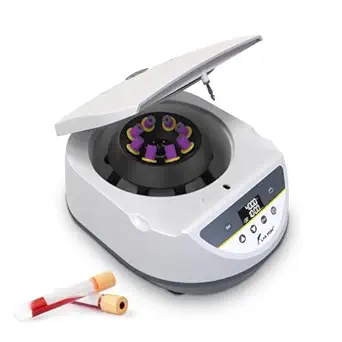
ONiLAB Scientific Mini Centrifuge 7000RPM, 2680 x g RCF, Lab Benchtop Centrifuge with 2 Rotors for 8 x 0.2/0.5/1.5/2.0ml and 0.2mL×32 PCR Strips, Low Noise ≤45dB, 100-240V, Green Lid (Only for Microtubes)
This mini centrifuge excels in environments where noise levels and space are primary concerns, operating at ≤45dB while reaching speeds up to 7000RPM. Its quick click-on rotor changes and included rotors for microtubes and PCR strips make it remarkably user-friendly for small-scale tasks. Compared with larger models like the JOANLAB LC500-12P, it sacrifices capacity and versatility but offers a quieter, more portable option for microvolume applications. Its limited compatibility means it’s ideal for PCR prep and microtubes, but not for larger sample volumes or high-throughput labs. Its low noise and swift safety stop make it suitable for shared lab spaces or educational settings, where quiet operation is valued over capacity.
Pros:- Very low noise operation at ≤45dB, perfect for shared or quiet environments
- Easy rotor swaps with click-on design for quick setup
- Includes versatile rotors for multiple microtubes and PCR strips
- Auto braking enhances safety during stops
Cons:- Limited to microtubes and PCR strips, not suitable for larger samples
- No detailed capacity per run, which could impact workflow planning
- Power stability needed for consistent operation (100-240V)
Best for: Researchers or lab technicians needing a quiet, space-saving device for microvolume sample prep.
Not ideal for: High-throughput laboratories or users requiring large sample capacities, as its small rotor limits throughput.
- Max RPM:7000 RPM
- RCF:2680 x g
- Voltage:100-240V
- Noise Level:≤45dB
- Rotors:2 (for 8 x 0.2/0.5/1.5/2.0ml tubes and 0.2mL×32 PCR strips)
- Application:Microtubes and PCR strips
Our verdict“This pick is best suited for small-scale, quiet lab tasks where space efficiency and low noise are priorities.”
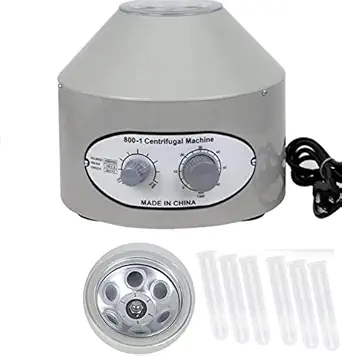
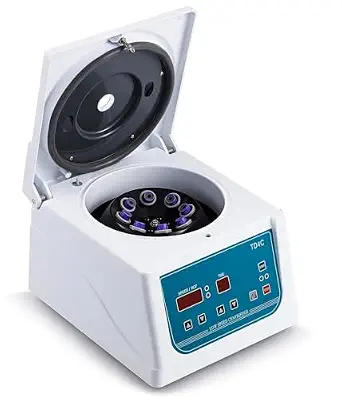
Desktop Electric Laboratory Centrifuge Machine with Timer and Speed Control, 4000 RPM, 20ML Capacity
This desktop model offers straightforward operation with adjustable speed and timer controls, making it suitable for basic biological and chemical procedures. Its capacity of 20ML per tube is higher than many mini options, but it doesn’t match larger capacity models like the JOANLAB LC500-12P, which support more tubes or larger volumes. Its maximum speed of 4000 RPM and relative centrifugal force of 1790×g are adequate for routine tasks like cell separation but fall short for high-speed or ultra-centrifugation needs. The control panel’s simplicity favors users who need quick setup without complex programming, though it lacks a digital display for precise speed and force readouts. Overall, it’s an accessible choice for small labs or educational settings where ease of use matters most.
Pros:- Simple, intuitive control panel for quick operation
- Decent capacity of 20ML per tube supports moderate sample volumes
- Affordable price point for basic lab work
- Reliable for routine centrifugation tasks
Cons:- Limited maximum speed restricts use for some advanced protocols
- Lacks digital interface for precise, programmable operation
- Requires AC110V power, which may limit portability
Best for: Small laboratories or educational labs seeking an affordable, easy-to-operate centrifuge for routine sample separation.
Not ideal for: High-speed or high-volume applications, as its 4000 RPM limit may not meet all research needs, especially in advanced biotech labs.
- Maximum Speed:4000 RPM
- RCF:1790×g
- Capacity:20ml×6
- Voltage:AC110V 60Hz
- Timer Range:0~60 min or continuous
- Application:Cell separation, basic lab prep
Our verdict“This model fits well for small labs or educational environments prioritizing affordability and ease of use over advanced features.”
JOANLAB LC500-12P Lab Centrifuge, 500-4000 RPM, 2075xg
The JOANLAB LC500-12P stands out for its precise speed control from 500 to 4000 RPM and a relatively high RCF of 2075×g, suitable for standardized laboratory protocols. Its 12-tube capacity makes it more efficient than small benchtop models like the ONiLAB Mini but less suited for high-volume applications. The four preset programs simplify routine tasks, but its lack of a digital display can make fine adjustments less intuitive. Its safety features, including imbalance shutoff and dual lid locks, reflect a focus on safe operation for busy labs. Compared to the ONiLAB Mini, it offers better protocol consistency and safety, but at a larger footprint and potentially noisier operation depending on environment.
Pros:- Precise and adjustable speed control for protocol accuracy
- Four preset programs streamline standard procedures
- Compact design saves space in busy labs
- Safety features including imbalance detection and dual lid locks
Cons:- Limited tube size support, restricting sample variety
- No digital display, which could hinder fine adjustments
- Potential noise at higher speeds
Best for: Research labs needing reliable, repeatable centrifugation with safety features and moderate throughput.
Not ideal for: High-capacity or ultra-high-speed workflows, as its capacity and speed range are limited for such demanding tasks.
- Speed Range:500-4000 RPM
- RCF:2075×g
- Rotor Capacity:12 tubes
- Supported Tube Sizes:10ml, 15ml, 5ml, 2ml
- Power Supply:Wide-voltage technology
- Application:Standardized sample separation
Our verdict“Ideal for labs requiring consistency and safety in routine sample processing, with moderate throughput capacity.”
ONiLAB Lab PRP Centrifuge, 6x15mL/10mL/7mL/1.5-5mL, 300-5000RPM, Max 2600×g
This centrifuge is tailored for platelet-rich plasma (PRP) applications, supporting speeds up to 5000RPM and a maximum RCF of 2600×g. Its digital controls with adjustable speed and timer make it easy to customize protocols, outperforming analog models like the Cgoldenwall in flexibility. The six-position rotor accommodates a range of blood and sample tubes, making it more versatile for specialized procedures. Its safety features, such as automatic lid lock and overspeed detection, enhance operational security in clinical or research settings. However, its limited rotor capacity and higher price tag might deter casual users or smaller labs with lower throughput needs. For those focused on blood processing and PRP, this device offers dedicated features and reliable performance.
Pros:- Digital controls enable precise speed and timing adjustments
- Dedicated rotor for PRP and blood samples
- Safety features including lid lock and overspeed protection
- Durable, maintenance-free brushless motor
Cons:- Limited rotor capacity restricts large sample processing
- Higher cost compared to basic models
- Noise levels can be noticeable at higher speeds
Best for: Clinics or research groups focused on PRP and blood component separation needing precise, customizable operation.
Not ideal for: High-volume or multi-sample processing environments where capacity and throughput are priorities, as its rotor capacity is limited.
- Speed Range:300-5000 RPM
- Max G-force:2600×g
- Rotor Capacity:6x15mL/10mL/7mL/1.5-5mL
- Timer:30 seconds to 99 minutes
- Motor:Maintenance-free brushless DC
- Dimensions:11.8 x 9.5 x 7.1 inches
Our verdict“This device suits professionals prioritizing customizable, safe blood processing protocols in clinical or research settings.”
Cgoldenwall Centrifuge Machine Lab PRP Benchtop 100-4000RPM Timer 1-99min 8x15ml
The Cgoldenwall centrifuge offers a broad speed range from 100 to 4000RPM, making it suitable for a variety of biochemical and clinical tasks. Its capacity of 8x15ml is comparable to the PRP Centrifuge but at a more accessible price point, making it appealing for smaller labs or educational use. While it lacks digital controls, its manual adjustment dials still provide reliable operation, though this means less precise control than digital models like the ONiLAB PRP centrifuge. Its noise level remains under 65dB, which is acceptable for most lab environments, and safety features like a lid lock improve operational security. Overall, this centrifuge balances affordability with versatility, but its limited advanced features may disappoint users seeking digital customization.
Pros:- Wide speed range supports diverse applications
- Affordable price for versatile use
- Safety features like lid lock enhance security
- Good capacity for small to medium samples
Cons:- No digital interface for precise control
- Limited capacity for large sample volumes
- Requires careful handling to avoid operational errors
Best for: Budget-conscious labs or educational institutions requiring flexible, reliable centrifugation for multiple sample types.
Not ideal for: High-precision research demanding digital interfaces and fine speed control, as its manual dials limit exact adjustments.
- Speed:100-4000rpm
- Maximum centrifugal force:1880xg
- Capacity:8 x 15ml
- Timer range:1-99 minutes
- Applicable test tubes:5-10ml vacuum and 10-15ml tubes
- Noise level:Not exceeding 65dB
Our verdict“This model offers excellent value for users needing flexible, basic centrifugation without digital complexity.”
PRP PRF Centrifuge Machine, 500-4000rpm, 2146×g, Plasma
I rank this model as the best choice for repeatable PRP and PRF routines because its nine memory programs reduce setup work when the same protocols run throughout the day. Its six-well rotor also accepts a broader mix of tube sizes than the NEWTRY Mini Centrifuge, including tubes as large as 50mL. The 500–4000 RPM range and 2146×g ceiling fit many plasma-separation tasks, but they provide less force than the ONiLAB Lab PRP Centrifuge and far less than the 10,000 RPM mini model. That makes this a workflow-focused pick rather than a performance leader. I also value the vibration and temperature protection, though careful balancing remains mandatory. Buyers should verify tube fit because the supported configurations are broad but still prescribed.
Pros:- Nine memory programs reduce repetitive setup
- Rotor accommodates several tube sizes from small collection tubes to 50mL vessels
- Speed stability supports consistent separation protocols
- Vibration and temperature protections add operational safeguards
Cons:- Lower maximum RCF than the ONiLAB PRP and 10,000 RPM mini models
- Samples must be balanced carefully before every run
- Tube compatibility remains limited to stated rotor configurations
Best for: Clinics and laboratories running recurring PRP or PRF protocols that benefit from saved speed-and-time programs
Not ideal for: Research teams needing more than 2146×g or unrestricted rotor compatibility
- Speed Range:500–4000 RPM
- Maximum RCF:2146×g
- Rotor Capacity:6 wells
- Compatible Tubes:50mL, 15mL, 10mL, and selected 2–5mL tubes
- Memory Programs:9
- Protection Systems:Vibration and temperature protection
Our verdict“Choose this model when repeatable PRP programming and mixed tube support matter more than maximum centrifugal force.”
Mini Centrifuge Machine, 10000RPM, OLED Display, Lab Benchtop with 3-in-1 Rotor for 0.5/1.5/2mL Tubes and PCR Strips
This is my high-speed pick for microvolume work. Its 10,000 RPM ceiling and 6708×g rating exceed every other model in this batch, making it better suited to quick sample spins, microfiltration, and small-tube separations than the 4000 RPM NEWTRY. The three-in-one rotor adds flexibility across 0.5mL, 1.5mL, and 2mL tubes plus PCR strips, while the OLED display gives more operating feedback than a basic dial-controlled unit. That performance comes with a firm boundary: it cannot replace the Lab Fish LC-8S or ONiLAB PRP centrifuge for 10–15mL tubes. Its ≤58dB rating is reasonable but not exceptionally quiet beside the ≤45dB ONiLAB Scientific Mini. I place it below full-size models for general laboratory versatility, yet first for compact, high-RCF microtube processing.
Pros:- Highest speed and RCF among these five products
- Three-in-one rotor handles microtubes and PCR strips
- OLED display provides clear operating feedback
- Universal-voltage power input suits laboratories in different regions
Cons:- Cannot process standard 5–15mL collection tubes
- Noise rating is higher than some lower-speed mini centrifuges
- No battery option for field or power-independent operation
Best for: Molecular biology and teaching laboratories processing microtubes or PCR strips that need high RCF in a small footprint
Not ideal for: PRP clinics and laboratories working with tubes larger than 2mL
- Maximum Speed:10,000 RPM
- Maximum RCF:6708×g
- Rotor Type:3-in-1 rotor
- Tube Compatibility:0.5mL, 1.5mL, and 2mL tubes
- Strip Compatibility:PCR strips
- Power:AC 100–240V, 50/60Hz, 40W
- Noise Level:≤58dB
Our verdict“Buy this model for fast microtube and PCR-strip processing, but skip it if your workflow uses larger clinical tubes.”
Lab Fish LC-8S Centrifuge, 8×2/5/10/15ml Tubes
I give the Lab Fish LC-8S the mixed-tube capacity role because its eight-position rotor accepts 2mL, 5mL, 10mL, and 15mL tubes. That is more simultaneous capacity than either six-well PRP model and far more volume flexibility than the 10,000 RPM mini centrifuge. Its 5000 RPM brushless motor reaches 3074×g, placing it above the ONiLAB PRP centrifuge on force while retaining a long timer range for varied protocols. The LCD controls, automatic lid lock, and alarms make it approachable for shared laboratory benches. Still, this remains a low-speed centrifuge; buyers performing demanding molecular separations will need the higher RCF of the mini model. The fixed tube list also limits unusual vessels. I rank it as the strongest general-purpose option when eight-tube throughput matters more than extreme speed.
Pros:- Eight-position rotor provides higher batch capacity than six-well PRP models
- Supports four common tube volumes
- Brushless motor reduces routine motor maintenance
- Automatic lid lock and alarms support safer shared use
Cons:- 3074×g is inadequate for many high-speed separation protocols
- Rotor does not support vessels outside the specified tube sizes
- Larger tube capacity comes at the expense of mini-centrifuge portability
Best for: Shared clinical, educational, or general laboratory benches processing batches of up to eight 2–15mL tubes
Not ideal for: Molecular laboratories requiring high-RCF pelleting or compatibility with tubes outside the listed 2–15mL formats
- Speed Range:500–5000 RPM
- Maximum RCF:3074×g
- Rotor Capacity:8 tubes
- Tube Compatibility:2mL, 5mL, 10mL, and 15mL
- Timing Range:10 seconds–99 minutes 59 seconds
- Rotor Material:Aluminum alloy
- Warranty:1 year
Our verdict“The LC-8S is the practical choice for laboratories that need eight-position capacity across common 2–15mL tubes.”
ONiLAB Lab PRP Centrifuge, 6x15mL/10mL/7mL/1.5-5mL, 300-5000RPM, Max 2600×g
The ONiLAB earns my Best Overall position by balancing useful speed, straightforward digital control, and the strongest safety package in this group. Its 300–5000 RPM range starts lower and finishes higher than the 4000 RPM PRP PRF model, while the 2600×g maximum covers common PRP and routine clinical separations. A brushless DC motor, preset programs, door interlock, overspeed detection, and automatic locking make it better suited to frequent bench use than the simpler NEWTRY. It does not win every category: the Lab Fish LC-8S holds eight tubes instead of six, and the 10,000 RPM mini centrifuge delivers much greater force. The 13.97-pound chassis is also a poor fit for crowded or mobile workspaces. I rank it first because it offers the most balanced package for buyers centered on 1.5–15mL tubes.
Pros:- Broad 300–5000 RPM adjustment range
- Multiple interlocks and overspeed detection strengthen operational safety
- Brushless DC motor suits repeated bench use
- Preset programs speed up recurring workflows
Cons:- Six-tube capacity trails the eight-position Lab Fish LC-8S
- Large 15.7 x 13.5-inch footprint consumes substantial bench space
- Maximum RCF is too low for demanding molecular separation work
Best for: PRP clinics and general laboratories wanting digital control, broad small-tube compatibility, and layered safety systems
Not ideal for: Space-limited laboratories or researchers needing more than 2600×g for high-speed microtube separations
- Speed Range:300–5000 RPM
- Maximum RCF:2600×g
- Rotor Capacity:6 tubes
- Tube Compatibility:15mL, 10mL, 7mL, and 1.5–5mL
- Timer:30 seconds–99 minutes
- Motor:Brushless DC
- Dimensions:15.7 x 13.5 x 10.2 inches
- Weight:13.97 pounds
- Safety Features:Door interlock, overspeed detector, and automatic lid lock
Our verdict“This is the most balanced choice for routine PRP and clinical workflows using 1.5–15mL tubes.”
NEWTRY Mini Centrifuge Machine, Electric Desktop Lab Centrifuge
The NEWTRY fills a niche the faster mini centrifuge misses: portable processing of 5mL and 10mL tubes. At 9 x 8.6 x 6.8 inches and 3.5 pounds, it is much easier to move or place on a crowded bench than the 13.97-pound ONiLAB PRP model. Its stepless 300–4000 RPM control supports gradual speed adjustment, while the ≤50dB noise rating is better suited to quiet work areas than the 10,000 RPM mini model’s ≤58dB figure. The unusually long 0–60-hour timer may help specialized extended runs, though most routine separations will never use that range. A maximum of 4000 RPM leaves it behind the Lab Fish LC-8S in speed and well behind the high-RCF mini option. I recommend it for space-conscious, moderate-speed workflows, not demanding separations or large batches.
Pros:- Compact 3.5-pound design is easy to relocate
- Six-place rotor accepts 5mL and 10mL tubes
- Stepless speed control supports fine manual adjustment
- ≤50dB rating suits quieter laboratory spaces
Cons:- 4000 RPM ceiling limits demanding separation work
- Six-tube capacity is modest for batch processing
- ABS housing is less substantial than metal-bodied laboratory units
Best for: Small laboratories, classrooms, and mobile work areas that process six 5mL or 10mL tubes at moderate speeds
Not ideal for: High-throughput or molecular laboratories needing more than 4000 RPM, high RCF, or tubes above 10mL
- Speed Range:300–4000 RPM
- Timing Range:0–60 hours
- Rotor Capacity:6 x 10mL
- Tube Compatibility:5mL and 10mL
- Motor Power:50W
- Noise Level:≤50dB
- Vibration Coefficient:≤0.6mm/s
- Dimensions:9 x 8.6 x 6.8 inches
- Weight:3.5 pounds
Our verdict“Pick the NEWTRY when bench space, low noise, and 5–10mL tube support outweigh the need for high centrifugal force.”

How We Picked
My ranking logic starts with the question that actually drives a centrifuge purchase: what tube format and g-force does your protocol require. I weighted RCF and speed range first, because a machine that can’t reach the separation force your application needs is unusable regardless of price. Capacity and rotor versatility came next — models that ship with multiple rotors or accept both microtubes and 15mL conicals score higher than single-configuration units, since rotor accessories often cost more than the price difference between machines.
From there, I evaluated control precision and usability: digital timers, adjustable speed increments, and clear displays beat analog dials for reproducibility. Noise levels, build quality of the lid and safety interlocks, and warranty support factored into tiebreakers. Finally, I judged value as capability per dollar rather than raw price — a $300 machine with programmable speeds and a full rotor set outranks a $120 unit that will need replacing the moment your protocols advance. Each pick below earns its place by being the strongest option for a specific buyer, not by being good at everything.
Factors to Consider When Choosing Laboratory Centrifuge
Before clicking buy on any of these models, it helps to understand what actually separates a centrifuge that fits your lab from one that ends up unused on a shelf. These are the factors that shaped my rankings — and the mistakes I see buyers make most often.RCF vs. RPM: The Spec That Tricks Most Buyers
Almost every listing in this category advertises RPM, but relative centrifugal force (RCF, measured in ×g) is what actually drives separation. RCF depends on both speed and rotor radius, so two machines spinning at 4,000 RPM can produce very different g-forces — the JOANLAB LC500-12P reaches 2,075×g while others at similar speeds fall well short. For cell separation, a minimum of around 1,500–2,000×g is typical; PRP and PRF protocols usually live in the 200–800×g range precisely because higher forces destroy platelets. The common mistake is buying on RPM alone and discovering the machine can’t pellet your sample — or spins it too hard. Always find the RCF figure in the spec sheet before comparing prices, and if it isn’t listed, treat that as a warning sign about the manufacturer’s transparency.
Tube Capacity and Rotor Compatibility
Match the rotor to the tubes you already use, not the ones the manufacturer wants to sell you. A mini centrifuge built for 0.2–2.0mL microtubes cannot run a 15mL conical, and adapting down with sleeves introduces imbalance and vibration problems that shorten bearing life. The 8×15mL class (Cgoldenwall, Lab Fish LC-8S) covers clinical and PRP workflows, while dual-rotor minis like the ONiLAB Scientific handle PCR strips and microtubes with a quick swap. One overlooked point: check whether extra rotors are available at all. Several budget models have no accessory ecosystem, so if your workflow changes, you’re buying a whole new machine. Buyers who expect to run mixed protocols should pay the premium for a multi-rotor platform up front.
Speed Range and Control Granularity
The spread between the lowest and highest usable speed matters more than the maximum. A centrifuge that starts at 500 RPM gives you the gentle spins plasma and PRF preparation require; a machine that effectively only runs near its ceiling is a blunt instrument. Digital controls with 100-RPM or finer increments let you follow published protocols exactly, while analog dials on entry-level desktop models make reproduction between runs nearly impossible — fine for classroom demos, bad for anything you plan to publish or bill for. Timers follow the same logic: a 1–99 minute range covers nearly all clinical spinning protocols, whereas a 15-minute ceiling will stop you mid-protocol. If you’re following any documented procedure, treat digital speed and time control as non-negotiable.
Noise, Footprint, and Where It Lives
Benchtop centrifuges under $500 are rarely silent, but the difference between a 45dB mini and a louder large-rotor machine determines whether it can share a workspace. Noise levels around ≤45–60dB let you hold a conversation next to the unit; anything louder tends to get relegated to a corner, which matters in small labs. Footprint is the other practical constraint — minis fit under a shelf or inside a hood-adjacent bench space, while 8×15mL machines need a stable, level surface with clearance for the lid to open fully. Vibration is the hidden cost of cheap machines: an unbalanced or poorly damped rotor transmits vibration to the bench, which is annoying at best and a sample-spilling hazard at worst. Plan the placement before you pick the size class.
Safety Features You Shouldn’t Skip
A centrifuge stores a surprising amount of kinetic energy, and lid interlocks are the feature that separates responsible manufacturers from risky ones. Look for automatic lid lock during operation and a housing rated to contain a rotor failure — the clear plastic safety lids on the ONiLAB and Cgoldenwall units are there for a reason. Imbalance shutoff is another feature worth paying for: it stops the motor before a tilted rotor destroys the bearings or walks the machine across the bench. Cheap desktop units sometimes omit these entirely, betting that buyers won’t notice until something goes wrong. Given that these machines spin biological samples at thousands of RPM, safety features shouldn’t be where you save twenty dollars.
Warranty, Support, and Total Cost of Ownership
The purchase price is only part of the cost equation. Motors and bearings are wear items, and brands with US-based support and published warranty terms (typically 1–2 years on this list) protect your investment far better than no-name listings with no service path. Watch for the duplicate-listing problem I flagged earlier: identical machines sold under multiple brand names at wildly different prices, sometimes with different rotor sets bundled. Read what’s actually in the box — a “centrifuge only” listing that omits rotors can erase a price advantage overnight. Finally, factor in replacement tube sleeves and rotor accessories when comparing two models; the cheaper unit often stops being cheaper once you outfit it for your actual protocols.
Frequently Asked Questions
What centrifuge speed do I need for PRP or PRF preparation?
PRP and PRF protocols are gentle-spin applications that typically call for roughly 200–800×g rather than maximum force, because hard spins rupture platelets and ruin the product you’re trying to concentrate. That’s why the ONiLAB PRP and PRF-focused models on this list start at 300–500 RPM — the low end of their range is the whole point, not a limitation. A machine with a 4,000 RPM ceiling is fine for this work as long as it can hold a stable, precise low speed, which favors digital control over analog dials. If you’re following a published soft-spin protocol, verify the machine can actually produce the target g-force at its lowest settings before buying. Generic high-speed minis are the wrong tool here despite their impressive RPM numbers.
Can a mini centrifuge handle 15mL conical tubes?
No — mini centrifuges like the ONiLAB Scientific and the 10,000 RPM OLED model are built exclusively for microtubes (0.2–2.0mL) and PCR strips, and no adapter changes that. The physics of the small rotor radius and vertical tube orientation simply don’t accommodate conicals. If your protocols mix microtube PCR prep with larger clinical tubes, you either need a dual-rotor benchtop machine with multiple adapters or, more realistically, two separate units — a fast mini and an 8×15mL machine. Many small labs find the two-unit approach costs about the same as one larger swing-out centrifuge and outperforms it on the microtube side. Buying a mini hoping to “make it work” with larger tubes is the most common regret in this category.
Is 4,000 RPM enough for general lab separation work?
It depends entirely on what you’re separating. At typical benchtop rotor radii, 4,000 RPM produces around 2,000–2,200×g, which handles blood separation, urine sediment, and routine pelleting of cells comfortably. It is not enough for efficiently pelleting bacteria, isolating membrane fractions, or any molecular biology protocol calling for 10,000×g or more. The desktop 4,000 RPM machines on this list are best understood as clinical and teaching instruments, not molecular workhorses. If your protocol documents specify a g-force above roughly 2,500×g, you need the high-speed mini class instead. When in doubt, convert the protocol’s required RCF to RPM for the specific rotor — never assume RPM numbers translate between machines.
Why does the same centrifuge appear at different prices across listings?
This category has a significant white-label problem: identical hardware is sold under several brand names, and even the same brand’s product shows up as duplicate listings with different prices and bundles. The ONiLAB PRP centrifuge appears twice on this very list, which is a good illustration of how common it is. Before ordering, compare the included rotor set, adapter count, warranty terms, and seller reputation — the cheaper listing sometimes omits rotors or ships without a warranty. Reviews attached to the listing you’re buying from matter more than reviews for the model number elsewhere. If two listings look identical, buy from the one with the clearer spec sheet and stated return policy, not just the lower price.
How important is a timer function on a budget centrifuge?
More important than most buyers expect, because spin duration directly affects separation results just as much as speed does. A centrifuge without a timer requires you to watch the clock and manually stop it, which introduces run-to-run variability that ruins reproducibility — a real problem if results feed into anything documented. The 1–99 minute digital timers on the Cgoldenwall and PRF machines let you walk away and get consistent 10-minute spins every time. Short fixed timers (15 minutes or less) are less limiting than they sound for quick spins, but they’ll block longer clinical protocols. My advice: treat an adjustable timer as a baseline requirement for any lab use, and only accept a manual machine for demonstration or hobby purposes.
Conclusion
Matching the right laboratory centrifuge to your bench comes down to tube format and target g-force. For most buyers, the ONiLAB Lab PRP Centrifuge is the best overall pick — its 300–5000 RPM range and 6×15mL capacity cover clinical, plasma, and general separation work with genuine low-speed precision. The Cgoldenwall 8×15mL benchtop is the best value, delivering nearly identical large-tube capability and a 99-minute timer at a lower price, provided you don’t need ultra-low starting speeds. For molecular biology and PCR workflows, the 10,000 RPM mini with OLED display is the best premium microtube option, while the ONiLAB Scientific dual-rotor mini is the best choice for beginners and small labs thanks to its simple operation and quiet 45dB running. If your needs are specialized — dental PRF at strict low g-forces, the dedicated PRP/PRF machine is purpose-built; for teaching labs and occasional use, the budget 4,000 RPM desktop models get the job done. Whatever you choose, buy the rotor configuration that matches the tubes in your hand today, not the protocols you might run someday.
Halloween Picks
halloween
As an affiliate, we earn on qualifying purchases.