
TL;DR

Get the latest gadgets delivered free — and shop member deals
- Fast, free delivery on millions of items
- Access to Prime Big Deal Days deals on October 6–7
- Prime Video, Amazon Music and more included
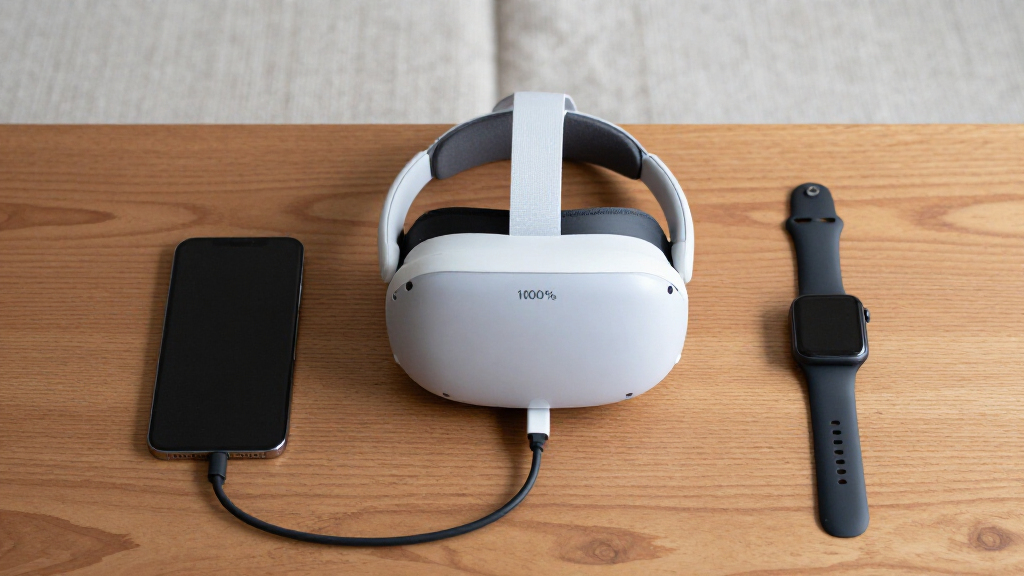
The Quest 3S battery is not immediately harmed by charging to 100%, according to user reports. Experts recommend avoiding prolonged full charges, but definitive long-term effects are still unconfirmed.
The confirmed information is that leaving the Quest 3S battery at 100% charge does not cause immediate damage, based on user reports and limited expert input. This matters because many users worry that frequent full charges could shorten battery lifespan, affecting device performance and longevity.
Multiple users on Reddit’s r/OculusQuest have observed that their Quest 3S devices remain functional after prolonged use despite leaving the battery at full charge. No concrete evidence suggests immediate harm from maintaining a 100% charge, but some experts note that lithium-ion batteries naturally degrade over time, especially with high voltage stress.
Battery management systems in the Quest 3S are designed to prevent overcharging, stopping charging once the battery reaches full capacity. However, the question remains whether keeping the device plugged in at 100% for extended periods accelerates aging. Current user anecdotes do not indicate rapid deterioration, but scientific consensus is lacking due to limited long-term data.
Does leaving your Quest 3S charged at 100% damage the battery?
Short answer: not immediately. Built-in battery management prevents overcharging, and user reports do not show rapid deterioration. Still, spending long periods at full charge—especially while warm—may add to normal lithium-ion aging over months or years.
Three facts separate normal charging from battery abuse.
The charging system reduces or stops incoming charge at full capacity. That prevents classic “overcharging,” but it cannot eliminate the gradual chemical wear shared by all lithium-ion batteries.
100% is a managed state
The headset’s battery management system controls charging once the reported capacity reaches full. A connected charger does not continuously force unrestricted energy into the cell.
Full charge still means higher voltage
Lithium-ion cells experience more chemical stress at high voltage. The effect is cumulative and depends heavily on temperature, time, usage patterns and manufacturing variation.
Quest 3S evidence is still young
User anecdotes are reassuring, but device-specific testing across multiple years is limited. No reliable public figure currently quantifies the extra wear caused by remaining plugged in.
What should you do in everyday use?
Convenience matters. The strongest practical advice is to avoid unnecessary heat and exceptionally long storage at full charge—not to panic whenever the indicator reaches 100%.
| Charging situation | Immediate safety | Long-term battery view | Recommended response |
|---|---|---|---|
| Charging to 100% before playing | ✓Normal use | No specific concern beyond routine aging | Charge and use normally |
| Leaving it plugged in overnight | ✓Generally safe | Likely a small concern if the headset remains cool | Acceptable when convenient |
| Keeping it docked at 100% every day | ~No immediate harm | May increase cumulative high-voltage exposure | Unplug when extended charging is unnecessary |
| Charging while the headset is very warm | ~Protection applies | Heat can accelerate chemical degradation | Allow it to cool before charging |
| Storing unused for weeks at 100% | ~Not an emergency | Less favorable than partial-charge storage | Use a moderate charge for long storage |
What happens after the display says 100%?
The system manages charging, but the cell can still spend time at a relatively high state of charge. That distinction explains why “safe” and “optimal for lifespan” are not identical.
Charger connected
Power reaches the headset through its controlled charging circuit.
Charge approaches full
The charging rate is managed as the battery nears capacity.
Protection takes over
The system prevents uncontrolled charging beyond its set limit.
Time and heat remain
Warmth and prolonged high charge can contribute to chemical wear.
Aging accumulates slowly
Any capacity loss is expected over cycles and years, not overnight.
Confidence is high on safety, lower on multi-year impact.
These bars represent the relative strength of the available claim—not a measured probability or a forecast of remaining battery capacity.
Strength of available evidence
Relative editorial confidence based on established lithium-ion behavior, device protections and current user reporting.
Practical concern scale
Routine full charging sits well below the level that should cause alarm. Prolonged heat at full charge deserves more attention.
Fast answers for Quest 3S owners.
Current discussion remains ongoing. These answers reflect general lithium-ion guidance, built-in charging safeguards and the limited device-specific evidence available.
Does 100% charge damage the battery immediately?
No. Current reports do not suggest immediate damage from reaching or briefly remaining at full charge.
Should I unplug it once charging is complete?
It is not strictly necessary, but unplugging during long periods of non-use may modestly favor battery longevity.
Is overnight charging safe?
Generally, yes. Built-in protections manage the charge. Keep the headset uncovered and away from excessive heat.
What matters more than hitting 100%?
Repeated heat exposure, time held at high voltage, deep cycling and the battery’s natural age all influence capacity loss.
When will there be a definitive Quest 3S answer?
Reliable conclusions require multi-year, device-specific performance data. Community anecdotes are useful signals, but they cannot isolate charging habits from temperature, usage, age and unit-to-unit differences.
Bottom line: use the headset normally.
Charging to full before a session or leaving it connected overnight is unlikely to cause immediate harm. For maximum long-term care, avoid storing it hot and fully charged for extended periods, unplug it when convenient, and do not treat a routine 100% charge as a battery emergency.
Understanding Long-Term Battery Health Risks
This matters because many users leave their Quest 3S plugged in overnight or during extended sessions, fearing they might damage the battery. Clarifying whether this practice shortens battery lifespan can influence user behavior and device maintenance routines, potentially affecting device longevity and resale value.
Quest 3S battery management system
As an affiliate, we earn on qualifying purchases.
As an affiliate, we earn on qualifying purchases.
Battery Management and Charging Practices for VR Devices
Battery degradation in lithium-ion devices is a well-studied phenomenon, with high voltage levels and heat accelerating chemical wear. VR headsets like the Quest 3S incorporate sophisticated battery management systems to mitigate risks. Previously, concerns about leaving devices plugged in at full charge have been common across portable electronics, but specific data for Quest 3S remains limited.
Recent discussions on Reddit highlight user uncertainty, with some reporting no issues after leaving their devices at 100%. Experts note that while short-term effects are minimal, the cumulative impact over years is still under study.
“Lithium-ion batteries are affected by voltage stress, but modern devices are designed to handle full charges without immediate damage.”
— an anonymous researcher
As an affiliate, we earn on qualifying purchases.
Long-Term Effects of Full Charge on Quest 3S Batteries
It is not yet confirmed whether consistently leaving the Quest 3S at 100% over months or years accelerates battery wear. Scientific studies specific to this device are limited, and long-term data is still emerging.
battery maintenance tools for VR headsets
As an affiliate, we earn on qualifying purchases.
As an affiliate, we earn on qualifying purchases.
Monitoring Battery Performance Over Time
Researchers and manufacturers are expected to conduct long-term testing to assess the impact of full charges. Users are advised to follow best practices, such as avoiding prolonged full charge when possible, until more definitive data is available.
As an affiliate, we earn on qualifying purchases.
Key Questions
Does leaving my Quest 3S at 100% damage the battery immediately?
No, current reports suggest there is no immediate damage from leaving the device at full charge, but long-term effects are still being studied.
Should I unplug my Quest 3S after it reaches 100%?
While not strictly necessary, unplugging after full charge may help prolong battery lifespan, according to general lithium-ion battery advice.
How does the Quest 3S manage battery health?
The device uses advanced battery management systems to prevent overcharging and reduce heat, which are primary factors in battery degradation.
Is it safe to leave my Quest 3S plugged in overnight?
It is generally safe due to built-in protections, but avoiding prolonged full charges when possible can help preserve battery health.
When will we have definitive data on long-term battery effects?
Long-term studies are ongoing; expect more comprehensive data in the coming months as manufacturers and researchers analyze device performance over years.
Source: r/OculusQuest
Fall Picks
fall essentials
As an affiliate, we earn on qualifying purchases.