

The MacAdam ellipse shows how close two colors can be before you can’t tell them apart. Inside this ellipse, shades blend seamlessly to your eye, meaning they’re perceptually indistinguishable. The size and shape of these ellipses depend on hue, brightness, and your visual sharpness, so ‘closeness’ varies. Generally, if two spots fall within this boundary, they appear identical to most people. Keep exploring to discover how these insights can help optimize your color choices and designs.
Key Takeaways
- The MacAdam ellipse defines the region where color differences are imperceptible to the average human eye.
- Inside the ellipse, color variations are “close enough,” meaning they appear identical under typical viewing conditions.
- The size of the ellipse varies with hue, brightness, and individual visual acuity, affecting how close colors can be before differences are noticeable.
- Smaller ellipses indicate finer perceptual discrimination, so “close enough” is a smaller difference for those with better visual acuity.
- Understanding the ellipse helps in designing displays and lighting where color differences remain imperceptible, ensuring perceptual consistency.

The MacAdam ellipse is a visual tool used to represent the human eye’s ability to distinguish between different colors. When you look at color samples, your visual system’s sensitivity determines how close two shades need to be for you to perceive them as identical. This concept is fundamental in understanding color vision and how accurately you can differentiate subtle color differences. The ellipse essentially maps out the region around a given color within which your eye cannot distinguish any differences, highlighting the limits of your visual acuity in color perception. Understanding these perceptual thresholds is essential for designing displays and lighting that align with human capabilities. Your color vision varies from person to person, but the MacAdam ellipse offers a standardized way to quantify these differences. It shows that some colors are easier to distinguish than others, especially in certain parts of the spectrum. For example, your ability to tell apart two shades of green depends on how far apart they are in the color space, which the ellipse visually illustrates. Inside the ellipse, colors blend seamlessly to your eye, making them appear identical, even if they are technically different. Outside the ellipse, your visual acuity allows you to see the distinctions clearly. This understanding helps industries like lighting, display manufacturing, and color calibration to create products that account for human perception limits. You can think of the MacAdam ellipse as a measure of your perceptual threshold. The size and shape of these ellipses change depending on the hue and brightness levels, reflecting the variability in your color vision. When working on tasks requiring precise color matching, such as graphic design or quality control, knowing these limits is essential. It tells you how close two colors can be before they become indistinguishable to the average viewer. This knowledge enables you to optimize color palettes, lighting conditions, and display settings for maximum perceptual accuracy. Recognizing how visual acuity influences color discrimination emphasizes the importance of designing visual elements that are perceptually optimized for human observers. Your visual acuity plays a fundamental role here because it determines how finely you can discern details, including color differences. The better your visual acuity, the smaller the MacAdam ellipse, meaning you can perceive more subtle variations. Conversely, if your color vision is limited, larger ellipses are needed to describe the regions of indistinguishability. Understanding these principles helps you appreciate why some color differences are imperceptible to the naked eye, while others stand out clearly. It underscores the importance of considering human perception in color-related applications and guarantees that visual displays, signage, and lighting are designed to meet the perceptual capabilities of users, making “close enough” a carefully calibrated standard in color science.
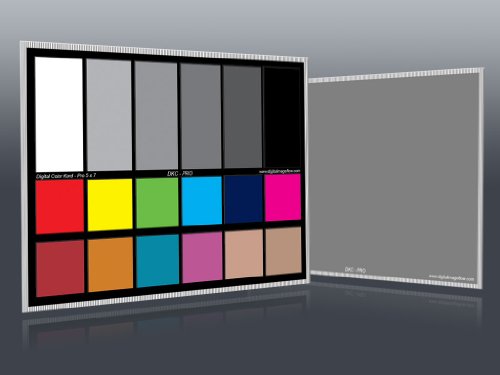
DGK Color Tools DKC-Pro 5" x 7" Set of 2 White Balance and Color Calibration Charts with 12% and 18% Gray – Pro Quality – Includes Frame Stand and User Guide
- Professional Quality: n-Chrome coated color targets
- High Color Accuracy: Eliminates metamerism for true colors
- Includes Two Cards: Each with 12% and 18% Gray
As an affiliate, we earn on qualifying purchases.
As an affiliate, we earn on qualifying purchases.
Frequently Asked Questions
How Does the Macadam Ellipse Impact Color Matching in Manufacturing?
You need to understand how color matching works in manufacturing. The MacAdam ellipse helps you see how small color differences are perceived by the human eye, which influences your approach to achieving color consistency. By considering these ellipses, you can set precise manufacturing standards, ensuring that your products meet quality expectations. This knowledge helps you minimize color variations, maintaining consistent color matching across batches and boosting overall product quality.
Can the Size of the Macadam Ellipse Vary With Different Lighting Conditions?
Oh, the joy of lighting variability! You’ll find that the size of the ellipse adapts when lighting conditions change, ensuring color matching stays consistent. This clever adaptation lets the MacAdam ellipse accommodate different lighting environments, acting like a chameleon. So, yes, the ellipse size isn’t fixed—it varies with lighting, making sure you’re never caught off guard by color discrepancies in different settings.
What Are the Limitations of Using Macadam Ellipses in Digital Displays?
You might find that using MacAdam ellipses in digital displays has limitations, especially regarding color consistency. Variations can occur due to different lighting conditions or display calibration issues. While calibration techniques help, they can’t fully eliminate subtle color differences within the ellipses. This means you’ll need to regularly calibrate your screens and consider these limitations when aiming for precise color matching, especially in environments with changing lighting.
How Do Macadam Ellipses Relate to Human Color Perception?
You might think color perception is exact, but perception variability shows it isn’t. Cultural influences shape how you see and interpret colors, making what’s close to one person seem far to another. MacAdam ellipses illustrate this, highlighting how small color differences can be perceived as identical or distinct. Recognizing this helps you understand that color matches are subjective, not purely objective, affecting design, communication, and your everyday visual experiences.
Are There Alternatives to Macadam Ellipses for Measuring Color Differences?
You might wonder if there are alternatives to MacAdam ellipses for measuring color differences. Yes, you can use colorimetric standards, which provide precise, quantifiable measurements, or depend on visual comparison methods, where you compare samples directly under controlled lighting. These options can sometimes offer more practical or specific insights, especially when accuracy or human perception is a priority. Both methods help ensure consistent color quality in various applications.

COLOR MUSE Colorimeter – Mobile Color Matching Tool
- Portable Design: Scan colors anywhere with ease
- High Accuracy: Over 90% color match accuracy
- Extensive Product Library: Includes top paint brands and products
As an affiliate, we earn on qualifying purchases.
As an affiliate, we earn on qualifying purchases.
Conclusion
So, now you see, the MacAdam ellipse is like a delicate dance floor where color differences tiptoe just within your eye’s whispering limits. It’s not about perfection but about understanding the shades your eyes can’t quite catch. When you grasp this boundary, you’re wielding a secret brush that helps you paint with confidence, knowing exactly how close is close enough. After all, in the world of color, it’s the subtlety that makes everything truly come alive.
As an affiliate, we earn on qualifying purchases.
As an affiliate, we earn on qualifying purchases.