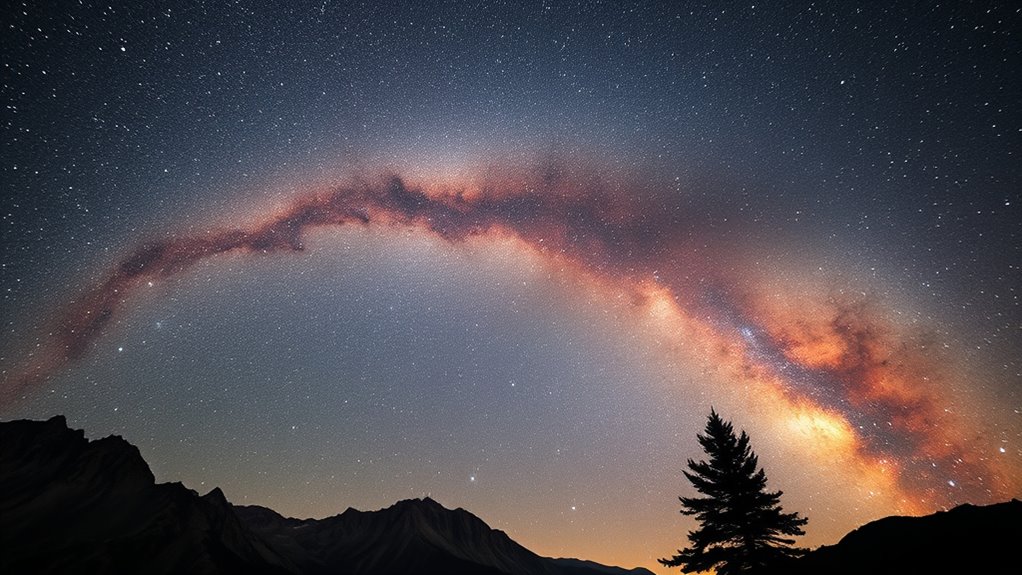

To capture stunning images of the night sky, you’ll need to understand the basics of astrophotography, including celestial navigation and star trail techniques. Start by locating constellations and the celestial pole to properly align your camera and plan your shots. Use long exposures or stacking methods to create star trails, and choose dark, low-light pollution locations for clearer results. Mastering these fundamentals will help you emancipate incredible cosmic visuals—keep exploring to discover even more ways to perfect your sky photography.

Get the latest gadgets delivered free — and shop member deals
- Fast, free delivery on millions of items
- Access to Prime Big Deal Days deals on October 6–7
- Prime Video, Amazon Music and more included
Key Takeaways
- Master celestial navigation to identify stars, constellations, and the celestial pole for accurate shot planning.
- Use long exposures or stacking techniques to create star trails, requiring stable equipment and proper settings.
- Align your camera with the celestial pole to produce symmetrical star trail patterns and capture celestial movement.
- Choose dark, low-light pollution locations during new moon phases for clearer, more vibrant night sky images.
- Plan shots around celestial events and utilize star charts or apps to anticipate object positions and optimize timing.
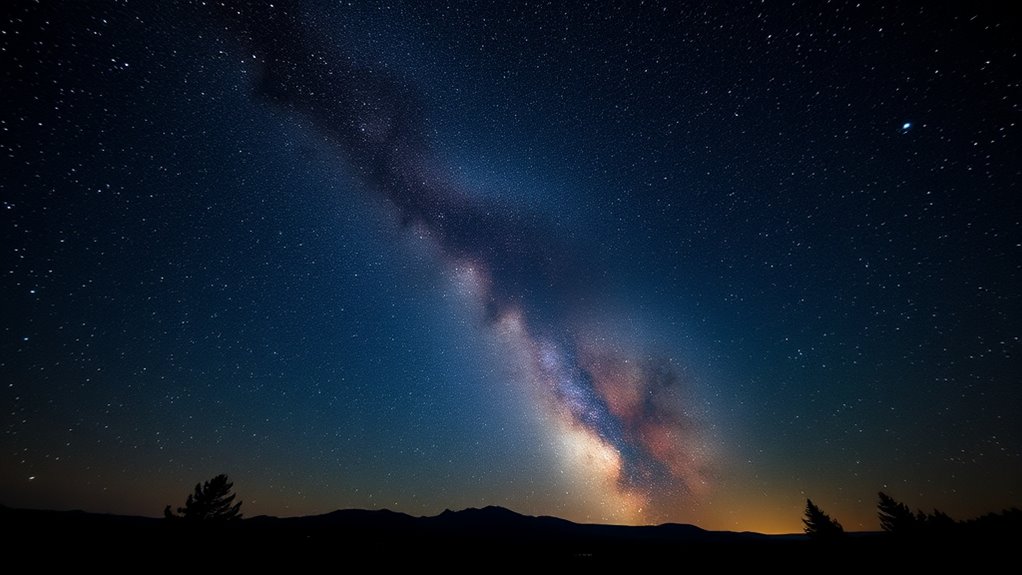
Astrophotography allows you to capture the beauty of the night sky, but getting started can seem overwhelming. One of the first skills you’ll need to master is celestial navigation, which helps you pinpoint the stars and constellations you want to photograph. Unlike traditional navigation, celestial navigation in astrophotography involves understanding how to identify key celestial objects and use their positions to orient yourself. This knowledge allows you to plan your shoots more effectively, especially when aiming for specific celestial events or formations. When you’re out under the stars, knowing how to read the night sky ensures you’re capturing the right objects at the right time, avoiding wasted effort and frustration. Additionally, studying astronomical events can help you anticipate the best moments for capturing extraordinary images.
Once you’re familiar with celestial navigation, you can begin experimenting with star trail techniques. These techniques involve capturing long exposures to create stunning images of stars appearing to streak across the sky due to Earth’s rotation. To achieve this, you’ll want to set your camera on a sturdy tripod and use a remote shutter release or intervalometer to avoid camera shake. A typical star trail photo might require exposures of 15 to 30 minutes, or stacking multiple shorter exposures in post-processing. The key is maintaining a consistent camera position and exposure settings to ensure the trails are smooth and continuous.
Experiment with long exposures and stacking to create smooth star trail images.
Star trail techniques not only produce mesmerizing images but also help you understand the movement of celestial bodies over time. As you practice, you’ll notice how the trails curve around the celestial pole, which is directly above Earth’s axis. This understanding ties back to celestial navigation, as recognizing the celestial pole’s position helps you align your camera accurately. By aligning your camera’s rotation with the celestial pole, your star trails become more symmetrical and visually appealing.
Getting comfortable with these techniques takes patience, but the results are worth it. Remember to plan your shoot during a new moon or when the sky is darkest, and choose a location with minimal light pollution. Use apps or star charts to identify constellations and the position of the celestial pole. With time, you’ll find that celestial navigation becomes second nature, and star trail techniques will allow you to craft breathtaking images that showcase the night sky’s grandeur. As you gain experience, you’ll develop your own style and methods, transforming your passion for astrophotography into a rewarding creative pursuit.
As an affiliate, we earn on qualifying purchases.
Frequently Asked Questions
What Is the Best Time of Year for Astrophotography?
The best time of year for astrophotography is during clear, moonless nights, typically in late fall and winter, when seasonal constellations are most visible. You should also consider moon phase considerations—aim for new moon nights to avoid light pollution. These conditions provide ideal darkness and contrast, making it easier to capture stunning images of stars, planets, and celestial objects. Planning around these factors enhances your overall astrophotography experience.
How Do I Prevent Star Trails in My Photos?
Ironically, the best way to prevent star trails is to keep your camera still—shocking, right? Use a sturdy tripod and set your camera to a low ISO. Keep your shutter speed short—usually under 20 seconds—using the proper aperture. Adjust your camera settings to avoid overexposure, and consider taking multiple shorter shots instead of one long exposure. This way, star trails stay at bay, and your night sky stays crisp.
What Types of Lenses Are Ideal for Astrophotography?
You should use wide angle lenses for capturing expansive night sky scenes and star trails, as they offer a broad field of view. Telephoto lenses are ideal for isolating celestial objects like the moon or planets, providing detailed shots. Both types are essential; wide angles for vast landscapes and telephotos for zoomed-in details. Choose a fast lens with a wide aperture (f/2.8 or lower) to maximize light collection and improve your astrophotography results.
How Do I Focus My Camera Accurately in Low Light?
Focusing your camera in low light feels like trying to catch a whisper in the dark, but don’t worry—you can master it! Switch to manual focus and use focusing aids like live view zoom or a bright star as your target. Adjust slowly until the star or distant light becomes sharp and crisp. Trust your eyes, and you’ll lock onto perfect focus in no time!
What Post-Processing Techniques Improve Astrophotography Images?
To improve your astrophotography images, start with noise reduction to minimize graininess caused by high ISO settings. Use software tools like Adobe Photoshop or Lightroom to selectively reduce noise without losing detail. Next, adjust color balancing to correct hues and enhance the natural look of stars and celestial objects. Fine-tuning these post-processing techniques will make your images clearer, more vibrant, and visually striking.
sturdy tripod for astrophotography
As an affiliate, we earn on qualifying purchases.
As an affiliate, we earn on qualifying purchases.
Conclusion
Now that you understand the basics, you’re ready to explore the night sky. With patience, you’ll capture stunning images that reveal its hidden beauty. The darkness may seem intimidating, but it’s where the stars shine brightest. As you set up your camera and press the shutter, remember that every challenge is just part of the journey. Embrace the quiet, the stars, and the thrill of turning night into a luminous masterpiece.
remote shutter release for cameras
As an affiliate, we earn on qualifying purchases.
As an affiliate, we earn on qualifying purchases.
star charts for celestial navigation
As an affiliate, we earn on qualifying purchases.
As an affiliate, we earn on qualifying purchases.
Fall Picks
fall essentials
As an affiliate, we earn on qualifying purchases.