To see the Aurora Borealis and Australis, you need clear, dark skies in polar regions like Scandinavia, Canada, Alaska, or southern areas like New Zealand and Tasmania. Timing is key; aim for winter months around a new moon and check space weather forecasts for solar activity. Dress warmly, bring a camera with a tripod, and be patient, as auroras can appear unexpectedly. If you keep exploring, you’ll discover even more about these stunning natural displays.
Key Takeaways
- Auroras are caused by charged solar particles interacting with Earth’s magnetic field, creating shimmering light displays in polar regions.
- The solar cycle influences aurora frequency and brightness, with more activity during solar maximums.
- Best viewing locations are within the auroral oval in polar areas like Scandinavia, Canada, and Alaska, away from light pollution.
- Optimal viewing conditions include winter months, new moon nights, clear skies, and high solar activity forecasts.
- Preparation involves dressing warmly, using tripods for photography, and allowing sufficient time for unpredictable aurora appearances.
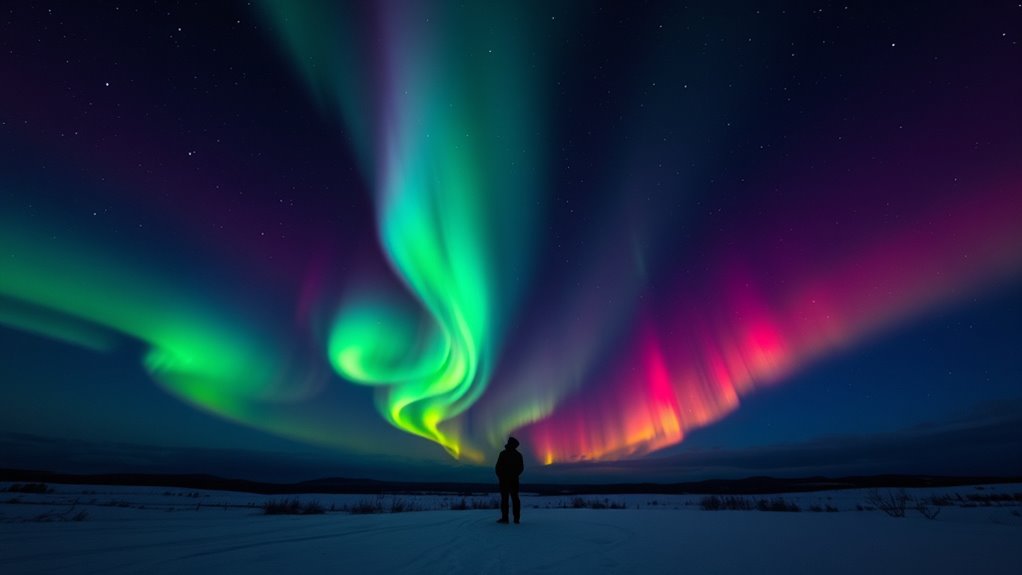
If you’ve ever seen shimmering curtains of light dancing across the night sky, you’ve experienced the awe-inspiring phenomena known as the Aurora Borealis and Aurora Australis. These mesmerizing displays are primarily driven by solar activity, which involves the Sun releasing charged particles into space. When these particles reach Earth, they interact with our planet’s magnetic field, creating the vibrant light shows we see as auroras. The intensity and frequency of these displays depend heavily on the solar cycle, which follows an 11-year pattern of solar maximums and minimums. During solar maximums, increased solar activity results in more charged particles streaming toward Earth, leading to brighter, more frequent auroras. Conversely, during solar minimums, auroras tend to be less intense and rarer.
Your best chance to witness these phenomena hinges on choosing the right viewing locations. Polar regions, such as northern Scandinavia, Canada, Alaska, and parts of Russia, are prime spots because they lie within the auroral oval—a ring-shaped zone around the Earth’s magnetic poles where auroras are most active. These locations not only offer higher chances of seeing the lights but also tend to have clearer, darker skies, free from city light pollution. For the Southern Hemisphere, places like Tasmania, the southern parts of New Zealand, and Antarctica provide excellent viewing opportunities for the Aurora Australis. The key is to find a spot with minimal artificial light, clear skies, and a good view of the northern or southern horizon, depending on which aurora you’re chasing.
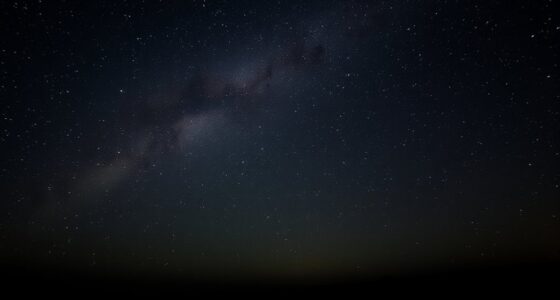
Timing also matters. The best viewing occurs during winter months when nights are longest and skies are darkest. Aim for nights around the new moon, when moonlight won’t wash out the auroras. Keep an eye on space weather forecasts, which track solar activity and predict aurora visibility. Websites and apps dedicated to aurora alerts can notify you when conditions are favorable. Remember, patience is essential—auroras can appear unexpectedly, and sometimes you’ll need to wait hours for the display to unfold. Dressing warmly, bringing a tripod for photography, and giving yourself plenty of time to soak in the spectacle are all important. Additionally, understanding the solar cycle can help you plan your viewing schedule for optimal chances of witnessing these natural light displays. By understanding how solar activity influences auroras and choosing ideal viewing locations, you’ll greatly enhance your chances of witnessing one of nature’s most breathtaking phenomena.
warm winter clothing for aurora viewing
As an affiliate, we earn on qualifying purchases.
As an affiliate, we earn on qualifying purchases.
Frequently Asked Questions
When Is the Best Time to See the Auroras?
The best time to see the auroras is during periods of high solar activity, typically around the solar maximum, which occurs roughly every 11 years. Aim for clear, dark nights, especially during a new moon when the lunar phase minimizes light pollution. Check space weather forecasts and avoid full moons. Clear skies and minimal light interference give you the best chance to witness this stunning natural phenomenon.
How Do Auroras Affect Local Weather Conditions?
Auroras don’t directly affect local weather conditions. However, increased solar activity often causes stronger auroras through atmospheric interactions, which can lead to geomagnetic storms. These storms may disrupt satellite and radio communications, and sometimes cause minor disturbances in power grids. But for your day-to-day weather, auroras have little to no impact. Focus on solar activity levels to understand potential space weather effects rather than expecting changes in your local climate.
Are There Any Health Risks Associated With Viewing Auroras?
You’re safe watching auroras, as they pose no direct health risks. Notably, fewer than 1% of viewers experience visual impairment from the intense light. However, extended exposure to UV rays during outdoor viewing can be harmful, so wearing protective clothing and sunglasses is wise. Rest assured, the auroras themselves don’t emit dangerous radiation, making them a safe and awe-inspiring spectacle to enjoy without health concerns.
Can Auroras Be Seen From Urban Areas?
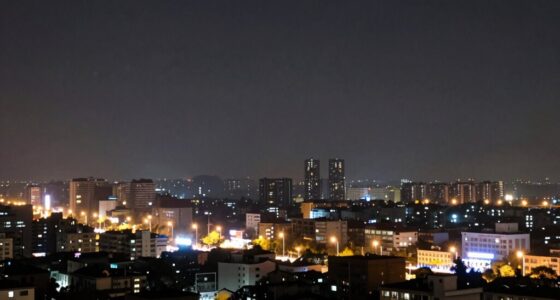
You can see auroras from urban areas, but light pollution and urban lighting often make them harder to spot. Bright streetlights and city glow diminish the visibility of the northern lights, so your best chances are in darker, less developed spots within or near cities. To improve your viewing experience, find locations away from heavy lights, and check aurora forecasts to catch these stunning displays despite the challenges of urban light pollution.
What Are the Differences Between Auroras on Earth and Other Planets?
Imagine witnessing a shimmering aurora on Jupiter—its vibrant displays differ from Earth’s due to planetary magnetic fields and atmospheric composition. Unlike Earth, which has a strong magnetic field guiding solar particles, Jupiter’s immense magnetic field creates massive auroras. Its thick, hydrogen-rich atmosphere produces different colors and effects. So, auroras on other planets vary markedly based on their magnetic environment and atmospheric makeup, making each planetary display unique.
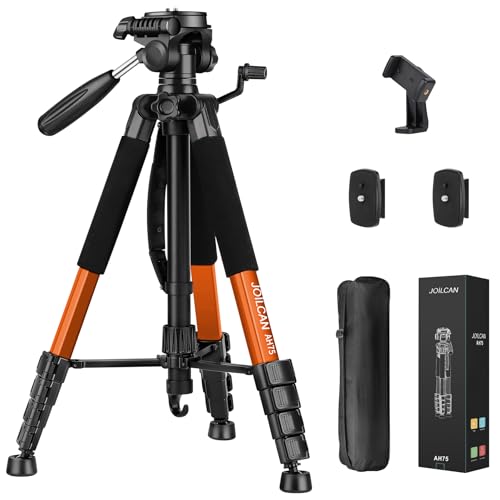
JOILCAN Tripod Camera Tripods, 74" Tripod for Camera Cell Phone Video Photography, Heavy Duty Tall Cameras Tripod Stand, Professional Travel DSLR Tripods Compatible with Canon iPhone, Max Load 15 LB
【Lightweight & Easy to Adjust】Upgraded trapezoidal flap lock tripod adjusted from 19.5" and 74" to meet different height…
As an affiliate, we earn on qualifying purchases.
As an affiliate, we earn on qualifying purchases.
Conclusion
While some might think catching the auroras is purely luck, understanding the science behind them and choosing the right timing and location greatly improves your chances. With a bit of planning and patience, you’ll likely experience these stunning natural displays firsthand. Don’t let doubts hold you back—embrace the adventure, and you’ll find that witnessing the Northern or Southern Lights is absolutely worth the effort. After all, nature’s most breathtaking phenomena are often within your reach.
space weather forecast app
As an affiliate, we earn on qualifying purchases.
As an affiliate, we earn on qualifying purchases.
best locations for viewing aurora borealis
As an affiliate, we earn on qualifying purchases.
As an affiliate, we earn on qualifying purchases.