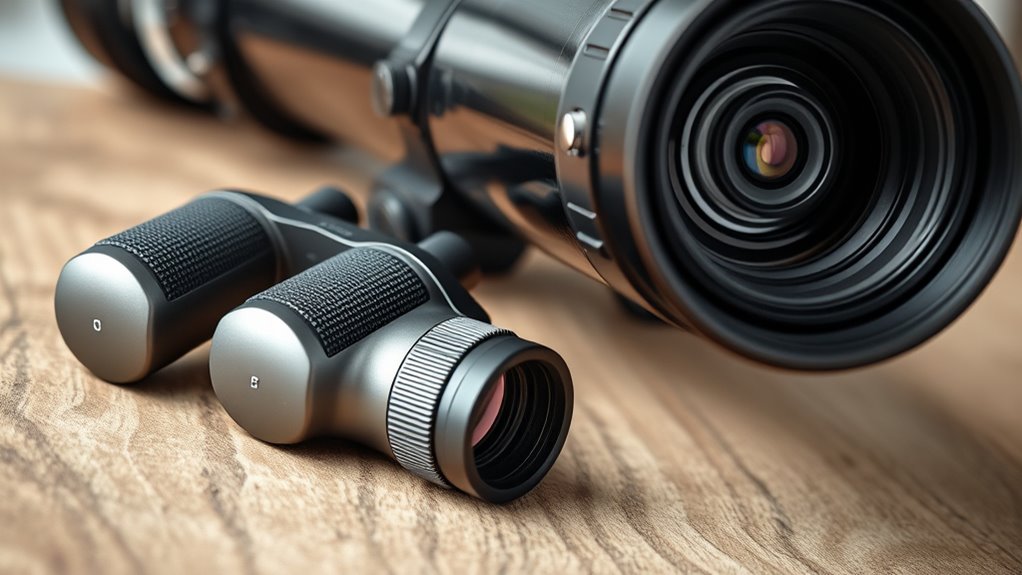
When comparing binoculars and telescopes for light gathering power, you’ll notice that telescopes have larger apertures, which means they gather more light and reveal fainter stars and distant planets better than binoculars. Binoculars are smaller and ideal for quick, wide views but don’t capture as much light. If you want to understand how each device suits different observing needs, keep exploring—they each bring unique benefits to your skywatching experience.
Key Takeaways
- Telescopes have larger apertures, collecting more light than binoculars, enabling observation of faint celestial objects.
- Binoculars have smaller apertures, limiting their light-gathering ability but offering wider fields of view.
- Larger aperture in telescopes allows for detailed imaging of deep-sky objects and distant planets.
- Optical quality and lens design influence the overall light-gathering efficiency of both devices.
- The increased light collection in telescopes justifies their use for serious astronomical observations over binoculars.
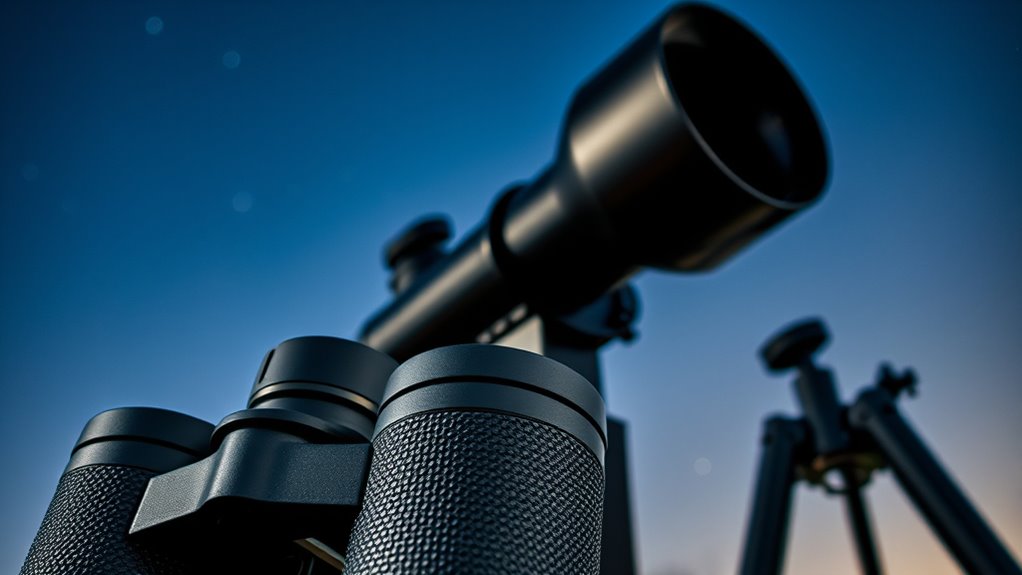
When choosing between binoculars and telescopes for stargazing or birdwatching, understanding their differences can help you make the right decision. One key aspect to think about is their light gathering power, which directly impacts how much detail you’ll see and how well you’ll perform in low-light conditions. Binoculars generally have smaller apertures, meaning they collect less light compared to telescopes. This limits their ability to reveal faint stars, distant planets, or subtle details on celestial objects. Telescopes, on the other hand, typically feature much larger apertures, enabling them to gather considerably more light. As a result, they can show you dimmer objects that binoculars might miss, making them more suitable for serious astronomers aiming to explore the depths of the night sky. Additionally, optical technology differences such as lens quality can influence image clarity and brightness, further affecting their light-gathering effectiveness.
However, it’s important to weigh magnification differences when evaluating light gathering power. While telescopes often offer higher magnification, this can sometimes be a double-edged sword. Increased magnification makes objects appear larger, but it also magnifies any instability or atmospheric distortion, which can blur the view. Binoculars usually provide lower magnification, but their wider fields of view make it easier to locate objects quickly and keep them centered in the view. For birdwatching, this means you can scan broad areas more effectively, while for stargazing, it allows for a more natural, immersive experience. The larger objective lenses on telescopes give them an advantage in light capture, but their bulk and complexity can make them less portable.
Portability considerations are vital when weighing light gathering power against convenience. Binoculars are compact, lightweight, and easy to carry around, making them ideal for quick trips into nature or casual stargazing sessions. They’re often pocket-sized or fit comfortably in a backpack, allowing you to carry them effortlessly for extended periods. Telescopes, conversely, tend to be bulkier and require more setup time and equipment. Their larger size and weight can be a challenge if you’re planning to hike or move frequently between locations. If portability is a priority, binoculars offer a practical advantage, even if they collect less light. But if you’re committed to detailed observations of faint celestial objects and don’t mind the extra gear, a telescope’s superior light gathering power can be worth the effort.
Ultimately, your choice depends on balancing light gathering power with portability considerations. If you want quick, versatile observations with decent light capture, binoculars may be your best bet. But if you’re aiming for detailed, deep-sky exploration and don’t mind carrying heavier equipment, a telescope provides the enhanced light gathering capabilities you need.
Frequently Asked Questions
How Does Weather Affect Light Gathering in Binoculars and Telescopes?
Weather impacts your viewing by causing atmospheric interference and cloud cover, which reduce light gathering in binoculars and telescopes. Clouds block your view of distant objects, while atmospheric interference, like humidity or pollution, scatters light and dims images. Clear, dry nights provide the best conditions, allowing your equipment to gather more light and produce clearer, brighter images. Always check the weather forecast before heading out for ideal stargazing or observation.
Can Binoculars Be Adapted for Astrophotography?
You can adapt binoculars for astrophotography, and many enthusiasts find it thrilling. With a proper astrophotography setup, you’ll attach a camera to your binoculars using a smartphone adapter or T-ring, capturing stunning celestial images. While not as powerful as dedicated telescopes, binoculars offer a portable and accessible way to start astrophotography. Your curiosity and effort can turn simple binoculars into a powerful tool for exploring the night sky.
What Maintenance Is Required to Maximize Light Transmission?
To maximize light transmission, you need to regularly clean lenses with a soft, lint-free cloth and appropriate lens cleaner, avoiding harsh chemicals. Store your binoculars in a protective case and keep them in a dry, cool place to prevent moisture buildup and dust accumulation. Check for scratches or smudges before each use, and handle them gently to maintain ideal clarity and light-gathering ability over time.
Are There Portable Options With High Light Gathering Capabilities?
Sure, you can find portable options with high light-gathering capabilities that fit in your pocket—if you don’t mind sacrificing some compact design and weight considerations. These lightweight, high-performance devices are perfect for on-the-go stargazing or wildlife viewing. While they may be a bit bulkier than standard binoculars, they offer impressive light gathering power, making them a clever choice when you want serious optics without the hassle of heavy gear.
How Do Light Pollution Levels Impact Viewing Quality?
Light pollution profoundly impacts your viewing quality by increasing sky brightness, which makes faint celestial objects harder to see. Urban lighting contributes to this problem, reducing contrast and hiding stars and planets. To get the best views, you should seek darker locations away from city lights. Using filters or choosing equipment with higher light gathering capabilities can help, but the most effective solution is finding a spot with minimal light pollution.
Conclusion
Imagine standing under a clear night sky, holding binoculars and seeing a few faint stars, then switching to a telescope and uncovering countless more. Just like upgrading your gear reveals hidden treasures, choosing the right instrument boosts your viewing power. Whether you opt for binoculars’ portability or a telescope’s light-gathering strength, remember, each tool opens a new window to the universe. Your celestial adventure begins when you pick what suits your curiosity best.