TL;DR
A solar ejection is predicted to cause geomagnetic storms tonight, possibly enabling the northern lights to be seen in 19 U.S. states. Visibility depends on atmospheric and sky conditions, with observers encouraged to find dark locations.
On the night of June 29, 2026, a coronal mass ejection (CME) launched by the Sun is expected to interact with Earth’s magnetic field, potentially producing visible aurora borealis in up to 19 U.S. states. You can check the latest forecast for aurora visibility here. This event could turn an ordinary summer night into a rare visual spectacle, depending on atmospheric conditions and sky clarity.
The solar CME, which involves a cloud of magnetized plasma, is predicted to reach Earth and generate a G1 to G2 geomagnetic storm. These levels are classified as minor to moderate but are sufficient to produce visible auroras in regions further south than usual, especially near the US-Canada border.
States most likely to see the northern lights include Washington, Idaho, Montana, North Dakota, South Dakota, Minnesota, Wisconsin, Michigan, and Maine. For more updates, see the latest aurora forecast. Some areas in Oregon, Wyoming, Nebraska, Iowa, Illinois, Indiana, Ohio, New York, Vermont, and New Hampshire may also experience faint auroras near the northern horizon, contingent on clear skies and minimal light pollution.
While the event is promising, the actual visibility depends on several factors, including local sky conditions, moonlight, and the magnetic orientation of the incoming solar particles. The forecast remains subject to change as real-time measurements clarify the storm’s strength and direction.
Implications for Skywatchers and Solar Observation
This event highlights how solar activity can influence Earth’s magnetic environment and create rare opportunities for aurora viewing outside traditional polar regions. Even minor geomagnetic storms like G1 and G2 can attract amateur astronomers and sky enthusiasts, offering a chance to witness a natural phenomenon usually confined to northern latitudes.
Additionally, such events serve as reminders of the Sun-Earth connection and the importance of space weather monitoring for both scientific research and public interest in astronomy. The visibility of auroras in these regions could also boost local tourism and community engagement with space sciences.

Celticbird Telescope for Adults High Powered, 80mm Aperture 600mm AZ Mount Refractor Telescope for Kids Beginners – Portable Telescopes for Adults Astronomy with Backpack, Phone Adapter, Moon Filter
- Excellent Optics: 80mm aperture for bright, clear images
- Portable & Stable: Includes backpack and adjustable tripod
- Easy to Operate: Simple assembly for beginners and kids
As an affiliate, we earn on qualifying purchases.
As an affiliate, we earn on qualifying purchases.
Background on Solar Activity and Aurora Visibility
The current solar event began with the Sun releasing a coronal mass ejection, which takes several days to reach Earth. Such CMEs carry charged particles capable of disturbing Earth’s magnetic field, leading to geomagnetic storms classified from G1 to G5 based on intensity. Past similar events have occasionally produced auroras visible at latitudes further south, especially during moderate storms like G1 and G2.
Forecast models from NOAA and other space weather agencies indicate that the current CME is aligned to produce a G1 to G2 storm, which, while not severe, can still produce striking auroras in suitable conditions. Historically, these storms have resulted in auroras seen as far south as the northern United States during peak activity periods.
Sky conditions, moon phase, and local light pollution levels are critical factors influencing actual visibility. The current forecast coincides with the Strawberry Full Moon, which could diminish the contrast needed for faint auroras to be seen with the naked eye.
“The incoming coronal mass ejection has the potential to produce minor to moderate geomagnetic activity, increasing the likelihood of aurora visibility in parts of the northern United States tonight.”
— NOAA Space Weather Prediction Center

Night Vision Goggles, Night Vision Binoculars for Adults, 5000mAh Rechargeable Infrared Binoculars with 3'' Large Screen, 10X Digital Zoom External Flashlight for Camping
- High Definition Capture: 5K HD videos and 60MP images
- Large Display Screen: 3'' HD display for clear viewing
- Long Battery Life: 5000mAh rechargeable lithium-ion battery
As an affiliate, we earn on qualifying purchases.
As an affiliate, we earn on qualifying purchases.
Factors That Could Alter Aurora Visibility Tonight
Forecast accuracy depends on real-time measurements of the solar cloud’s magnetic orientation and intensity as it approaches Earth. The actual geomagnetic storm level could strengthen or weaken during the night, affecting aurora visibility.
Additional uncertainties include local weather conditions, moonlight, and light pollution, which may obscure faint auroras. The impact of the full moon and the prolonged twilight period during summer further complicate observations.
Therefore, while the prediction is promising, the actual visual experience remains uncertain until the event unfolds and measurements are confirmed.

TrixHub Rechargeable Flashlights 2 Pack, Super Bright High Lumens Flash Light, 5 Modes Zoomable Linternas with LCD Digital Display, Powerful Handheld LED Flashlights for Home Emergencies Camping
- Bright Flashlight: LCD battery level display
- USB Rechargeable: Fast charging with circuit protection
- 5 Modes & Zoomable: High, medium, low, strobe, SOS modes
As an affiliate, we earn on qualifying purchases.
As an affiliate, we earn on qualifying purchases.
Monitoring and Reporting of Aurora Activity Tonight
Scientists and space weather agencies will continue to monitor the solar wind and magnetic conditions throughout the night. Observers are encouraged to stay updated via local weather alerts and space weather forecasts.
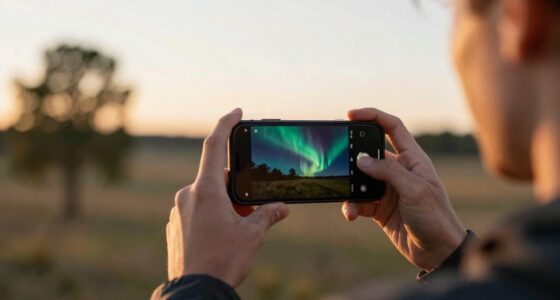
Individuals planning to view the aurora should find dark, open areas away from city lights and be prepared for potentially faint displays. Photographers may capture more detail with long exposures, even if the aurora appears subtle to the naked eye.
Further updates and confirmation of aurora sightings are expected in the early morning hours, with detailed reports from amateur and professional astronomers alike.

The Night Sky 30°-40° (Large; North Latitude)
- Condition: Used book in good condition
As an affiliate, we earn on qualifying purchases.
As an affiliate, we earn on qualifying purchases.
Key Questions
Can I see the northern lights in the southern United States tonight?
It is unlikely. The forecast indicates auroras will be visible primarily in northern states, near the US-Canada border, due to the moderate geomagnetic storm levels.
What is the best way to observe the aurora borealis?
Find a dark, open location away from city lights, look towards the northern horizon, and use a camera with long exposure settings to enhance faint colors.
Will the full moon affect aurora visibility?
Yes, the bright moonlight can reduce the contrast needed to see faint auroras, making them harder to observe with the naked eye.
How long will the aurora display last tonight?
The duration depends on the storm’s strength and magnetic conditions, but it could last several hours during peak geomagnetic activity.
Is this event unusual?
Minor to moderate geomagnetic storms like G1 and G2 are common during solar activity cycles, but seeing auroras at these latitudes outside the Arctic is still a rare and exciting opportunity.
Source: Google Trends