To create glare-free office lighting for monitor-heavy workspaces, position lights to the sides or behind your monitors instead of directly overhead. Use fixtures with diffusers or lampshades to spread light evenly and reduce harsh reflections. Adjust brightness and color temperature settings to match ambient lighting, and incorporate natural light control with blinds or curtains. Keeping your monitors clean and adjusting their settings also helps. Continuing with tips will help you optimize your workspace even further.
Key Takeaways
- Use diffused lighting fixtures with adjustable brightness to evenly illuminate the workspace and minimize harsh shadows.
- Position lights to the sides or behind monitors to prevent reflections and glare on screen surfaces.
- Incorporate natural light control through blinds or curtains to reduce sunlight glare without sacrificing overall illumination.
- Select monitors with adjustable settings and keep screens clean to further reduce reflections and eye strain.
- Prioritize indirect lighting and diffuse sources to create a comfortable, glare-free environment conducive to monitor-heavy tasks.
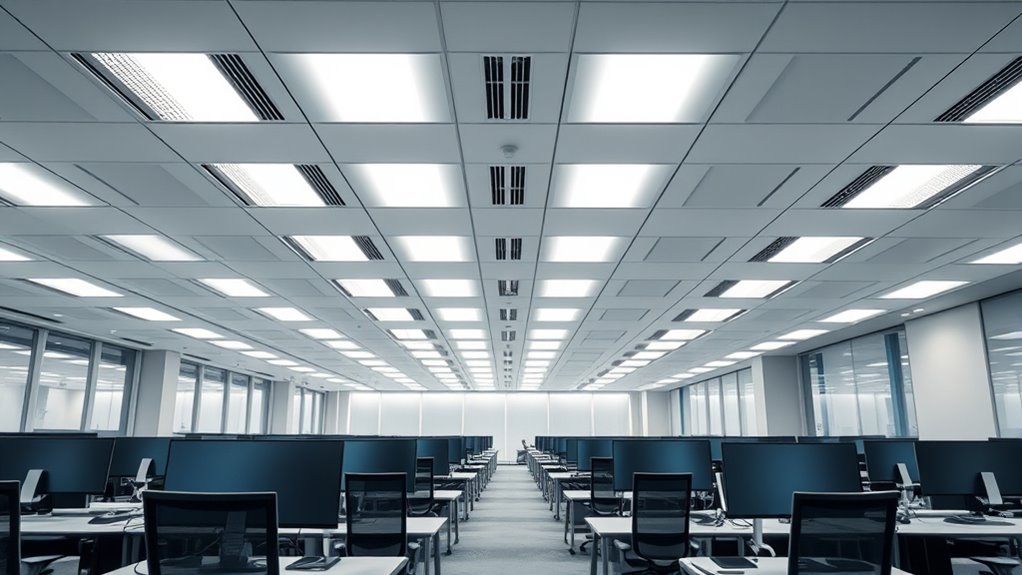
In monitor-heavy workspaces, proper lighting is vital to reduce eye strain and boost productivity. When you spend hours in front of screens, glare becomes a common issue that can cause discomfort, headaches, and decreased focus. To combat this, you need to prioritize glare reduction by carefully selecting your lighting setup. Effective glare control starts with understanding how light interacts with your screens and surroundings. Direct bright lights or reflections bouncing off shiny surfaces can intensify glare, making it harder to see your monitor clearly. To minimize this, consider using fixtures that provide light diffusion, softening the light and distributing it evenly across the workspace.
Proper lighting with diffusion reduces glare, preventing eye strain and enhancing focus in screen-heavy workspaces.
Light diffusion plays a fundamental role in creating a comfortable environment. Instead of harsh, direct lighting that creates sharp contrasts and glare, opt for fixtures with diffusers or lampshades that scatter light in multiple directions. This approach ensures that the light wraps around your workspace uniformly, reducing the harsh shadows and bright spots that strain your eyes. When choosing your lighting, look for options that offer adjustable brightness levels and color temperatures. Being able to tweak these settings allows you to customize the ambiance and reduce glare based on the time of day or your specific task.
Positioning your lighting sources properly is equally important. Avoid placing lights directly behind or above your monitor, as this can cause reflections and glare on the screen. Instead, position lights to the sides or behind you, ensuring that they illuminate the workspace without shining directly into your monitor. Using indirect lighting, such as wall-mounted fixtures or lamps with diffusers, can greatly improve light diffusion and minimize glare. If your office has windows, incorporate window treatments like blinds or curtains to control natural light, which can also contribute to glare if not managed well. Additionally, selecting monitor settings that are compatible with your ambient lighting can further reduce eye fatigue.
Finally, choosing the right monitor settings can complement your lighting strategy. Adjust the brightness and contrast to match the ambient light levels, reducing the need for overly bright screens that can cause eye fatigue. Regularly cleaning your monitor’s screen also helps, as smudges and dust can reflect light and increase glare. By combining thoughtful lighting design with proper monitor adjustments, you create an environment that’s conducive to focus, comfort, and productivity. Proper glare reduction and effective light diffusion are key to transforming your workspace into a healthier, more comfortable place to work for hours on end.
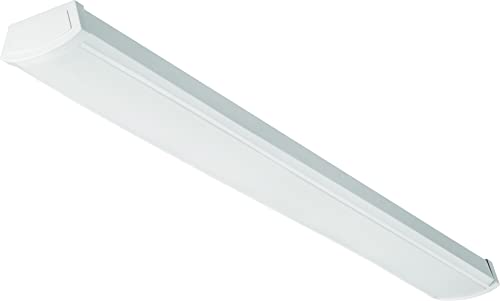
Lithonia Lighting 4 Foot LED Light Fixture, Low-Profile LED Wraparound Flush Mount Ceiling Light, 4000K Cool White, 120V, 48-Inch (FMLWL 48 840)
VERSATILE CEILING LIGHT FIXTURE: The Lithonia Lighting FMLWL LED wraparound delivers bright, even illumination with equivalent light output…
As an affiliate, we earn on qualifying purchases.
As an affiliate, we earn on qualifying purchases.
Frequently Asked Questions
How Does Glare-Free Lighting Impact Employee Productivity?
Glare-free lighting boosts your employee productivity by enhancing visual comfort, reducing eye strain, and minimizing distractions. When you provide ideal lighting, workers can focus more effectively on their tasks without constant adjustments or discomfort. Additionally, glare-free solutions improve energy efficiency by using targeted illumination, which saves power and creates a healthier, more comfortable workspace. This seamless lighting environment encourages concentration, efficiency, and overall work satisfaction.
What Are the Cost Implications of Implementing Glare-Free Lighting?
Implementing glare-free lighting involves initial installation costs, but it can lead to significant energy savings over time. You might spend more upfront on specialized fixtures and setup, yet you’ll reduce the need for excessive lighting and lower energy bills. These long-term savings help offset the installation costs, making glare-free lighting a cost-effective choice for creating comfortable, productive workspaces.
Can Glare-Free Lighting Be Integrated With Existing Office Fixtures?
You can typically integrate glare-free lighting with your existing office fixtures by checking retrofit compatibility. Many glare-free solutions are designed for easy installation, allowing you to customize fixtures without extensive replacements. This approach minimizes disruption and costs. Guarantee the new components fit your current fixtures and confirm compatibility with your lighting system. With proper planning, you can achieve glare-free lighting while maintaining your workspace’s existing infrastructure.
How Does Glare-Free Lighting Affect Long-Term Eye Health?
Imagine working long hours at your desk, feeling less eye strain and discomfort. Glare-free lighting enhances vision health by reducing glare and harsh reflections, which can cause eye fatigue over time. This improves ergonomic comfort, helping prevent long-term issues like digital eye strain or headaches. By minimizing glare, you support healthier eyes and more comfortable work sessions, making it a smart choice for monitor-heavy workspaces.
What Are the Best Practices for Maintaining Glare-Free Lighting Systems?
To maintain glare-free lighting systems, you should regularly adjust lighting control settings based on your workspace needs. Proper fixture placement is essential; position lights to minimize direct glare on monitors and reduce reflections. Use adjustable fixtures and dimming options to tailor lighting levels, and guarantee screens are at comfortable angles. Routine checks help identify issues early, ensuring consistent glare-free conditions that protect your eyes and improve productivity.

shinelife LED Desk Lamp for Office Home, Bright Desk Light with USB Charging Port, Adjustable Dimmable Desk Lamps 5 Modes 5 Brightness, Touch Study Lamp for Nail, Craft, Puzzle, Sewing, Study, Black
Superior Brightness Enjoy crisp, natural lighting with our office lamp, designed to enhance focus and reduce eye fatigue….
As an affiliate, we earn on qualifying purchases.
As an affiliate, we earn on qualifying purchases.
Conclusion
By choosing glare-free lighting for your monitor-heavy workspace, you create a haven where productivity and comfort reign supreme. Don’t let poor lighting turn your day into a nightmare—invest in the right design and transform your office into a sanctuary of focus. With the perfect lighting setup, you’ll feel like you have superpowers, tackling tasks with ease and clarity. Make the switch today and experience the unimaginable difference it makes in your workday!

LazBlinds Cordless Cellular Shades, Light Filtering Honeycomb Shades for Home, Thermal Insulation Noise Reduction Blinds for Windows, 36'' W x 64'' H, Taupe
How to Choose a Proper Size: For INSIDE mount: Choose the size SAME or CLOSEST to your window…
As an affiliate, we earn on qualifying purchases.
As an affiliate, we earn on qualifying purchases.

EVEO® Screen Cleaner Spray Kit (Streak-Free) TV Screen Cleaner for Smart TV, Lcd, LEd, Oled | Computer Screen Cleaner Spray and Wipe Microfiber Cloth – TV, Monitor, Laptop, iPad, Car – 6.7oz 1 Pack
Screen Cleaner is Your Screen’s New Bestfriend! – EVEO is proud to present a screen cleaner that’s perfectly…
As an affiliate, we earn on qualifying purchases.
As an affiliate, we earn on qualifying purchases.