Technology moves quickly, but choosing useful gadgets should not feel like chasing an endless stream of launches. The best devices solve a clear problem, provide measurements or results you can understand, and fit naturally into the way you work, create, explore, or relax. Whether you are comparing smartphone accessories, optical instruments, home-entertainment upgrades, wellness devices, or specialist imaging equipment, the same principles apply: begin with the task, understand the relevant specifications, and consider the entire setup rather than one headline feature.
This hub provides an orientation to the world of technology news and gadgets, with particular attention to devices involving light, imaging, measurement, and visual enhancement. These categories reveal both the promise and the complexity of modern consumer technology. A compact sensor can reveal heat invisible to the eye, a meter can quantify room illumination, and an inexpensive lighting accessory can change how a screen feels after dark. The important question is not simply what a device can do, but whether it can do it reliably in your intended environment.
How to Make Sense of Technology News
Technology coverage often focuses on what is new: faster processors, smaller sensors, additional software features, and revised designs. Newness can matter when it brings better compatibility or removes a genuine limitation, but it is not automatically the same as usefulness. A meaningful update should improve something observable, such as measurement range, image clarity, battery endurance, setup time, portability, or support for the devices you already own.
When reading announcements, separate a product’s core function from its supporting features. A thermal camera’s central job is to visualize temperature differences; its app interface and export options support that job. A spectrometer’s measurement range and resolution matter more than cosmetic details. For smart lighting, the quality and consistency of illumination may matter more than the number of animated effects. This distinction makes comparisons easier and reduces the influence of promotional language.
It also helps to distinguish specifications from outcomes. Specifications describe technical capacity, while outcomes describe what you can accomplish. Higher numbers are not always better in practice, especially when they introduce greater cost, complexity, power consumption, or storage requirements. Look for the threshold that meets your actual need rather than assuming the largest figure must represent the best value.

TOPDON TC001 Thermal Imaging Camera for Android, 512×384 High Resolution
- High Resolution: 512×384 thermal imaging clarity
- Low Power Consumption: Only 0.35W for extended use
- Wide Temperature Range: -4℉ to 1022℉ detection
As an affiliate, we earn on qualifying purchases.
As an affiliate, we earn on qualifying purchases.
Start With the Job, Not the Gadget
Define the Environment
A device that performs well indoors may struggle outside, underwater, or under a bright sky. Before comparing models, describe where the gadget will be used. Consider ambient light, temperature, moisture, working distance, available power, and whether you will be wearing gloves or operating the device with one hand. Environmental constraints can eliminate unsuitable options before you become distracted by secondary features.
This is especially important for imaging and lighting equipment. Smartphone thermal cameras need compatible hardware and software, astronomy accessories must match the telescope and observing conditions, and underwater lights have to function as part of a camera rig. The right device is therefore not an isolated purchase. It is one component in a system.
Choose the Required Level of Precision
Some gadgets provide an approximate indication, while others are intended for repeatable measurement. That difference affects cost, calibration needs, and ease of use. A hobbyist checking relative brightness around a workspace may have different requirements from someone documenting lighting conditions across multiple locations. Readers exploring illumination measurement can use this guide to the best lux meters for hobbyists to understand the practical considerations behind portable light measurement.
Think about whether you need an exact value, a repeatable comparison, or simply a visual clue. Repeatability is often more useful than theoretical maximum precision. If a tool produces stable readings under the same conditions, it can help you compare changes over time even when laboratory-grade accuracy is unnecessary.
Account for the Learning Curve
Specialist tools frequently require interpretation. A colorful image, graph, or numerical reading is not automatically meaningful without context. Before buying, determine whether you are willing to learn the basics of calibration, measurement technique, data export, or image processing. Devices that expose more information can be powerful, but only if their workflow remains manageable.
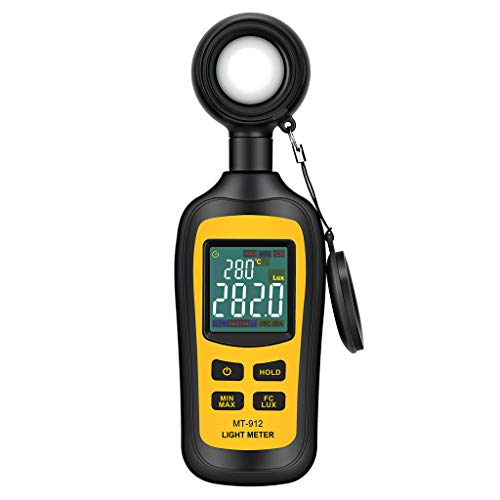
Light Meter Digital Illuminance Meter Handheld Ambient Temperature Measurer, Range up to 200,000 Lux, Luxmeter with 4 Digit Color LCD Screen
- Measurement Range: 0 to 200,000 Lux
- High Accuracy: ±3% rdg ± 8 dgts
- LCD Screen: 4 digit color display
As an affiliate, we earn on qualifying purchases.
As an affiliate, we earn on qualifying purchases.
Measurement Gadgets: Turning the Invisible Into Data
Light-measurement tools are a useful entry point into scientific gadgets because they translate phenomena we experience every day into comparable information. Lux meters quantify illumination at a surface, while spectrometers separate light into wavelengths. These tools can support photography, electronics projects, lighting experiments, classroom demonstrations, and other hobbyist investigations.
A pocket spectrometer deserves especially careful comparison. Portability is valuable, but users should also examine its wavelength coverage, resolution, connection method, supported operating systems, and data format. The accompanying software can be as important as the sensor itself because it determines how easily results can be viewed, saved, and compared. The roundup of USB pocket spectrometers for on-the-go analysis offers a focused starting point for this category.
Good measurement habits improve almost any instrument. Keep the geometry consistent, minimize uncontrolled changes in ambient conditions, record settings, and repeat readings. Measurement gadgets become far more useful when they are treated as tools in a simple process rather than as devices expected to produce unquestionable answers from a single reading.
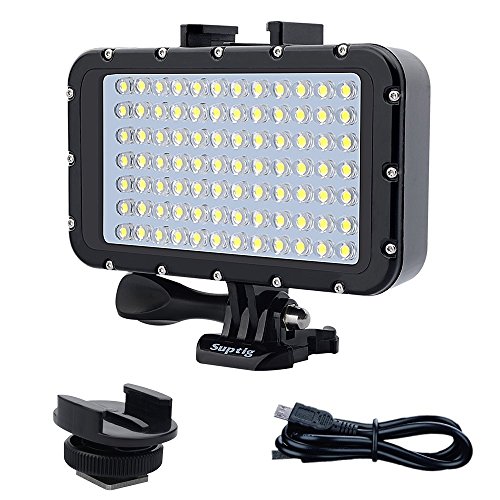
Suptig Underwater Lights Dive Light 84 LED High Power Dimmable Waterproof LED Video Light Waterproof 164ft(50m) Camera Light for Gopro Canon Nikon Pentax Panasonic Sony Samsung SLR Cameras
- Camera Compatibility: Works with various SLR and action cameras
- Waterproof Depth: Submersible up to 164ft (50m)
- Battery Type: Built-in 2600mAh lithium battery
As an affiliate, we earn on qualifying purchases.
As an affiliate, we earn on qualifying purchases.
Thermal Imaging and Smartphone-Based Tools
Smartphones increasingly serve as the display, processor, storage system, and communications hub for external sensors. This approach can make advanced capabilities more portable, but it introduces dependencies. Connector type, phone dimensions, operating-system support, app maintenance, case clearance, and battery use all deserve attention before purchase.
Thermal imaging is a strong example. A thermal attachment does not see through objects; it represents infrared radiation as a visual temperature pattern. That can help users investigate insulation differences, locate possible heat sources, inspect electronics, or observe broad thermal patterns, but interpretation still matters. Reflective materials, viewing angle, distance, and surface properties can influence what appears on screen.
Anyone considering this type of accessory can compare the category through the guide to thermal imaging cameras for smartphones. Beyond image appearance, prioritize compatibility, usable temperature range, sensitivity to small differences, refresh behavior, and export options. A polished app is convenient, but dependable device support is more important over the long term.

SUNVIE 5W Smart Floor Can Light Up Lights Indoor, APP Control, RGBCW, 2PCS
- Unique Beveled Design: Artistic ambiance for indoor lighting
- 16 Million Colors: RGB color mode for vibrant settings
- Adjustable Warm/Cool Whites: 2700K-6500K for any atmosphere
As an affiliate, we earn on qualifying purchases.
As an affiliate, we earn on qualifying purchases.
Wellness Technology and Responsible Expectations
Wellness gadgets sit at the intersection of consumer electronics and personal health, so they require more scrutiny than ordinary accessories. Marketing language may imply certainty where individual results, treatment protocols, and evidence are more complicated. Avoid treating a consumer device as a substitute for professional diagnosis or care, particularly when pain is severe, persistent, unexplained, or associated with other symptoms.
For light-based wellness devices, practical comparison points include treatment-area size, wavelength information, operating controls, session timing, power source, and eye-safety guidance. Handheld designs may offer targeted application, although that also means the user must hold or reposition the device consistently. The guide to handheld red light devices for pain relief can help readers explore the available formats and decision factors without assuming that one approach suits every person.
Look for clear instructions, sensible precautions, transparent specifications, and a return policy appropriate to the purchase. Be cautious when a device promises to address a long list of unrelated conditions or presents testimonials as definitive proof. In health-adjacent technology, restraint and clarity are signs of a more credible buying process.
Home Entertainment Lighting
Not every useful gadget needs to measure or diagnose something. Lighting accessories can improve the atmosphere around a television, reduce the visual harshness of a bright screen in a dark room, or add color to an entertainment space. The main choice is between simple static backlighting and systems that change color in response to screen content, audio, or an app.
Before selecting a strip, measure the television and plan the cable route. Consider how the strip handles corners, where its power will come from, how firmly it can be mounted, and whether controls remain accessible after installation. Color consistency and suitable brightness are generally more important than a huge library of effects. For category-specific options, see the guide to LED light strips for TV backlighting.
Placement matters as much as the strip itself. Backlighting works best when the wall can reflect and diffuse the light. Wall color, distance from the screen, nearby furniture, and visible cables all affect the finished result. Plan the installation before removing adhesive backing, and test the lighting at the brightness levels you actually use for viewing.
Astronomy Gadgets: Alignment Before Enhancement
Astronomy encourages accessory purchases, but optical alignment and sound technique usually come before additional enhancement. A telescope that is not properly collimated may not deliver its expected image quality regardless of the eyepiece, camera, or filter attached to it. Collimation tools help users align optical components, though the appropriate method depends on the telescope design and the precision required.
The overview of telescope collimation tools for accurate alignment is a useful next step for readers building or maintaining an observing setup. Compatibility should be checked carefully because not every tool is suitable for every optical configuration. Ease of verification also matters: a procedure is only valuable if the user can complete it confidently and confirm the result.
For astrophotography, light pollution filters can improve the separation of certain astronomical emissions from unwanted artificial light, but they cannot restore information that was never captured. Their effects vary with the target, local lighting, camera sensor, lens or telescope, exposure strategy, and processing workflow. The guide to light pollution filters for astrophotography explores options for photographers working toward clearer night-sky images.
Filters also change the captured color balance and the amount of light reaching the sensor. Evaluate them as part of the entire imaging workflow, including calibration frames and post-processing, rather than expecting a universal fix. In many cases, better tracking, focus, alignment, and exposure technique produce larger improvements than adding another accessory.
Underwater Video Lighting
Water absorbs and scatters light, causing color and contrast to change with depth and distance. An underwater video light can restore illumination close to the camera, but effectiveness depends on placement, beam shape, subject distance, water clarity, and the balance between brightness and backscatter. Simply choosing the most powerful-looking specification does not guarantee better footage.
A broad beam is often useful for video because it can illuminate the frame more evenly, while mounting two lights can reduce harsh shadows in some setups. Battery management, control accessibility, attachment points, and the stated depth rating should be considered together. The guide to underwater LED video lights provides a focused comparison for marine filming equipment.
Reliability procedures are essential around water. Inspect seals, keep sealing surfaces clean, follow charging and maintenance guidance, and test the assembled setup in controlled conditions before an important dive. Lighting technique also matters: positioning lights away from the lens axis can help reduce the appearance of particles reflecting directly back toward the camera.
Compatibility, Privacy, and Long-Term Ownership
Many modern gadgets depend on an app, account, wireless connection, or cloud service. That convenience can shorten setup time, but it may also determine whether the product remains useful after an operating-system update or service change. Before buying, check whether core functions work offline, whether data can be exported, what permissions the app requests, and whether a physical control is available for essential operations.
Long-term value also includes replaceable batteries, standard cables, accessible accessories, firmware support, and understandable documentation. A less glamorous device with a stable workflow may serve you better than a feature-rich alternative that depends on fragile software. For field equipment, consider how easily each part can be packed, charged, protected, and replaced.
A Smarter Gadget-Buying Framework
Begin by writing down the result you want and the conditions in which you need it. Identify the two or three specifications that determine whether the device can achieve that result. Then verify compatibility with every relevant component, including phones, cameras, telescopes, mounts, cables, power sources, apps, and operating systems.
Next, examine the workflow: setup, calibration, operation, interpretation, storage, cleaning, and maintenance. Consider what happens when the device is taken outside the ideal environment. Finally, compare total ownership requirements rather than the gadget alone. Accessories, adapters, protective cases, subscriptions, and replacement power options can materially affect convenience.
The most rewarding technology purchases are rarely the ones with the longest feature lists. They are the tools whose purpose is clear, whose limitations are understood, and whose design fits the user’s real routine. Use specialist guides for the deep comparison, but keep the larger principle in view: buy the capability you can apply, understand, and continue using after the excitement of the initial setup has passed.