
The best digital camera for most people in 2026 is the Canon EOS R100 — an entry-level mirrorless with a 24.1MP APS-C sensor, a modern RF lens mount, and a price that undercuts many fixed-lens rivals. If money is tight, the Canon EOS Rebel T7 bundle is my value pick because it includes the shoulder bag and 64GB card a beginner would buy anyway. And if sheer reach is the goal, the Nikon COOLPIX P950 and its 83x zoom stand alone in this lineup. The core tradeoff in this category is simple: interchangeable-lens cameras give you room to grow, while fixed-lens models give you convenience and extreme zoom in one package. Sensor size, not megapixel count, is what separates the strong performers from the spec-sheet fillers. Below, I break down all seven picks — what each does well, where each falls short, and who should buy which.

Get the latest gadgets delivered free with Prime
- Fast, free delivery on millions of items
- Prime Video, Amazon Music and more included
- Member-only deals all year
Complete the kit



Key Takeaways
- The Canon EOS R100 took the top spot because it’s the only mirrorless camera in the lineup — its RF mount gives beginners an upgrade path that the aging Rebel T7 DSLR can’t match.
- The two Rebel T7 listings are the same camera underneath: the bundle with the bag and 64GB card is the smarter buy for first-timers, while the bare kit only wins on sticker price.
- Zoom reach trades directly against image quality — the Nikon P950’s 83x zoom is the lineup’s standout feature, but its small 1/2.3-inch sensor can’t match the APS-C Canons in low light.
- The Canon PowerShot SX740 HS and ELPH 360 HS split the compact category in two: one packs a 40x travel zoom, the other is simply the smallest and cheapest camera here.
- The Kodak PIXPRO AZ528 undercuts the P950 by hundreds of dollars, but the savings come from its 16MP sensor, lack of 4K video, and stripped-down controls.


| digital camera | Connectivity | Sensor | Video | Optical Zoom |
|---|---|---|---|---|
| Canon EOS Rebel T7 DSLR Camera | Built-in Wi-Fi and NFC | 24.1MP APS-C CMOS | Full HD 1080p | — |
| Canon EOS Rebel T7 DSLR Camera | Wi-Fi and NFC | 24.1MP APS-C CMOS | — | — |
| Canon PowerShot SX740 HS Digit | Wi-Fi and Bluetooth | 20.3MP CMOS | 4K UHD | 40x |
| KODAK PIXPRO AZ528 16MP Digita | Wi-Fi | 16MP BSI CMOS | 1080p Full HD | 52x |
| Nikon COOLPIX P950 Superzoom D | Wi-Fi and Bluetooth | — | 4K UHD | 83x (166x Dynamic Fine Zoom) |
| Canon PowerShot ELPH 360 HS Ca | Wi-Fi, NFC | 20.2 Megapixel CMOS | — | 12x |
| Canon EOS R100 Mirrorless Came | Wi-Fi, Bluetooth | 24.1 Megapixel APS-C CMOS | 4K at 24 fps, Full HD at 60 fps, HD at 120 fps | — |
More Details on Our Top Picks
Canon EOS Rebel T7 DSLR Camera with EF-S 18-55mm f/3.5-5.6 IS II Lens Kit
If I had to point a first-time DSLR buyer at one camera in this roundup, it would be the Canon EOS Rebel T7. Its 24.1MP APS-C sensor is the same size found in pricier Canon bodies, so image quality is a real step up from any compact here, including the Canon PowerShot SX740 HS. The EF/EF-S lens mount means the camera grows with you — a cheap 50mm prime transforms portraits in a way no fixed-lens option can. The tradeoffs are honest ones: the 9-point autofocus feels dated for fast action, and video stops at 1080p while the Nikon COOLPIX P950 shoots 4K. If you mostly shoot stills and want to learn photography properly, neither matters much. Buyers who want everything in one box should look at the bundled T7 kit instead.
Pros:- 24.1MP APS-C sensor delivers detail far beyond compact cameras
- Compatible with Canon’s huge EF and EF-S lens catalog
- Built-in Wi-Fi and NFC for quick phone transfers
- Approachable controls and guided feel for new photographers
Cons:- No 4K video — capped at Full HD 1080p
- 9-point autofocus system lags behind modern mirrorless rivals
- Plasticky build compared with higher-end bodies
Best for: First-time DSLR buyers who want real image quality and a lens system they can grow into over years
Not ideal for: Video-focused shooters — it tops out at 1080p, and hybrid creators will outgrow the basic 9-point autofocus quickly
- Sensor:24.1MP APS-C CMOS
- Video:Full HD 1080p
- Autofocus:9-point AF system
- ISO Range:100–6400 (H: 12800)
- Lens Mount:Canon EF and EF-S
- Included Lens:EF-S 18-55mm f/3.5-5.6 IS II
- Connectivity:Built-in Wi-Fi and NFC
Our verdict“The right first DSLR for stills-focused beginners who value image quality and lens upgrade paths over video features.”
Canon EOS Rebel T7 DSLR Camera with 24.1MP APS-C Sensor, Wi-Fi & NFC, Kit with 18-55mm Lens, Shoulder Bag, 64GB Card
This is the same Rebel T7 as the standalone kit above, wrapped in a shoulder bag and 64GB memory card — and that difference matters more than it sounds. A first camera bought without a card or bag is a camera that stays home, so this bundle removes the two most common day-one frustrations. Compared with buying the base T7 and accessories separately, the package usually costs less and guarantees card compatibility. What it doesn’t fix are the camera’s inherent limits: no 4K video, a modest 9-point autofocus system, and an 860mAh battery that runs dry during long outings — a spare is worth adding to the cart. Against the Canon EOS R100, the T7 feels a generation behind, but it also costs noticeably less, which is the whole point of this pick.
Pros:- True day-one kit: bag and 64GB card included
- 24.1MP APS-C sensor with DIGIC 4+ processing
- Cheaper than assembling the same kit piece by piece
- Full access to Canon EF and EF-S lenses
Cons:- 860mAh battery is weak for extended sessions
- No 4K video recording
- 18-55mm kit lens limits reach until you buy more glass
Best for: Gift buyers and students who want a complete, ready-to-shoot package without researching accessories
Not ideal for: Anyone planning long shooting days away from a charger — the small 860mAh battery demands a paid backup
- Sensor:24.1MP APS-C CMOS
- Processor:DIGIC 4+
- Included Lens:18-55mm kit lens
- Connectivity:Wi-Fi and NFC
- Included Accessories:Shoulder bag and 64GB memory card
- Battery:LP-E10 (860mAh)
Our verdict“The smartest buy for anyone who wants the Rebel T7 experience in a single box with nothing left to purchase on day one.”
Canon PowerShot SX740 HS Digital Camera with 20.3MP, 40x Zoom, 4K Video, Wi-Fi & Bluetooth
The Canon PowerShot SX740 HS is the camera I’d suggest to anyone who likes the Rebel T7’s price but not its size. It slips into a jacket pocket, yet packs a 40x optical zoom and 4K video — two things the T7 can’t match at the same time. Against the smaller Canon PowerShot ELPH 360 HS, the SX740 costs more but offers far greater zoom reach and adds 4K, which makes it the better travel companion. The compromises come with the compact body: there’s no viewfinder, so bright-sun shooting means squinting at the LCD, and manual control is limited compared with any DSLR here. Battery life also fades quickly when you lean on the zoom and 4K. For travelers who shoot from morning sightseeing to evening dinners, that tradeoff is easy to accept.
Pros:- 40x optical zoom in a genuinely pocketable body
- 4K UHD video — a feature the Rebel T7 lacks
- Wi-Fi and Bluetooth for easy sharing on the road
- Bundle includes 64GB card, bag, and charger
Cons:- No viewfinder — LCD-only framing struggles in bright sun
- Limited manual controls for advanced shooters
- Battery drains fast under heavy zoom and 4K use
Best for: Travelers who want big zoom and 4K video in a camera that disappears into a pocket or purse
Not ideal for: Enthusiasts who want manual control dials and a viewfinder — this is a point-and-shoot at heart
- Sensor:20.3MP CMOS
- Optical Zoom:40x
- Video:4K UHD
- Connectivity:Wi-Fi and Bluetooth
- Form Factor:Compact point-and-shoot
- Viewfinder:None (LCD only)
- Included Accessories:Battery, charger, wrist strap, bag, 64GB card
Our verdict“The pick for travelers who prioritize pocket size, zoom reach, and 4K video over hands-on control.”
KODAK PIXPRO AZ528 16MP Digital Camera, 52x Optical Zoom, Wi-Fi, Black
The KODAK PIXPRO AZ528 exists for one reason: getting 52x optical zoom for far less than Nikon’s superzooms charge. Sitting between a point-and-shoot and a DSLR in size, it covers 24mm wide-angle through serious telephoto, with optical image stabilization keeping long shots usable. Compared with the Nikon COOLPIX P950, the zoom is shorter and there’s no 4K — video tops out at 1080p — but the price gap is substantial, and for casual wildlife or kids’ sports the AZ528 gets you most of the reach. Where it shows its budget roots is the spec sheet’s silence: no touchscreen, no advanced autofocus, and no published battery rating, so all-day outings are a gamble. Next to the Canon PowerShot SX740 HS it’s bulkier and less pocketable, but the extra 12x of zoom is the whole argument.
Pros:- 52x zoom from 24mm wide-angle to long telephoto
- Optical stabilization keeps max-zoom shots sharp
- 6fps burst mode for action sequences
- Wi-Fi sharing plus SDXC support up to 512GB
Cons:- 1080p video only — no 4K at this price
- No touchscreen or advanced autofocus features
- Bulky bridge design won’t fit a pocket
Best for: Budget-minded hobbyists shooting school sports, backyard birds, or vacations who want maximum reach per dollar
Not ideal for: Video shooters and pixel-peepers — 1080p-only recording and a 16MP sensor trail every other pick here
- Sensor:16MP BSI CMOS
- Optical Zoom:52x
- Lens:24mm wide-angle
- Video:1080p Full HD
- Burst Mode:6fps
- Image Stabilization:Optical
- LCD Screen:3-inch
- Connectivity:Wi-Fi
- Memory Support:SD/SDHC/SDXC up to 512GB
Our verdict“The sensible choice for casual shooters who want serious telephoto reach without paying Nikon superzoom prices.”
Nikon COOLPIX P950 Superzoom Digital Camera
No other camera in this roundup reaches like the Nikon COOLPIX P950. Its 83x optical zoom stretches to a 2000mm-equivalent focal length — territory that would cost thousands in DSLR lenses — and dedicated bird and moon modes show exactly who Nikon built it for. Next to the KODAK PIXPRO AZ528, you get far more reach plus 4K video, RAW capture, and a vari-angle LCD, which justifies the higher price for serious hobbyists. The catches are real: this is a bulky, DSLR-sized body that no pocket will swallow, and the small sensor behind that enormous zoom struggles in low light, so dusk wildlife shots get noisy fast. There’s also no weather sealing, an odd omission on an outdoor camera. For daylight birding and moon shots, nothing here competes; for anything else, it’s overkill.
Pros:- 83x zoom reaching a 2000mm-equivalent focal length
- 4K UHD video and RAW capture for flexible editing
- Dedicated bird and moon scene modes
- Vari-angle LCD and Dual Detect VR stabilization
Cons:- Large, heavy body that’s awkward to carry all day
- Small sensor produces noisy low-light images
- No weather sealing despite the outdoor focus
Best for: Birders, moon photographers, and wildlife hobbyists who shoot in good light and need extreme reach without buying lenses
Not ideal for: Travelers and everyday shooters — the DSLR-sized bulk and weak low-light performance make it a specialist tool
- Resolution:16MP
- Optical Zoom:83x (166x Dynamic Fine Zoom)
- Focal Length:2000mm equivalent
- Video:4K UHD
- Screen:3.2-inch vari-angle LCD
- Image Stabilization:Dual Detect VR
- RAW Support:Yes
- Connectivity:Wi-Fi and Bluetooth
Our verdict“The clear pick for daylight wildlife and bird photography where maximum zoom reach outweighs portability.”
Canon PowerShot ELPH 360 HS Camera
The Canon PowerShot ELPH 360 HS earns its spot as the true pocket camera of this lineup. Its 12x optical zoom and 20.2MP CMOS sensor deliver reach and detail a phone can’t fake, and it slips into a jacket pocket. Next to the Canon PowerShot SX740 HS, the tradeoff is clear: the SX740 gives you 40x zoom and 4K video, while the ELPH 360 HS costs less and stays slimmer. I’d steer casual shooters who mostly share online toward the ELPH — built-in Wi-Fi and NFC make moving shots to a phone painless, and Hybrid Auto stitches clips into quick recaps. Skip it if you want serious zoom or 4K; the fixed lens and modest burst speeds also rule it out for sports or wildlife.
Pros:- Genuinely pocketable body that still packs a 12x optical zoom
- 20.2MP CMOS sensor holds up in varied lighting
- Wi-Fi and NFC make sharing shots to a phone quick
- Hybrid Auto mode builds automatic video recaps
Cons:- No 4K video, while the SX740 HS in this same list offers it
- 12x zoom is short next to superzooms like the Kodak PIXPRO AZ528’s 52x
- Fixed lens and basic controls leave no room to grow
Best for: Casual shooters and travelers who want better-than-phone photos from a camera that disappears into a pocket
Not ideal for: Wildlife or sports shooters — the 12x zoom runs out fast, and anyone who wants 4K video should look at the SX740 HS instead
- Sensor:20.2 Megapixel CMOS
- Optical Zoom:12x
- Image Stabilization:Optical
- Processor:DIGIC 4+
- Display:3.0-inch LCD
- Connectivity:Wi-Fi, NFC
- Special Mode:Hybrid Auto video recaps
Our verdict“The right buy if you want a simple, affordable pocket camera that beats your phone without demanding any skill.”
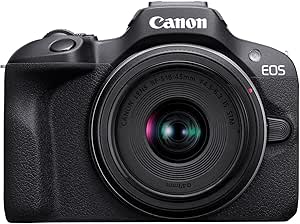
Canon EOS R100 Mirrorless Camera RF-S 18-45mm F4.5-6.3 IS STM Lens Kit
The Canon EOS R100 is the model I’d hand to anyone buying a first interchangeable-lens camera. Its 24.1MP APS-C sensor sits in the same class as the Canon EOS Rebel T7’s, but the R100’s Dual Pixel CMOS AF with eye detection locks onto people far more reliably than the Rebel’s dated autofocus, and it shoots 4K video the T7 can’t match. Compared with the Canon PowerShot ELPH 360 HS, you carry a bigger body in exchange for lens flexibility and better low-light results. The compromises are real: 4K tops out at 24 fps, the RF-S lens lineup is still thin, and battery life won’t survive a long event. For learning photography properly, though, nothing else in this roundup fits better.
Pros:- 24.1MP APS-C sensor delivers sharp, detailed stills
- Dual Pixel CMOS AF with face and eye detection is rare at this price
- 4K video plus 60 fps Full HD and 120 fps HD slow motion
- Compact and light for an interchangeable-lens camera
Cons:- 4K limited to 24 fps, which restricts video work
- RF-S lens selection is still small compared with Canon’s DSLR mount
- Battery life is tight for extended shooting sessions
Best for: Beginners and new creators stepping up from a phone who want strong autofocus and room to grow with interchangeable lenses
Not ideal for: Video-first shooters who need smooth 4K — it records at only 24 fps — and anyone wanting a deep native lens selection
- Sensor:24.1 Megapixel APS-C CMOS
- Kit Lens:RF-S 18-45mm F4.5-6.3 IS STM
- Video:4K at 24 fps, Full HD at 60 fps, HD at 120 fps
- Autofocus:Dual Pixel CMOS AF with face and eye detection
- Continuous Shooting:Up to 6.5 fps
- Connectivity:Wi-Fi, Bluetooth
Our verdict“The smartest first real camera in this roundup for beginners who want modern autofocus, 4K, and a system to grow into.”
How We Picked
I evaluated all seven cameras the way a first-time buyer should: image quality per dollar, usability for beginners, versatility of the lens or zoom range, video capability, build and handling, and how current each model is in 2026. Sensor size carried the most weight, because it shapes every photo a camera takes, while megapixel counts were treated as a minor spec. I also weighed what each camera costs against what it replaces — a body that pushes you toward buying lenses later had to justify that extra spending with visibly better results.
The ranking follows a simple logic: cameras that serve the most buyers well rank highest. The Canon EOS R100 leads because it pairs the lineup’s largest sensor class with a modern mirrorless mount at a price many fixed-lens cameras match. The two Rebel T7 kits follow on the strength of the same APS-C sensor at lower prices, with the bundle edging the bare kit because its extras are genuinely useful. The compacts and superzooms rank lower not because they’re worse cameras, but because they’re specialist tools — the Nikon P950 for reach, the SX740 HS for pocket travel zoom, the Kodak AZ528 for budget superzoom duty, and the ELPH 360 HS for price and size — and a specialist only makes sense when you already know you need the specialty.
| digital camera | Connectivity |
|---|---|
| Canon EOS Rebel T7 DSLR Camera | Built-in Wi-Fi and NFC |
| Canon EOS Rebel T7 DSLR Camera | Wi-Fi and NFC |
| Canon PowerShot SX740 HS Digit | Wi-Fi and Bluetooth |
| KODAK PIXPRO AZ528 16MP Digita | Wi-Fi |
| Nikon COOLPIX P950 Superzoom D | Wi-Fi and Bluetooth |
| Canon PowerShot ELPH 360 HS Ca | Wi-Fi, NFC |
| Canon EOS R100 Mirrorless Came | Wi-Fi, Bluetooth |
Factors to Consider When Choosing Best Digital Cameras
The seven picks above fall into three camps — interchangeable-lens bodies, travel compacts, and superzoom bridge cameras — and choosing the right camp matters more than choosing the right model. The five points below cover the questions that actually decide which camp fits you: where sensor specs mislead, how much zoom is worth paying for, what the real budget looks like, and the mistakes that leave first-time buyers with the wrong camera. Read these before comparing any spec sheets.
Sensor Size Beats Megapixels Every Time
This lineup spans two very different sensor classes: APS-C sensors in the Canon EOS R100 and Rebel T7, and much smaller 1/2.3-inch sensors in everything else. The Kodak PIXPRO AZ528 advertises 16MP and the Rebel T7 advertises 24.1MP, but that gap undersells the real difference — the T7’s sensor has far more surface area, so each pixel gathers much more light. In practice that means cleaner indoor shots, better dynamic range, and the soft background blur people associate with a real camera. Small-sensor cameras can produce lovely daylight photos, but they hit a hard ceiling once the light drops. Megapixel counts mostly tell you how far you can crop, not how good the image looks. The rule I follow: buy the biggest sensor your budget allows, and only accept a small sensor when you’re deliberately trading it for zoom reach or pocket size.
Interchangeable Lenses vs. Fixed-Lens Convenience
Every camera here sits on one side of a fork in the road. The R100 and the two Rebel T7 kits take removable lenses, which means the body is the start of a system — you can add a brighter portrait lens or a telephoto later, and the camera grows with you. The SX740 HS, P950, AZ528, and ELPH 360 HS are sealed designs: nothing to buy later, nothing to clean, and a ceiling you can’t raise. There’s a catch on the system side, though. A mirrorless or DSLR body with only its kit lens is easily out-zoomed by a $300 bridge camera, and telephoto lenses cost real money. Mount choice matters too: the R100 uses Canon’s current RF system, while the Rebel T7’s EF-S mount is a legacy line with fewer new lenses coming. If you enjoy learning gear and plan to shoot for years, buy into a system; if you want one purchase that covers everything, a fixed-lens camera is the honest answer.
How Much Zoom Do You Actually Need?
Zoom numbers are the loudest spec in this category, and the most misused. The Nikon P950’s 83x zoom reaches a 2000mm equivalent — enough to fill the frame with the moon — while the Kodak AZ528’s 52x and the SX740’s 40x still cover serious distance. But extreme reach demands small sensors and slow apertures, which is why superzooms struggle indoors and at dusk. Most everyday photography — family, travel, food, street — happens between roughly 24mm and 200mm, a range even the basic kit lenses cover. So the honest question is whether you can name the subject that needs more. Birding, safaris, and moon shots justify a superzoom; everything else is paying for bulk you’ll leave at home. Buy zoom for a subject you already shoot, not for one you might.
Budget for the Whole Kit, Not Just the Camera
The sticker price is the entry fee, not the total. A dependable 64GB or 128GB UHS-I card runs $15 to $30, a spare battery $30 to $50, and a basic bag $25 to $40 — plan on adding 15 to 20 percent on top of the camera price. This is exactly where the Rebel T7 bundle earns its place: its shoulder bag and 64GB card are basic, but they’re the items a first-timer would buy anyway. Be skeptical of giant accessory bundles, though — twenty-piece kits with flimsy tripods and no-name filters are usually worth less than one good memory card. Battery planning differs by camera type: DSLRs like the T7 can shoot for days on a charge, while the mirrorless R100 and the superzooms drain faster and genuinely need a spare. Skimping here doesn’t save money; it just delays the spending until a full card or dead battery ruins an outing.
The Mistakes That Cost First-Time Buyers the Most
After comparing these seven cameras, the same buyer errors keep surfacing. Watch for these five:
- Shopping by megapixels. Sensor size and lens quality shape image quality far more than resolution does.
- Buying maximum zoom just in case. A superzoom without a distant subject to shoot is an expensive paperweight.
- Ignoring video fine print. Some 4K in this price range is heavily cropped, and several cameras here are 1080p-only.
- Paying full price for older models. The Rebel T7 and ELPH 360 HS are years old — smart buys at a discount, poor ones at launch pricing.
- Underestimating size and weight. The camera you leave at home takes no photos, so a smaller body you’ll carry beats a bigger one you won’t.
Avoid these five and almost any pick from this list will serve you well.
Frequently Asked Questions
Is a DSLR or mirrorless camera better for beginners in 2026?
Mirrorless is the safer bet for most beginners now. The Canon EOS R100 uses Canon’s current RF mount, which means new lenses and accessories will keep arriving for years, while the Rebel T7’s EF-S mount is a legacy system Canon has largely stopped developing. Mirrorless bodies also tend to be smaller and show you the exposure in the viewfinder before you shoot, which flattens the learning curve. DSLRs still hold two advantages: far better battery life and an optical viewfinder that some shooters prefer. Price is the real decider — if the R100 fits your budget, it’s the better long-term buy; if it doesn’t, the Rebel T7 delivers the same sensor quality for less and remains a perfectly good learning camera.
Are superzoom cameras like the Nikon P950 worth it for wildlife photography?
For reach on a budget, yes — nothing else comes close at this price. Matching the P950’s 2000mm equivalent with an interchangeable-lens setup would cost several thousand dollars in telephoto glass. The tradeoff is sensor size: the P950 and Kodak AZ528 use small 1/2.3-inch sensors, so they produce their best results in good daylight and get noisy at dusk, when wildlife is often most active. The P950 earns its premium over the AZ528 with 4K video and RAW capture, which give you far more editing flexibility. For backyard birds, safari trips, and moon photography, a superzoom is the right tool; for gallery-quality prints or fast action in low light, you’d need to spend much more on a mirrorless body and telephoto lens.
Is the Canon EOS Rebel T7 still worth buying in 2026?
At the right price, yes. The T7’s 24.1MP APS-C sensor still produces sharp, colorful photos that hold up against anything in this price bracket, and its battery life outlasts every mirrorless rival here. The age shows elsewhere: a basic 9-point autofocus system, 1080p video with no 4K option, and a fixed rear screen. It also relies on Canon’s older EF-S mount, so treat it as a self-contained purchase rather than the start of a big lens collection. Buy the bundle version if you’re starting from zero, since the included bag and 64GB card cover your first accessories. Skip the T7 entirely if you plan to invest in lenses over time — that money belongs in the R100’s RF system instead.
How much should I budget for accessories on top of the camera price?
Plan on 15 to 20 percent extra for the accessories that aren’t optional. A memory card is the first need — a 64GB UHS-I card costs $15 to $30 and handles both bursts and 4K clips on these cameras. A spare battery ($30 to $50) ranks second, and it moves from nice-to-have to required for the mirrorless R100 and the power-hungry superzooms. A padded bag ($25 to $40) protects the investment and makes you more likely to carry the camera. This is why starter bundles like the Rebel T7 kit with a bag and 64GB card can be genuinely smart value rather than marketing filler. Everything beyond those three items — tripods, filters, extra lenses — can wait until you know what your shooting actually demands.
Do I need 4K video in a beginner camera?
Only if video is a real priority rather than a checkbox. In this lineup, the SX740 HS and Nikon P950 shoot true 4K, the R100 records 4K with a heavy crop that narrows your framing, and the Rebel T7 tops out at 1080p. For casual clips shared to a phone, 1080p still looks perfectly good and keeps file sizes manageable. Where 4K pays off is cropping and reframing in editing, plus future-proofing footage you’ll keep for years. If video matters most to you, weigh the R100’s crop penalty honestly — vloggers and hybrid shooters may find the SX740’s uncropped 4K more useful in practice. And if you rarely film, don’t let 4K steer the decision at all; put that money toward the better stills camera.
Conclusion
After weighing everything above, my recommendation for most buyers is the Canon EOS R100 — it pairs the best sensor in this lineup with a modern RF mount, so the camera can grow as your skills do. If you’re starting from zero and watching every dollar, the Canon EOS Rebel T7 bundle is the value pick: same-class image quality, plus the bag and memory card you’d otherwise buy separately. Choose the bare Rebel T7 kit only when its lower sticker price matters more than the extras. Wildlife and moon shooters should go straight to the Nikon COOLPIX P950 — nothing else here touches its 83x reach — while the Kodak PIXPRO AZ528 covers the same job on a tighter budget with clear compromises. Travelers who want one pocket camera with serious zoom get the Canon PowerShot SX740 HS, and anyone who just wants the smallest, cheapest step up from a phone should grab the PowerShot ELPH 360 HS. Pick the role that matches how you actually shoot, not the spec sheet that looks biggest — that’s the whole decision.
Fall Picks
fall essentials
As an affiliate, we earn on qualifying purchases.