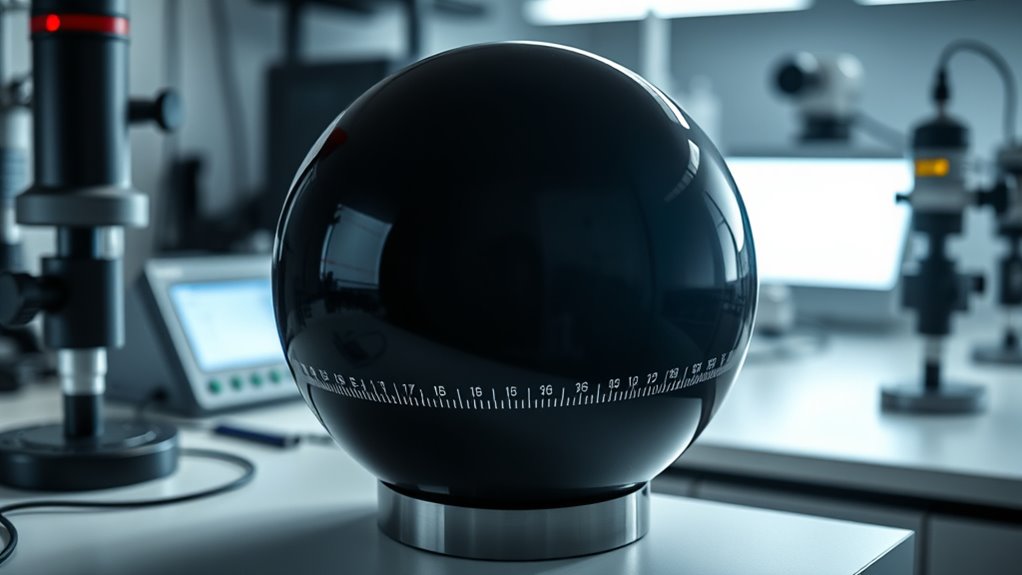

For most fiber-coupled measurements, I’d start with the 36 mm PTFE Integrating Sphere with SMA905 Fiber Port: its compact format and familiar connector make it a practical general-purpose pick. The Laser Testing Integrating Sphere, 200–2500 nm, SMA905/FC stands out when a stated wavelength span and connector choice matter, while the INT-36T 36 mm Reflectance and Transmittance Sphere suits measurements that need both sample interaction modes. Choosing among lab-grade integrating spheres means balancing sphere size, port layout, coating, wavelength coverage, and whether a detector is included. Smaller spheres can fit fiber setups neatly, while larger or specialized configurations may better match particular samples and measurement workflows. Read on for the full comparison and guidance on matching a sphere to your instrument.

Get the latest gadgets delivered free with Prime
- Fast, free delivery on millions of items
- Prime Video, Amazon Music and more included
- Member-only deals all year
Complete the kit



Key Takeaways
- The 36 mm SMA905 options lead on straightforward fiber integration, but their similar descriptions make port geometry, coating documentation, and model-specific compatibility worth confirming before purchase.
- The laser-testing model is the clearest wavelength-led choice because its stated 200–2500 nm range helps narrow the field for buyers who need broad spectral coverage.
- INT-36T and INT-36T-2 serve different measurement layouts: reflectance/transmittance capability and dual outlets address distinct optical arrangements, so outlet count alone does not define suitability.
- The 120 mm units with detectors and the 200–2500 nm sphere trade compactness for specialized system fit; buyers should verify detector response, interfaces, and condition rather than assume included hardware is ready to use.
- Several listings overlap in size and connector style, making documentation, exact port configuration, coating specification, and included components more useful decision points than diameter alone.
| 36mm PTFE Integrating Sphere with SMA905 Fiber Port |  | Best Compact Lab Setup | Inner diameter: 36 mm | Outer dimensions: 48 × 48 × 48 mm | Entrance aperture: 10 mm | VIEW ON AMAZON | See Our Full Breakdown |
| Used Integrating Sphere, 120 mm Outer Diameter, with Detector |  | Best for Experienced Buyers Seeking a Larger Used Sphere | Condition: Used | Outer diameter: 120 mm | Fiber optic interface: SMA905 | VIEW ON AMAZON | See Our Full Breakdown |
| 36 mm Reflectance and Transmittance Integrating Sphere, Model INT-36T |  | Best for Reflectance and Transmittance Work | Model: INT-36T | Manufacturer: zatagen | Diameter: 36 mm | VIEW ON AMAZON | See Our Full Breakdown |
| Used Integrating Sphere, 120 mm Outer Diameter, with Detector |  | Best Used Option for Light-Flux Work | Condition: Used | Diameter: 120 mm | Reflectivity: Up to 98% | VIEW ON AMAZON | See Our Full Breakdown |
| YX-IS Integrating Sphere, 50 mm Diameter |  | Best for Luminous-Flux Measurement | Manufacturer: Zatagen | Part number: YX-IS | Model number: YX-IS | VIEW ON AMAZON | See Our Full Breakdown |
| iDili 36 mm Integrating Sphere with PTFE Coating and SMA905 Fiber Port |  | Best Compact General-Purpose Pick | Inner diameter: 36 mm | Outer dimensions: 48 × 48 × 48 mm | Entrance aperture: 10 mm | VIEW ON AMAZON | See Our Full Breakdown |
| Laser Testing Integrating Sphere, 200–2500 nm, SMA905/FC |  | Best for Broad-Range Laser Testing | Effective wavelength: 200–2500 nm | Product size: 53 × 53 × 51 mm | Inlet aperture: 9 mm | VIEW ON AMAZON | See Our Full Breakdown |
| 36 mm PTFE-Coated Integrating Sphere with SMA905 Fiber Port | | Best for Compact Spectral Collection | Inner diameter: 36 mm | Outer dimensions: 48 × 48 × 48 mm | Entrance aperture: 10 mm | VIEW ON AMAZON | See Our Full Breakdown |
| INT-36T-2 36 mm Integrating Sphere with Dual Outlets |  | Best for Dual-Outlet Transmittance Work | Model: INT-36T-2 | Integrating sphere diameter: 36 mm | Outlets: Dual | VIEW ON AMAZON | See Our Full Breakdown |
| PTFE Foam Integrating Sphere, 53 × 53 × 51 mm |  | Best for Flexible SMA905/FC Setup Matching | Material: F4 (PTFE) liner | Dimensions: 53 × 53 × 51 mm | Mouth diameter: 5–10 mm | VIEW ON AMAZON | See Our Full Breakdown |
| labgrade integrating sphere | Manufacturer |
|---|---|
| 36mm PTFE Integrating Sphere w | LeTkingok |
| Used Integrating Sphere | Tycoi |
| 36 mm Reflectance and Transmit | zatagen |
| Used Integrating Sphere | Tycoi |
| YX-IS Integrating Sphere | Zatagen |
| iDili 36 mm Integrating Sphere | — |
| Laser Testing Integrating Sphe | — |
| 36 mm PTFE-Coated Integrating | — |
| INT-36T-2 36 mm Integrating Sp | — |
| PTFE Foam Integrating Sphere | — |
More Details on Our Top Picks
36mm PTFE Integrating Sphere with SMA905 Fiber Port
This is my pick for a space-constrained optical bench where a fiber connection matters more than accommodating large sources. Its 36 mm PTFE-lined interior is paired with a 48 mm cubic housing, giving it a smaller footprint than the 50 mm YX-IS Integrating Sphere. The SMA905 port also offers a familiar route to compatible spectrometers and detectors. The tradeoff is working volume: the 10 mm entrance aperture and small sphere can limit sample size and light collection, so I would not choose it for bulky sources or setups needing flexible input geometry. Unlike the INT-36T, which is described for both reflectance and transmittance, this model’s listing emphasizes LED power measurement, transmittance testing, and sensor calibration rather than detailing a broader measurement configuration.
Pros:- PTFE inner coating is specified for diffuse reflection and light uniformity.
- Compact 48 × 48 × 48 mm housing can fit into crowded optical setups.
- SMA905 output connects with compatible fiber-based instruments.
- Aluminium housing provides a durable enclosure.
Cons:- The 36 mm interior can limit sample size and light collection for larger sources.
- The fixed 10 mm entrance aperture restricts input configuration options.
Best for: Labs with limited bench space measuring compact LEDs or sensors through an SMA905-connected spectrometer or power meter.
Not ideal for: Teams measuring large sources or samples, or those needing a larger entrance opening or clearly specified reflectance-and-transmittance configuration.
- Inner diameter:36 mm
- Outer dimensions:48 × 48 × 48 mm
- Entrance aperture:10 mm
- Output interface:SMA905
- Inner coating:PTFE
- Housing material:Aluminium
- Manufacturer:LeTkingok
- Part number:TK26-0608-103
Our verdict“Choose this sphere for compact, fiber-coupled measurements; choose the larger YX-IS when added diameter matters more than bench space.”
Used Integrating Sphere, 120 mm Outer Diameter, with Detector
The main draw here is the 120 mm outer diameter and stated reflectivity of up to 98%, a larger-format alternative to the 36 mm PTFE Integrating Sphere. Its clean interior and SMA905 fiber interface may suit an existing setup built around fiber-coupled measurements. But this is a used unit, and the included detector is explicitly untested; I would treat it as a possible spare or component, not as a ready-to-run measurement system. Compared with the INT-36T, this listing provides less detail about supported measurement modes and no tested detector assurance. Buyers who can independently verify the sphere and supply a known-good detector may find the larger format useful; labs needing dependable turnkey operation should skip it.
Pros:- 120 mm outer diameter offers a larger format than the listed 36 mm spheres.
- Reflectivity is stated as up to 98%.
- Clean interior is described as supporting measurement accuracy.
- SMA905 interface can connect with compatible fiber optics.
Cons:- Used condition adds uncertainty about wear and calibration history.
- The included detector is untested and may not work.
- The listing does not specify supported measurement modes or detailed sphere geometry.
Best for: Experienced optical-lab buyers who can inspect used equipment, verify performance, and connect a known-good detector.
Not ideal for: Labs needing a ready-to-use instrument, guaranteed detector function, or clearly documented measurement modes.
- Condition:Used
- Outer diameter:120 mm
- Fiber optic interface:SMA905
- Reflectivity:Up to 98%
- Detector:Included; untested
- Manufacturer:Tycoi
- Model:Integrating Sphere-U
Our verdict“Consider this used sphere only if you can verify the unit and already have a dependable detector for your setup.”
36 mm Reflectance and Transmittance Integrating Sphere, Model INT-36T
The INT-36T earns a distinct place for buyers whose work calls for both reflectance and transmittance measurements. That scope is more explicit than the YX-IS, which is described for luminous flux measurement, and more clearly stated than the compact PTFE model’s listing. Its 36 mm diameter keeps it in the smaller-sphere category, so it is a better fit for compact samples than large sources. The available details are limited, though: the listing mentions one accessory without identifying it, and asks buyers to confirm model compatibility. At 2.2 pounds, it is also not the lightest-sounding choice for a portable setup. I would favor it when the stated measurement modes match the task, but ask the seller for configuration details before ordering.
Pros:- Explicitly described for both reflectance and transmittance measurements.
- 36 mm diameter suits compact measurement setups.
- A listed accessory is included.
- A 180-day warranty is specified.
Cons:- The included accessory is not identified in the supplied details.
- Model compatibility should be confirmed before ordering.
- The listing does not specify an output interface or coating material.
Best for: Optical labs measuring reflectance and transmittance on compact samples that can confirm the INT-36T configuration with the seller.
Not ideal for: Buyers who need a fully documented accessory package, a clearly specified fiber interface, or a larger sphere for bulky samples.
- Model:INT-36T
- Manufacturer:zatagen
- Diameter:36 mm
- Measurement types:Reflectance and transmittance
- Weight:2.2 pounds
- Package dimensions:11.81 × 11.81 × 9.84 inches
- Power source:AC/DC
- Included components:Accessory
- Warranty:180 days
Our verdict“Choose the INT-36T when reflectance and transmittance are the priority and the seller confirms the exact configuration you need.”
Used Integrating Sphere, 120 mm Outer Diameter, with Detector
This listing is framed for light-flux measurement and pairs a 120 mm sphere with an SMA905 fiber interface. Its stated reflectivity of up to 98% gives buyers a useful specification to check against their measurement needs, while the listed one-pound item weight may appeal when handling or mounting matters. As with the other used Tycoi sphere in this roundup, the detector is untested, so its inclusion does not make this a dependable turnkey package. Compared with the B0HBCJTL5H listing, this one adds a stated light-flux use and weight, but still leaves detector function uncertain. The 36 mm PTFE sphere is a clearer compact choice; this used unit makes more sense only when a larger sphere is specifically needed and verification is possible.
Pros:- 120 mm diameter is larger than the 36 mm options in this batch.
- Listing identifies light-flux measurement as a use.
- SMA905 interface supports compatible fiber-optic connections.
- Reflectivity is listed as up to 98%.
Cons:- The included detector is untested and may not function.
- Used condition leaves equipment history and wear uncertain.
- The listing does not provide calibration details or a tested measurement range.
Best for: Experienced buyers looking for a larger used sphere for light-flux work who can test the detector or use their own.
Not ideal for: Users who need guaranteed detector operation, new equipment, or documented calibration and measurement performance.
- Condition:Used
- Diameter:120 mm
- Reflectivity:Up to 98%
- Fiber optic interface:SMA905
- Detector:Included, untested; functionality not guaranteed
- Item weight:1 pound
- Package dimensions:5.12 × 5.12 × 5.12 inches
- Manufacturer:Tycoi
Our verdict“Pick this only if light-flux work calls for a 120 mm sphere and you can verify or replace its untested detector.”
YX-IS Integrating Sphere, 50 mm Diameter
The 50 mm diameter makes the YX-IS a middle ground between the 36 mm PTFE sphere and the used 120 mm Tycoi units. Its stated purpose is luminous-flux measurement, giving it a more focused fit than the INT-36T, which is presented for reflectance and transmittance. That larger interior than a 36 mm model may help when a compact source needs more room, though the listing does not specify a coating, port, or aperture, so buyers cannot judge compatibility from those details alone. It weighs 2.2 pounds and includes an accessory, but that accessory is not identified. The 180-day warranty is specified; I would still confirm the exact YX-IS part configuration with the seller before purchase.
Pros:- 50 mm diameter is larger than the 36 mm models in this batch.
- Designed for luminous-flux measurement.
- An accessory is listed as included.
- A 180-day warranty is specified.
Cons:- The listing does not state the coating material, aperture, or output interface.
- The included accessory is not identified.
- Part number details should be confirmed with the seller.
Best for: Labs measuring luminous flux from compact sources that want a 50 mm sphere and can confirm port and accessory details before ordering.
Not ideal for: Buyers who need a documented PTFE coating, specified SMA905 interface, or clearly itemized included accessories.
- Manufacturer:Zatagen
- Part number:YX-IS
- Model number:YX-IS
- Diameter:50 mm
- Weight:2.2 pounds
- Package dimensions:11.81 × 11.81 × 9.84 inches
- Power source:AC/DC
- Included components:Accessory
- Warranty:180 days
Our verdict“Choose the YX-IS for a 50 mm luminous-flux setup only after confirming its interface and included accessory match your instruments.”
iDili 36 mm Integrating Sphere with PTFE Coating and SMA905 Fiber Port
The iDili is a compact choice for labs that need a small sphere with a clearly specified port and housing. Its 36 mm inner diameter, 10 mm entrance aperture, and SMA905 output suit small-source measurements and fiber-coupled collection without taking much room in an optical setup. Compared with the Laser Testing Integrating Sphere, 200–2500 nm, SMA905/FC, the iDili is positioned around a broader set of routine tasks rather than a stated laser wavelength range. Its aluminium housing and PTFE coating are useful practical details, but the supplied information does not specify reflectivity or a wavelength range, so I would not choose it over the laser-focused model when those figures are essential. The compact aperture also rules it out for larger samples or sources.
Pros:- 36 mm inner diameter and compact 48 mm cube dimensions fit space-limited setups.
- PTFE inner coating supports diffuse light collection.
- SMA905 output connects to compatible fibers and spectrometers.
- Listed for source measurement, reflectance and transmittance testing, and calibration work.
Cons:- The 10 mm entrance aperture limits source and sample size.
- No wavelength range or reflectivity value is supplied.
- Requires compatible SMA905 fiber or detector equipment.
Best for: Lab technicians measuring small LEDs or collecting spectra with an existing SMA905 fiber or spectrometer.
Not ideal for: Researchers testing larger samples or needing a documented wavelength range and reflectivity specification.
- Inner diameter:36 mm
- Outer dimensions:48 × 48 × 48 mm
- Entrance aperture:10 mm
- Output interface:SMA905
- Inner coating:PTFE
- Housing:Aluminium
- Part number:USCNC-2026-0446
Our verdict“Choose the iDili for compact, general optical measurements when its small aperture and SMA905 connection fit your setup.”
Laser Testing Integrating Sphere, 200–2500 nm, SMA905/FC
This is the clearest fit in this group when the measurement plan calls for a stated 200–2500 nm effective wavelength range. Its 98.5% reflectivity and PTFE construction provide useful performance details that the iDili 36 mm model does not list, while SMA905/FC compatibility gives buyers a choice of common fiber connections. The compact 53 × 53 × 51 mm body can fit into a bench setup, though its 9 mm inlet and 4 mm output impose tighter physical limits than the 10 mm entrance aperture on the iDili and Jieotwice spheres. I would favor this model for laser work where its stated range matters; I would skip it if the setup needs larger openings or a larger sphere volume. The listing describes one sphere, not a measurement system.
Pros:- States an effective wavelength range of 200–2500 nm.
- Lists 98.5% reflectivity for the PTFE sphere.
- Supports SMA905 and FC interfaces.
- Compact body dimensions suit constrained optical benches.
Cons:- The 9 mm inlet and 4 mm output apertures restrict setup compatibility.
- No inner diameter is supplied, making sphere capacity difficult to compare.
- Package contents list the sphere only.
Best for: Optics labs measuring laser output across the stated 200–2500 nm range with SMA905 or FC connections.
Not ideal for: Users working with bulky sources, large samples, or fiber and detector interfaces outside SMA905/FC.
- Effective wavelength:200–2500 nm
- Product size:53 × 53 × 51 mm
- Inlet aperture:9 mm
- Output aperture:4 mm
- Material:PTFE
- Reflectivity:98.5%
- Interface:SMA905/FC
Our verdict“Pick this model for compact laser testing when the stated spectral range and SMA905/FC interface match your instrumentation.”
36 mm PTFE-Coated Integrating Sphere with SMA905 Fiber Port
The Jieotwice offers a straightforward small-sphere layout for setups centered on spectral collection and routine sample measurements. Its 36 mm inner diameter, 10 mm entrance, and SMA905 fiber port closely match the iDili model, so the practical choice between them comes down to the stated application and listing detail: this one explicitly describes diffuse collection and names spectrometers, power meters, or optical fibers as compatible equipment. Both remain limited to small sources and samples, and neither listing gives a wavelength range or reflectivity figure. The aluminium housing helps keep the package compact, but the useful output depends on already having a compatible fiber or detector. Compared with the laser-focused 200–2500 nm sphere, this model is less documented for spectral limits but better framed for general LED and sample testing.
Pros:- 36 mm inner diameter in a compact 48 mm cube.
- PTFE coating is described as diffuse-reflective for light collection.
- SMA905 port supports compatible spectrometers, power meters, and fibers.
- Aluminium housing keeps the listed assembly compact.
Cons:- The 10 mm entrance aperture limits the size of sources and samples.
- No wavelength range or reflectivity value is provided.
- A compatible SMA905 fiber or detector is needed for output measurements.
Best for: Users building a compact spectrometer setup for small LEDs, sample transmittance or reflectance work, and routine spectral collection.
Not ideal for: Labs that need a specified wavelength range, quantified reflectivity, or an aperture larger than 10 mm.
- Inner diameter:36 mm
- Outer dimensions:48 × 48 × 48 mm
- Entrance aperture:10 mm
- Output interface:SMA905
- Inner coating:PTFE
- Housing:Aluminium
- Part number:JT26-0605-48
Our verdict“Choose the Jieotwice when you want a compact SMA905 sphere for small-source spectral and sample measurements, not a documented laser-range specification.”
INT-36T-2 36 mm Integrating Sphere with Dual Outlets
The INT-36T-2 is the specialist option here: its dual outlets and stated purpose of transmittance testing make it more relevant to that workflow than the single-output iDili or Jieotwice spheres. That distinction may matter when a test arrangement needs two outlet paths, but the listing does not describe outlet geometry, coating, port interfaces, or a spectral range. Buyers cannot confirm from the supplied data whether it will connect directly to their detector or how its performance compares with the PTFE models. The 36 mm sphere size is specified, while the listed package dimensions are much larger; I would verify the actual equipment footprint and compatibility before ordering. Its stated 2.2-pound weight also makes it less obviously portable than the compact cube-shaped alternatives.
Pros:- Dual-outlet design supports setups that need two outlet paths.
- Intended use is specifically listed as transmittance testing.
- 36 mm sphere diameter is stated.
- An accessory is included according to the listing.
Cons:- The listing does not identify outlet interfaces or coating material.
- Compatibility should be confirmed before purchase.
- Package dimensions are large relative to the stated sphere diameter, and the actual footprint should be verified.
Best for: Optical labs with a defined transmittance workflow that specifically requires a 36 mm sphere with dual outlets.
Not ideal for: Buyers who need confirmed fiber interfaces, coating or wavelength specifications, or clear physical dimensions before purchase.
- Model:INT-36T-2
- Integrating sphere diameter:36 mm
- Outlets:Dual
- Intended use:Transmittance testing
- Weight:2.2 pounds
- Package dimensions:11.81 × 11.81 × 9.84 inches
- Warranty:180 days
Our verdict“Select the INT-36T-2 only when dual outlets suit your transmittance setup and you can confirm its interfaces and dimensions.”
PTFE Foam Integrating Sphere, 53 × 53 × 51 mm
This PTFE sphere is a possible match for labs that need a stated 200–2500 nm spectral range and want SMA905/FC output compatibility. It shares those headline points with the Laser Testing Integrating Sphere, but its listing provides less performance detail: it does not state reflectivity, and its internal dimensions are unclear, described as “25 mm in the sphere, 36 mm in the middle.” That ambiguity makes it harder to judge usable volume than the clearly specified 36 mm inner diameters of the iDili and Jieotwice models. A 5–10 mm mouth also limits source and sample access. The PTFE liner and firing-molded construction are specified, but I would ask for clarification on internal geometry before selecting it for a tightly controlled measurement arrangement.
Pros:- States a spectral range of 200–2500 nm.
- PTFE liner is specified.
- SMA905/FC output accommodates either listed interface type.
- Firing-molded production method is identified.
Cons:- Internal dimensions are unclear in the product description.
- The 5–10 mm mouth restricts access for larger sources and samples.
- No reflectivity value is provided.
Best for: Lab buyers who need SMA905/FC compatibility and the stated 200–2500 nm range, and can confirm the internal dimensions with the supplier.
Not ideal for: Users who need clearly documented sphere volume, aperture dimensions, or reflectivity before choosing equipment.
- Material:F4 (PTFE) liner
- Dimensions:53 × 53 × 51 mm
- Mouth diameter:5–10 mm
- Spectral range:200–2500 nm
- Output interface:SMA905/FC
- Production method:Firing molding
- Warranty:120 days
Our verdict“Consider this sphere only if its stated wavelength range and connector options fit your setup and the seller clarifies its internal geometry.”

How We Picked
I ranked these spheres by how clearly their stated design supports a real measurement workflow: port and fiber compatibility, sphere dimensions, stated coating or wavelength details, measurement configuration, and included detector hardware. A product with a defined use case ranks ahead of a broadly described alternative when its specifications help buyers check fit before ordering. I also treated used equipment as a separate tradeoff: an included detector can be useful, but condition, calibration history, and interface details need verification.
The ranking favors versatility and specification clarity for the general-purpose positions, then places more specialized, larger, or less fully described options where they best fit a narrower need. Similar 36 mm PTFE-coated models are not treated as interchangeable simply because their names resemble one another; exact port geometry and documentation can decide whether a sphere works with a given setup. I could not infer unlisted performance figures, calibration status, or accessory contents, so those remain questions for the seller rather than assumed advantages.
| labgrade integrating sphere | Manufacturer |
|---|---|
| 36mm PTFE Integrating Sphere w | LeTkingok |
| Used Integrating Sphere | Tycoi |
| 36 mm Reflectance and Transmit | zatagen |
| Used Integrating Sphere | Tycoi |
| YX-IS Integrating Sphere | Zatagen |
| iDili 36 mm Integrating Sphere | — |
| Laser Testing Integrating Sphe | — |
| 36 mm PTFE-Coated Integrating | — |
| INT-36T-2 36 mm Integrating Sp | — |
| PTFE Foam Integrating Sphere | — |
Factors to Consider When Choosing Labgrade Integrating Spheres
Before choosing a sphere, I’d map its optical interfaces and measurement task to the instruments already on the bench. Nominal diameter is only one part of fit; ports, sample access, detector response, and calibration documentation can matter just as much. These checks help prevent a technically plausible sphere from becoming an awkward or incomplete component in a measurement system.
Match the port layout to the optical path
Start by listing every connection your setup requires: source input, detector output, fiber feed, sample opening, and any reference path. Connector labels such as SMA905 or FC identify interface types, but they do not tell you whether the port angle, aperture, or adapter suits your hardware. A common mistake is to match only the fiber connector and overlook port placement or the number of openings. Ask for a port diagram and dimensions when the listing does not provide them. A dual-outlet sphere can support a different arrangement from a reflectance/transmittance model, even when both are compact. Prioritize the actual optical geometry over a familiar product name.
Choose sphere size around the sample and ports
Sphere size affects how the instrument accommodates samples and ports, but a larger diameter is not automatically a better measurement choice. Check the usable internal space, port diameters, and sample mounting method against the object you need to measure. Larger housings can suit setups that need more room or an included detector, while compact units may integrate more easily with fiber benches. The wrong comparison is to choose by outer diameter alone; outer and internal dimensions are not the same. Ask how much of the sphere wall is occupied by openings, since port area can affect the measurement geometry. If your sample is unusual in shape or size, request a drawing before committing.
Treat coating and wavelength claims as documentation questions
PTFE is a common sphere coating, but the material name alone does not establish reflectance across your full operating range or guarantee a particular measurement uncertainty. Match the stated spectral range to your source and detector, then ask whether the coating specification applies across that range. Broad wavelength claims, such as 200–2500 nm, are useful only when the seller can clarify relevant performance documentation and configuration limits. Avoid assuming that two PTFE-coated models have identical coating quality or calibration. For demanding work, request calibration records, coating data, and any stated operating limits. If your work uses a narrow band, a well-documented fit for that band may be more valuable than an expansive range you will not use.
Verify detector compatibility before paying for an included detector
A sphere listed with a detector may reduce the number of components you need to source, but it does not guarantee compatibility with your acquisition system. Check detector type, spectral response, connector, output format, and whether its calibration or operating condition is documented. Buyers sometimes focus on the detector being present and miss that it may not match the wavelength range or electronics already in use. For used equipment, request photographs, model numbers, condition details, and any service or calibration history. Compare the complete system cost in time and integration work, not just the number of included parts. If you already own a suitable detector, a sphere without one may offer a cleaner fit.
Decide whether your measurement needs reflectance, transmittance, or both
Reflectance and transmittance measurements place different demands on sample access and optical geometry, so confirm the intended measurement mode before selecting a model. A sphere described for both modes may be more adaptable, but the sample holder, port arrangement, and measurement procedure still need to match your work. Do not infer a dual-mode capability from the number of outlets; multiple ports can serve other purposes. Ask which openings are intended for the source, detector, and sample, and whether accessories are required. If you will measure only one mode, a simpler configuration may reduce setup complexity. If your work changes between modes, the extra flexibility is worthwhile only when the documentation explains how to configure it.
Set a documentation threshold for new and used equipment
For any lab-grade sphere, useful documentation includes a dimensional drawing, coating and wavelength information, port specifications, and calibration details where relevant. Used listings need extra scrutiny because external appearance cannot establish coating condition, detector function, or calibration status. Request the exact model identifier and a list of included adapters, holders, and cables before comparing options. A low-detail listing can still suit a buyer who can inspect and characterize the unit, but it creates more work for a lab that needs traceable measurements quickly. Paying more makes sense when it buys verified compatibility, records, or a complete configuration rather than a broad claim alone. Keep a written checklist so each candidate is judged on the same evidence.
Frequently Asked Questions
Which sphere should I choose if my setup uses an SMA905 fiber?
I’d begin with one of the 36 mm models explicitly listing an SMA905 port, then compare its port layout and coating documentation with your setup. Several products here share that connector description, so the connector alone does not identify the best fit. Confirm whether you need a source port, detector port, or a particular sample arrangement. Request a drawing if the listing does not show port positions or dimensions. The laser-testing option also lists FC, which may help if your bench uses that interface, but verify the actual included configuration.
Is a 200–2500 nm wavelength claim enough to choose the laser-testing sphere?
No; it is a useful starting point, not a complete performance specification. Confirm that the coating, detector arrangement, and any supplied accessories support the wavelengths and measurement mode you plan to use. Ask for documentation describing the range’s limits and whether the claim applies to the full assembled configuration. Your source and detector also need compatible spectral response, regardless of the sphere’s stated range. If your work covers only a narrow band, prioritize evidence for that band over range breadth alone.
Should I buy one of the 120 mm spheres with a detector if I already own a detector?
Only if the larger sphere’s geometry or the included detector offers a clear benefit for your measurement. First check whether your existing detector can mount to the sphere and whether the ports match your optical path. Then compare the included detector’s model, wavelength response, interface, and condition with the detector you already use. A bundled detector is not automatically an upgrade, particularly when calibration or compatibility details are absent. If your current detector fits and is documented, a sphere-only configuration may be simpler to integrate.
How do I choose between the INT-36T and INT-36T-2?
Choose based on the measurement configuration you need, not just the model names. The INT-36T is identified as a reflectance and transmittance sphere, while the INT-36T-2 is described with dual outlets. Those descriptions point to different selection questions: measurement mode for the former, and outlet arrangement for the latter. Ask the seller for a port diagram and confirmation of the supported sample setup before deciding. If you need both reflectance and transmittance, verify the procedure and required accessories rather than assuming the model name covers every configuration.
What should I verify before buying a used integrating sphere?
Ask for the exact model and photographs of the coating, ports, detector, and any sample fixtures. Request the detector’s model and operating status, plus calibration or service records if the measurements need traceability. Confirm that adapters and cables shown or mentioned are actually included. For the sphere itself, ask whether the coating has visible damage or contamination and whether its performance has been checked. If the seller cannot provide those details, factor the inspection and characterization work into your decision rather than treating the unit as ready for immediate lab use.
Conclusion
For a general fiber-coupled setup, my best overall choice is the 36 mm PTFE Integrating Sphere with SMA905 Fiber Port, subject to confirming its exact port geometry and documentation. The best value in practical flexibility is the YX-IS 50 mm sphere for buyers who prefer a mid-size format and can verify its specifications; the listing details should be checked before purchase. For a wavelength-led, specialized setup, the best premium-style pick is the Laser Testing Integrating Sphere, 200–2500 nm, SMA905/FC, provided its range is documented for your use. The most approachable starting point is one of the straightforward 36 mm SMA905 PTFE models, especially for a buyer who already knows the connector and sample layout required. For specific needs, choose the INT-36T for reflectance/transmittance work, the INT-36T-2 when its dual outlets match your optical path, or a 120 mm detector-equipped unit when its size and verified detector suit the bench. My final filter would be the same for every option: confirm dimensions, port layout, included parts, and documentation before settling on a model.