
Light pollution occurs when artificial light from sources like streetlights, billboards, and buildings is poorly directed or overly bright, washing out the night sky. It disrupts ecosystems, affects wildlife, and makes it difficult to see stars or conduct astronomical research. Solutions include using shielded, downward-focused lighting, lowering brightness, and implementing smart controls. Addressing this issue benefits everyone’s health and environment. Keep exploring to discover how smarter lighting can help preserve our nightscapes.

Get the latest gadgets delivered free with Prime
- Fast, free delivery on millions of items
- Prime Video, Amazon Music and more included
- Member-only deals all year
Key Takeaways
- Excessive, poorly directed outdoor lighting from urban infrastructure causes skyglow and obscures the night sky.
- Light pollution disrupts ecosystems, harming wildlife and plant behaviors dependent on natural light cycles.
- It hinders astronomical observations by creating a luminous haze that blocks celestial visibility.
- Solutions include using shielded fixtures, lowering brightness, and implementing smart controls like timers and sensors.
- Community awareness and policy measures promote responsible lighting practices to reduce skyglow and protect ecosystems.
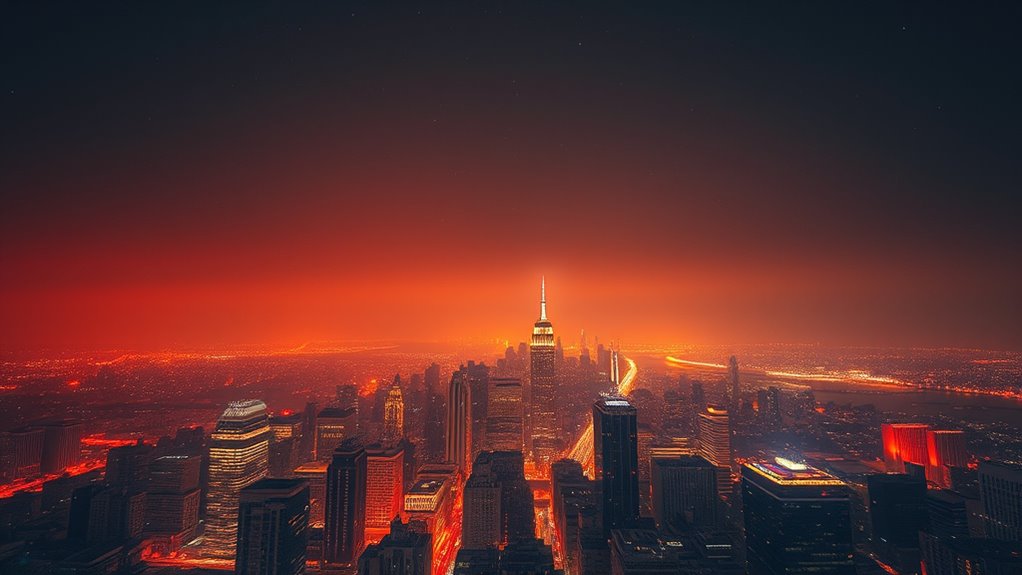
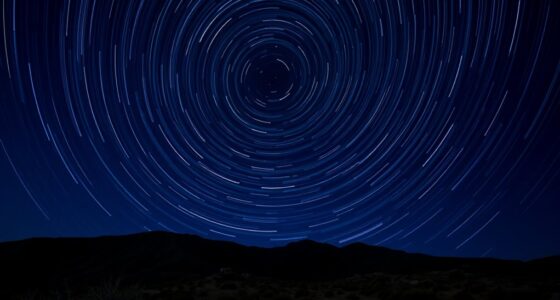
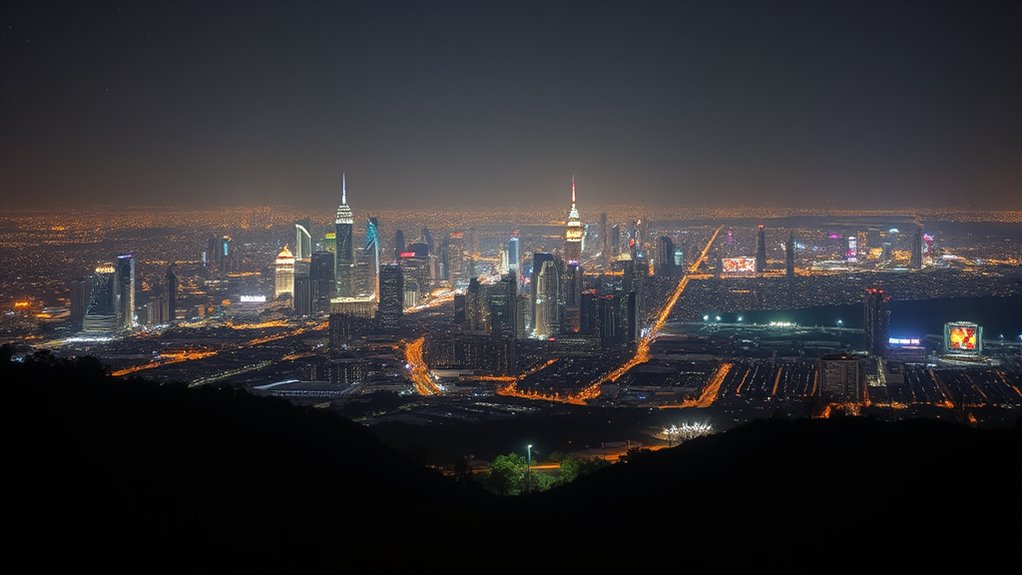
Have you ever noticed how cities glow brightly at night, making it hard to see the stars? That urban glow is a result of light pollution, a growing problem that impacts not only our view of the night sky but also the environment and human health. When city lights are left on unnecessarily or are too bright, they create a luminous haze that extends far beyond urban areas, illuminating the atmosphere and causing what’s known as astronomical interference. This interference makes it difficult for astronomers and stargazers to observe celestial objects clearly, diminishing our ability to explore the universe and understand our place in it.
City lights at night create a luminous haze, blocking stars and disrupting natural ecosystems.
The root of this problem lies in excessive or poorly directed lighting. Many streetlights, billboards, and building lights are designed without considering their impact beyond their immediate area. They often emit light upward or sideways, contributing to the urban glow that spreads into the night sky. This glow doesn’t just obscure our view of stars; it also disrupts natural rhythms for wildlife and plants that rely on the natural cycle of day and night. Birds, insects, and marine life can become disoriented by artificial lighting, leading to behavioral changes or declines in populations.
You might not realize how much your own lighting choices contribute to this issue, but small adjustments can have a big impact. Using shielded fixtures that direct light downward, lowering illumination levels, and opting for warmer-colored lights can help reduce unnecessary brightness. Implementing smart lighting controls—like timers and motion sensors—ensures lights aren’t left on when they’re not needed. These simple steps can considerably cut down on urban glow, helping restore darkness to our nights and reduce astronomical interference. Additionally, choosing high-quality projectors with precise color accuracy and contrast ratio for home entertainment can minimize the need for excessive ambient lighting, further reducing light pollution.
Addressing light pollution isn’t just about preserving the beauty of the night sky; it’s also about creating healthier environments for everyone. Cities can adopt lighting ordinances that prioritize energy efficiency and minimize skyglow. Community awareness campaigns can educate residents and businesses about responsible lighting practices. The more we recognize the importance of reducing light trespass and glare, the better we can protect our nightscapes and the ecosystems that depend on natural darkness. By making conscious choices and advocating for smarter lighting policies, you can help diminish the urban glow and bring back the stars for future generations to enjoy.
shielded outdoor lighting fixtures
As an affiliate, we earn on qualifying purchases.
As an affiliate, we earn on qualifying purchases.
Frequently Asked Questions
How Does Light Pollution Affect Nocturnal Wildlife Behavior?
You might notice that light pollution disrupts nocturnal wildlife behavior by interfering with their natural activities. It impacts animal navigation, causing creatures like sea turtles and insects to become disoriented. Additionally, bright artificial lights can disrupt mating behaviors, making it harder for animals to find partners or reproduce successfully. This disturbance threatens their survival and alters ecosystems, emphasizing the importance of reducing light pollution for the well-being of nocturnal species.
What Are the Economic Impacts of Light Pollution on Cities?
Think of light pollution as a fog that dims a city’s sparkle. It hits your wallet by increasing economic costs through higher energy bills and maintenance expenses. Plus, it can cause a tourism decline as visitors miss the charm of a starry night, preferring brighter destinations. These factors combine to drain a city’s resources and reputation, making it harder to thrive and attract new visitors or investments.
Can Artificial Light Improve Security Without Increasing Pollution?
Yes, artificial light can improve security without increasing pollution if you use smart urban illumination. Focus on targeted, low-intensity lighting that brightens key areas like streets and entry points. Properly designed lighting enhances crime prevention by increasing visibility, while minimizing light spillage and skyglow. You can achieve effective security measures that protect residents without contributing to excessive light pollution, creating a safer and more sustainable environment.
Are There Specific Technologies to Measure and Monitor Light Pollution Levels?
Satellite imaging and sky quality meters serve as sophisticated sensors and scrutinize sources of light pollution. Satellite imaging captures extensive, celestial scans from space, offering a broad perspective. Meanwhile, sky quality meters measure the brightness of the night sky directly from the ground. Together, these technologies help you monitor, manage, and minimize light pollution levels effectively, ensuring your environment stays brighter without unnecessary excess.
How Do Cultural and Societal Attitudes Influence Light Pollution Practices?
Your cultural perceptions and societal norms heavily influence how you address light pollution. If your community values bright, well-lit environments, you might overlook its negative effects. Conversely, societies that prioritize dark skies may implement policies to reduce excess lighting. Your attitudes shape public support for regulations, influence individual behaviors, and determine the acceptance of new technologies aimed at minimizing light pollution. Changing perceptions can lead to more responsible lighting practices.
As an affiliate, we earn on qualifying purchases.
Conclusion
While some might think reducing outdoor lighting will make areas less safe, the truth is, smarter lighting actually improves safety by preventing dark spots. Addressing light pollution not only restores the night sky but also benefits your health, environment, and energy bills. So, don’t dismiss the idea—by making simple changes, you can enjoy clearer skies and a healthier planet. Remember, protecting the night sky is easier than you think, and every small step counts.
As an affiliate, we earn on qualifying purchases.
light pollution reduction solutions
As an affiliate, we earn on qualifying purchases.
As an affiliate, we earn on qualifying purchases.
Columbus Day / Indigenous Peoples' Day Picks
long weekend sales
As an affiliate, we earn on qualifying purchases.